
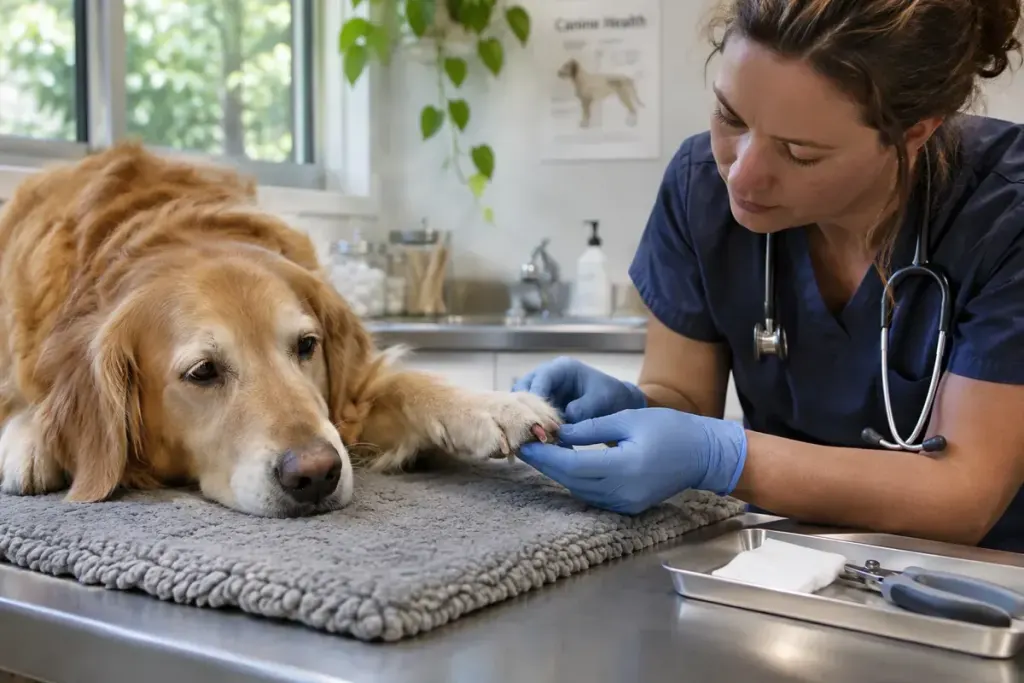
A sudden yelp, a lifted paw and a small trail of blood can come from one damaged nail. The injury may look minor beside the size of the dog, but the living tissue inside the nail contains nerves and blood vessels.
VCA’s veterinary guidance on broken nails explains why tears can be very painful and need attention. A split that reaches the quick is a different situation from trimming an overlong, intact tip.
First, keep the dog from running around and approach carefully. Pain can make even a familiar animal react defensively. If you cannot handle the paw safely, do not wrestle with the dog to obtain a better photograph; contact the veterinary team for advice.
Describe what you can observe
- Which foot and nail appear affected, including a dewclaw if relevant.
- Whether bleeding is ongoing and whether the dog can bear weight.
- Whether a piece is dangling, the nail is split near its base or the surrounding toe looks swollen.
- When it happened and whether there was a known snag or fall.
Gentle direct pressure with clean gauze or a clean towel can help control bleeding while you seek advice, if the dog allows it. Persistent bleeding, severe pain or an injury close to the nail base warrants prompt veterinary attention. Do not pull off the loose section or attempt a deep cut into painful tissue.
The clinician may need to assess the remaining nail, clean and protect the exposed area, and decide on pain relief or other treatment. Do not give human pain medicines unless a veterinarian has specifically instructed you to do so.
After the visit, write down the instructions for keeping the area protected and for checking it again. Ask what licking, swelling or renewed bleeding should trigger a call. Once the injury has healed, routine nail checks can resume; the immediate priority is a comfortable paw and an appropriately treated wound.