
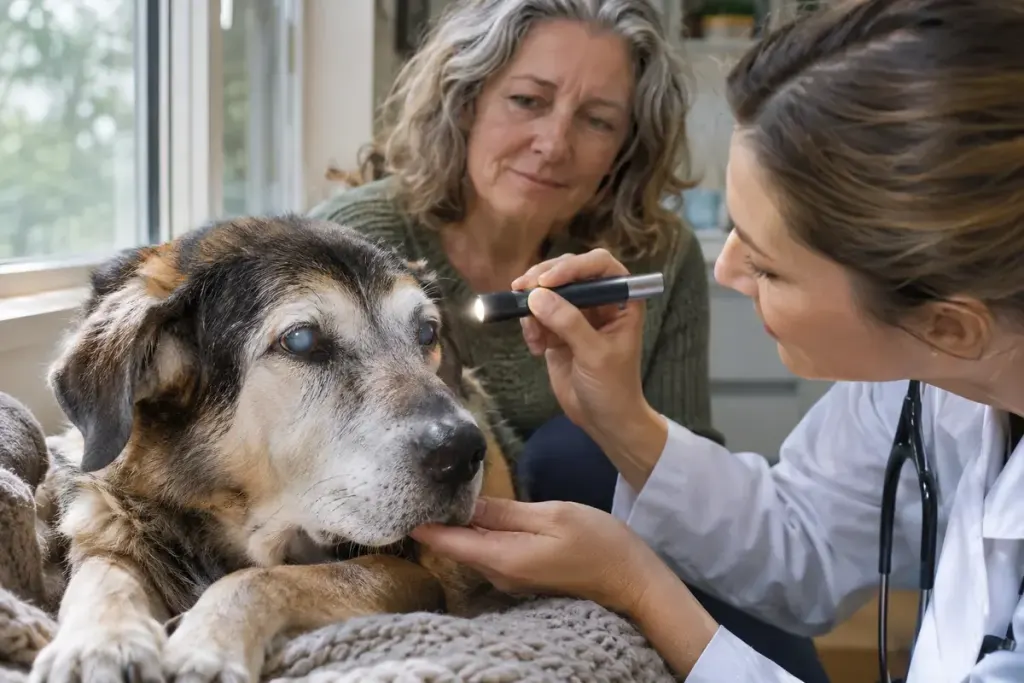
You notice a pale haze in an older dog’s eyes when sunlight comes through the window. It is tempting to call it a cataract from appearance alone. Another possibility is lenticular, or nuclear, sclerosis, an age-related change in the lens that needs a veterinary examination to distinguish.
VCA’s guide to lenticular sclerosis describes a bluish, transparent haze seen in middle-aged and older dogs. Cataracts involve opacity of the lens and can affect vision differently. An owner cannot reliably separate the conditions from a casual photograph.
Bring observations, not a home diagnosis
Note when you first noticed the change and whether it appears in one eye or both. Describe behaviour as well: hesitation at steps, bumping into familiar objects or difficulty finding something in a changed light. These observations give the veterinarian context without claiming to measure the dog’s vision.
For example, a dog pausing at a dark doorway may be responding to several things. Record the situation and whether it is new rather than deciding that a cloudy lens explains every hesitation. Keep the environment familiar while arranging the examination, and avoid testing vision by creating obstacles.
Eye pain, squinting, redness, discharge, a sudden change or apparent loss of vision warrants prompt veterinary contact. Do not wait for a routine senior check if those signs appear. Avoid using leftover eye drops or human products without veterinary advice.
Ask what was found
After the examination, ask which structure is affected, whether vision is impaired and what follow-up is appropriate. If the finding is lenticular sclerosis, ask what changes should trigger another visit. A reassuring explanation today does not mean every later eye change has the same cause.
The useful distinction is between a visible change and the diagnosis behind it. Naming the haze accurately helps determine whether monitoring, treatment or further assessment is needed.