
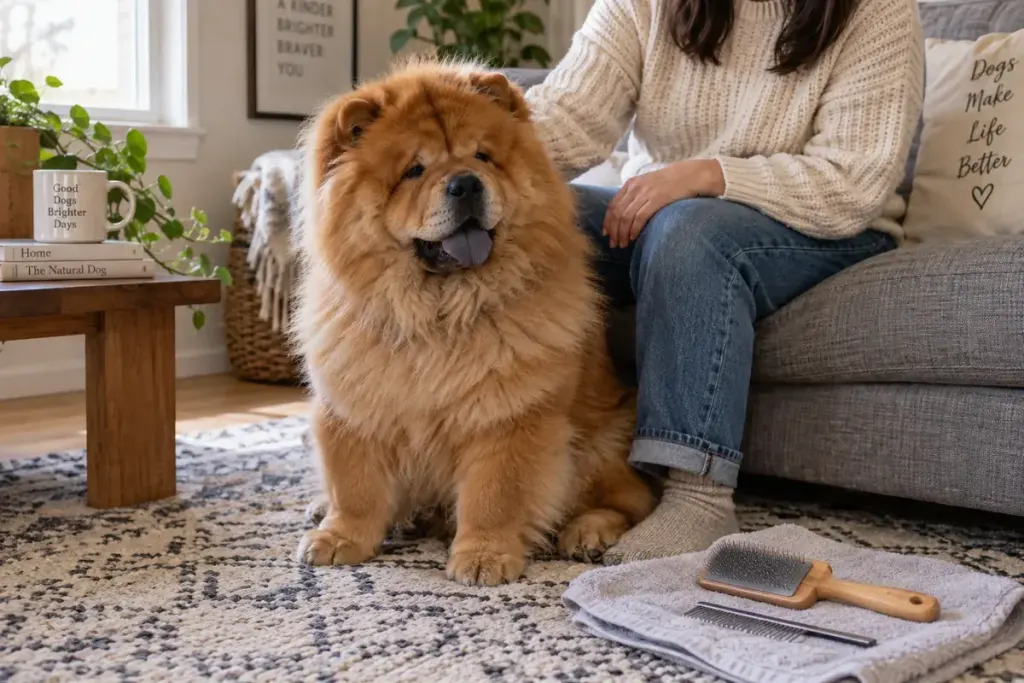
A thick coat can look impressive from across the room while hiding the details a groomer needs to know. Before an appointment, a few careful observations are more useful than asking for a dog to look like a photograph.
For a Chow Chow, begin with the coat you actually have in front of you and the dog’s comfort with handling. The aim is to give the professional a clear starting point, not to diagnose a skin problem or remove difficult tangles yourself.
Describe changes rather than guessing their cause
Note where you have noticed loose coat, tangles or a change in texture, and when you first saw it. Mention any recent grooming or bathing and the products used. “A tight patch behind the left ear noticed this week” is more useful than “the coat is unhealthy.”
If the skin appears sore, the dog seems painful or you notice a concerning change, ask a veterinarian for advice. A routine grooming appointment should not be used to delay assessment of a possible health issue.
Keep comfort in the conversation
Tell the groomer which areas your dog is comfortable having touched and where they tend to pull away. Describe what happened rather than labelling the dog stubborn. Include any previous stressful grooming experience and ask how the appointment can be approached with the dog’s welfare in mind.
Do not hold the dog through increasing distress just to complete your inspection. Short, calm observation is enough for a useful note. A groomer or veterinarian can help you plan handling that is appropriate to the individual dog.
Ask for a routine matched to this coat
The American Kennel Club’s Chow Chow overview identifies the breed’s double coat and its regular grooming needs. That is background, not a complete routine for every dog. Coat condition, tolerance of handling and previous care all affect what you should discuss at the appointment.
Ask the groomer to demonstrate the tools and gentle technique they recommend for maintenance between visits. Request guidance on where to stop and ask for help. Avoid choosing a tool solely because it removes a dramatic amount of hair in an online video.
Do not turn a tangle into a home cutting experiment
Dense mats can make it difficult to see where skin lies. Leave difficult mat removal and clipping decisions to an appropriately qualified professional. The AKC’s general grooming guidance distinguishes ordinary home care from tasks that need professional help. Follow advice for your dog rather than improvising with scissors.
Bring your questions about coat length and seasonal comfort to the groomer or vet. Do not assume that a shorter-looking coat is automatically the right answer for a double-coated dog.
Leave with a plan you can repeat
Write down the agreed maintenance steps, the recommended tools and the signs that should prompt another conversation. If a demonstration felt too quick, ask to see it again. A routine that you can carry out calmly is more useful than a long list you cannot follow.
At the next visit, bring the same note with a brief update: what was manageable, what your dog tolerated and what changed. That turns grooming into a continuing care conversation rather than a fresh guess at every appointment.