
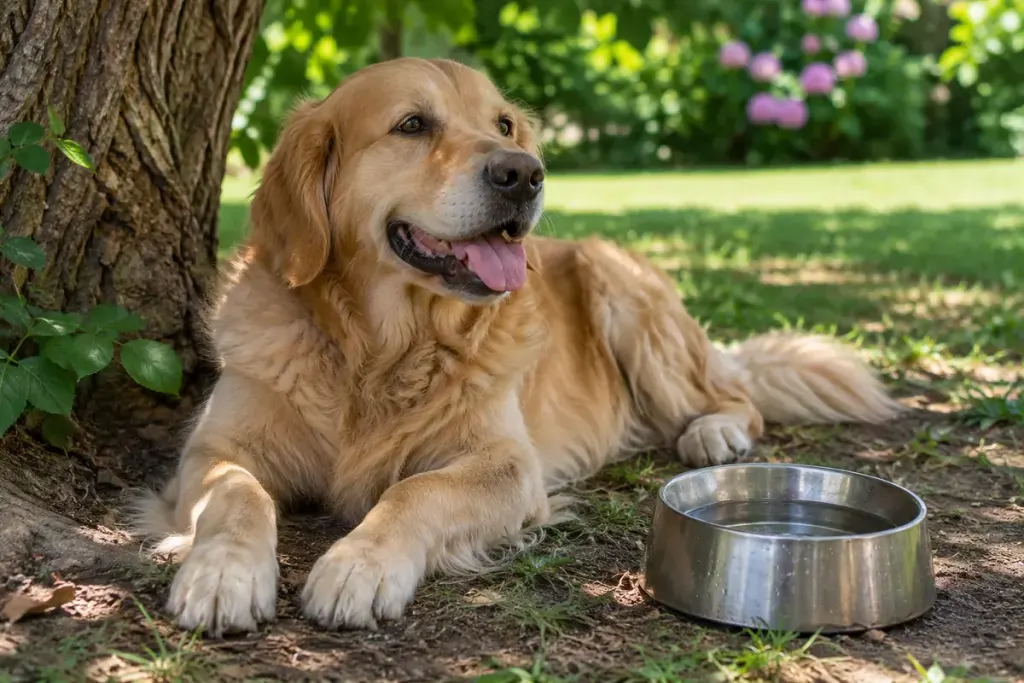
A dog panting after activity and a dog panting while resting in a cool room may look similar in a quick photograph. The surrounding circumstances are what make the observation useful.
VCA explains the tongue’s role in cooling: dogs rely heavily on panting to regulate temperature. Yet cooling is not the only context. Its guidance on stress signs also notes panting with excitement or stress.
Describe the change from your dog’s usual pattern
Note what happened beforehand, the environment and how the dog behaved afterwards. Was there exercise, heat, travel or an unfamiliar visitor? Did the dog settle, or did the breathing remain unusual? Include other signs rather than describing the mouth alone.
A short video can help a veterinarian understand an intermittent change if recording it does not delay care or disturb the dog. Keep the date and context with the clip. Several near-identical recordings without that information may be less useful than one clearly described episode.
Do not turn observation into a home diagnosis
Persistent or unexplained panting deserves veterinary advice, particularly when it differs from the dog’s normal behaviour. Pain, illness and medicines can be relevant, but an article cannot identify the cause in an individual animal.
Breathing difficulty, collapse, marked weakness or suspected heat illness requires urgent veterinary help. Move away from heat and contact a veterinary service promptly; do not wait to see whether an online checklist fits every sign.
For ordinary activity, plan shade, water and an appropriate pace before the dog struggles. Weather, breed, age and health all affect what is manageable.
The useful habit is to know the baseline without dismissing a change. Panting is a normal canine function, but “dogs do that” is not a complete answer when the timing, intensity or accompanying behaviour is new.