
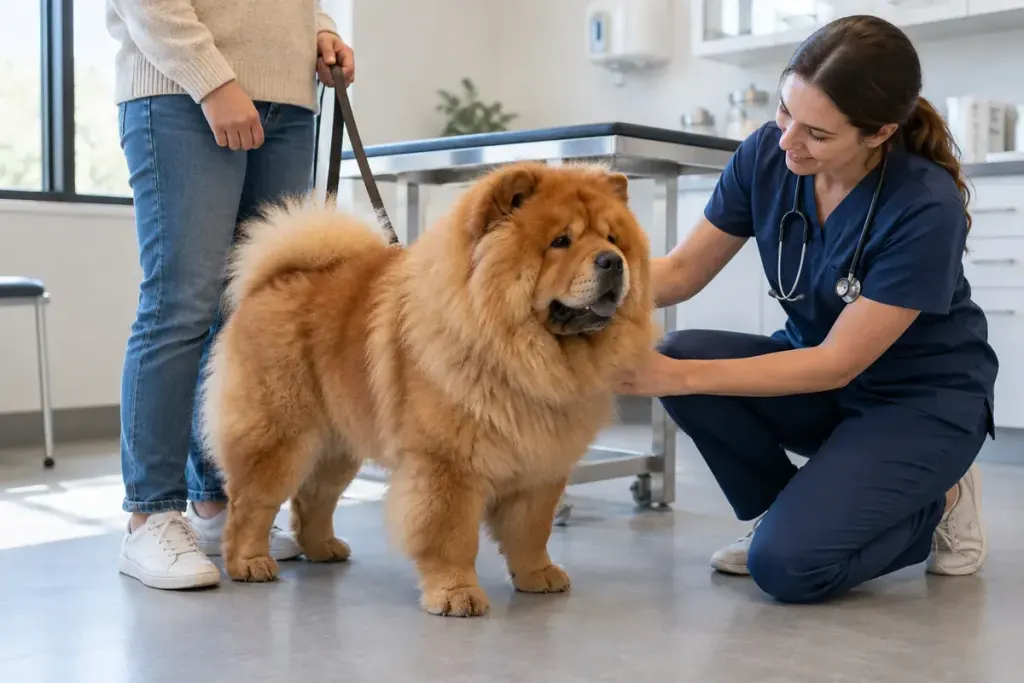
A full Chow Chow coat makes a photograph an unreliable place to begin judging body fat. The outline you see includes fur. A body-condition assessment therefore combines looking with feeling the structures beneath the coat.
The World Small Animal Veterinary Association’s dog body-condition chart describes features such as rib coverage, waist and abdominal tuck across its scale. It is best learned with a veterinary professional who can demonstrate how those descriptions apply to your individual dog.
Ask for a demonstration at the next suitable visit
Have the clinician show you where and how gently to feel. Then, if your dog is comfortable, demonstrate what you understood so they can correct the technique. Pressing harder through a dense coat is not a substitute for learning the assessment, and a dog that is painful or uneasy should not be forced through it at home.
Ask which scale the practice records. A number without the scale and date is easy to misinterpret. Keep the score beside the dog’s measured weight and any relevant clinical advice, rather than using one figure as the whole nutritional picture.
Use changes to start a conversation
For example, a coat change may make the same dog appear slimmer without establishing a change in body fat. Conversely, an unchanged silhouette can conceal a gradual change that becomes clearer through a consistent hands-on assessment and weight record.
If the veterinary team recommends monitoring, agree a sensible interval and method. Bring the current food details, measured portions, treats and any feeding changes to the discussion. That information helps the team interpret a trend instead of guessing from a single photograph.
Body-condition scoring is not a stand-alone diagnosis, and it is different from assessing muscle condition. Avoid sharply cutting food or selecting a target weight from an online breed chart. Unexpected weight change, reduced appetite or other symptoms deserve veterinary attention.
The goal for an owner is not to become an expert scorer overnight. It is to recognise what can be observed reliably, notice a change and describe it clearly to the person responsible for the dog’s care.