
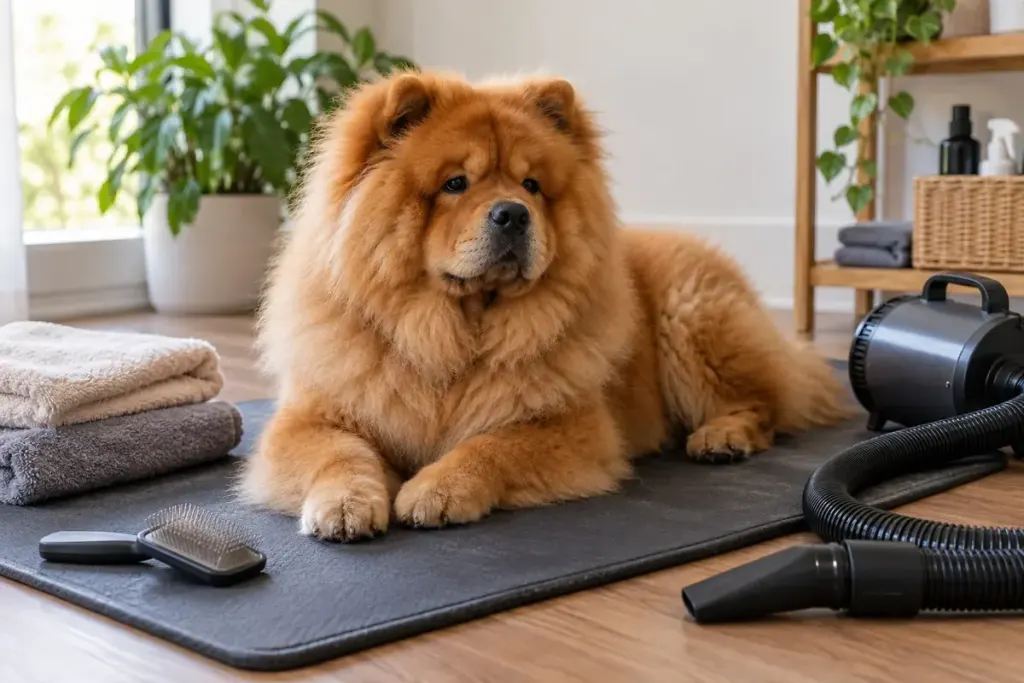
A quick stroke along a dog’s back can make a thick coat seem dry. Parting the hair gently may tell a different story: the outer layer has dried while moisture remains closer to the skin. With a dense double coat, the surface is only part of the check.
The American Kennel Club’s guide to double-coated breeds explains the distinction between outer coat and undercoat. The appropriate grooming routine also depends on the individual dog’s skin, coat condition and tolerance.
Check without turning drying into a struggle
Use towels gently to absorb water rather than rubbing vigorously into tangles. During a calm pause, separate small sections of coat with your fingers to assess whether the undercoat remains damp. Do not pull at mats or repeatedly handle an area the dog finds painful.
Ask a qualified groomer to demonstrate a suitable drying method and equipment settings for your dog. Heat, airflow, noise and restraint all need consideration. Household equipment should not be assumed safe merely because it dries human hair.
Plan time and comfort together
Choose a bathing time that leaves room for a patient drying routine. A rushed wash immediately before a cold outdoor trip is a poor setup for a dog whose coat takes longer to dry.
Watch the dog’s behaviour throughout. Give breaks and stop if the dog becomes distressed. Avoid directing airflow into eyes or ears, and never leave the dog unattended with drying equipment.
Persistent odour, redness, soreness or unusual scratching calls for veterinary advice rather than stronger heat or more frequent washing. A coat that feels different can have more than one explanation.
For the next grooming appointment, describe what happens at home: which areas stay damp and which parts of drying the dog dislikes. That information helps build a realistic routine rather than simply requesting a faster finish.