
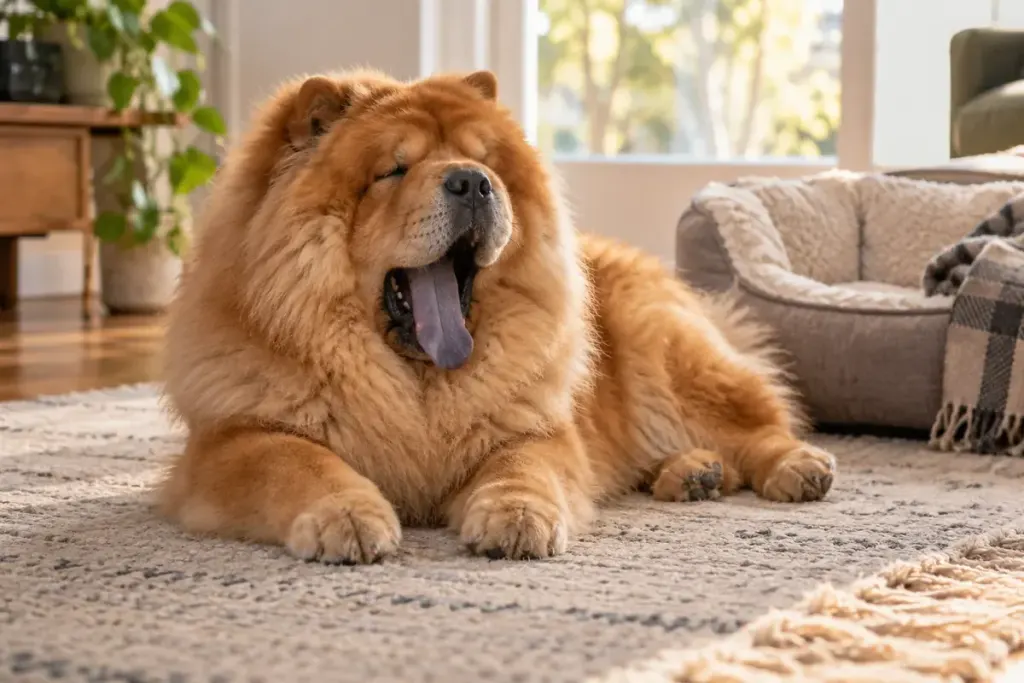
A dog waking on its bed may yawn before stretching. The same mouth movement during a close encounter with a stranger deserves a different look. A yawn is an observation; its meaning depends on what is happening around it.
Dogs Trust’s body-language guidance includes yawning without tiredness among possible signs of discomfort. It advises reading the whole dog and the context rather than assigning one fixed meaning to an isolated signal.
Look before the yawn and after it
Notice whether the dog has just rested, whether someone is leaning over it, and whether it can move away. Look at the face, ears, posture and direction of movement. A relaxed body near a familiar bed is a different picture from sudden stillness, a turned head and repeated attempts to create distance.
For an illustrative note, write: “Visitor reached toward head; dog turned away and yawned; interaction stopped.” That is more useful than writing “dog was rude” or deciding that the visitor has been accepted because there was no growl.
Reduce pressure instead of testing the interpretation
If the interaction appears uncomfortable, stop it and give the dog space. Do not repeat the reach to see whether another yawn occurs. Ask other people to wait rather than pursuing the dog into its resting place.
A Chow Chow’s coat and facial shape can make some small signals less obvious, so learning the individual dog’s ordinary behaviour matters. Familiarity should improve observation, not justify ignoring a change.
Frequent new yawning, altered behaviour or signs of physical discomfort warrant veterinary advice. A short video taken without provoking the behaviour may help a professional, but the dog’s immediate comfort comes first.
Good observation leaves room for uncertainty. You do not have to know exactly what a yawn means to make an interaction less demanding and allow the dog a comfortable choice.