
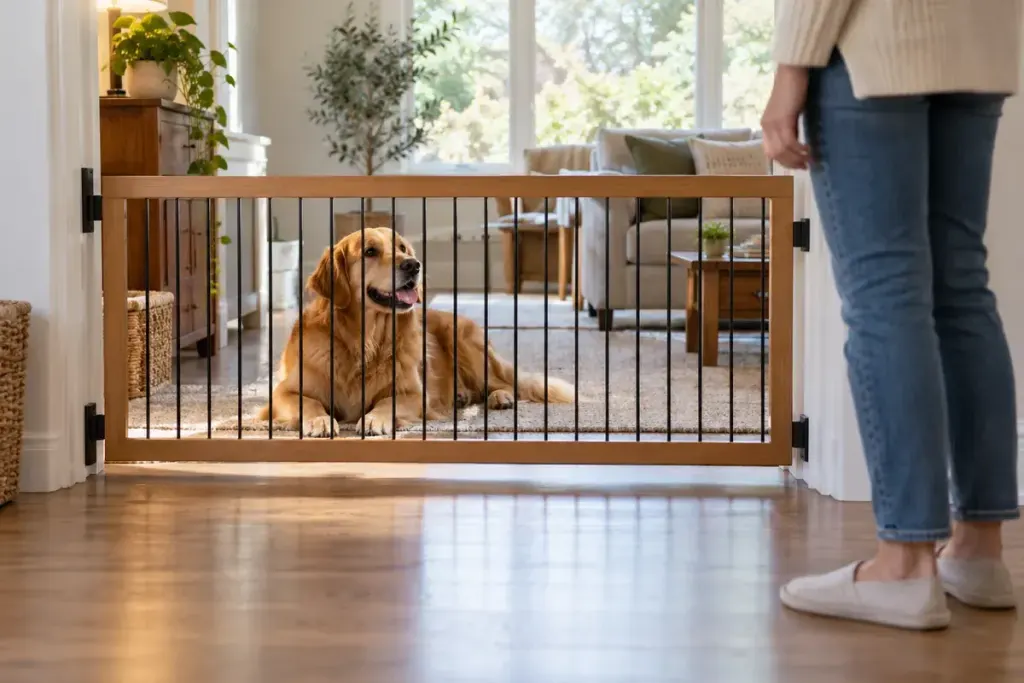
A growl can interrupt an ordinary moment: someone reaches towards a bed, a visitor comes too close, or handling becomes uncomfortable. The immediate aim is safety, not proving that the dog will tolerate the same action if it is repeated more firmly.
Dogs Trust’s guidance on aggression around veterinary visits advises against telling a dog off for growling and other warning behaviour. Punishing the warning can leave the underlying discomfort unresolved. A growl is information to respond to, not a challenge that needs winning.
Reduce pressure and protect space
Stop the interaction and create distance where it is safe to do so. Keep children and visitors away from the situation. Do not corner the dog, grab its collar, stare it down or deliberately repeat the trigger to see whether it “really means it”. If you cannot manage the situation safely, seek professional help rather than attempting a confrontation.
Once everyone is safe, note what happened immediately beforehand. Include where the dog was, who approached, what handling or object was involved, and any earlier signs you noticed. A factual record is more useful than deciding the dog was being stubborn or jealous.
Consider health as well as learning
A new or changing response deserves a veterinary conversation, particularly if touching or movement seems uncomfortable. Pain or illness can affect behaviour. Tell the clinic about the warning before arriving so the visit can be planned appropriately.
For ongoing difficulties, ask the vet about a suitably qualified, reward-based behaviour professional. Work on a plan that addresses the situation and the dog’s needs; do not copy a dramatic online “correction”.
A quieter dog is not automatically a more comfortable dog. The useful change is one in which the underlying problem is understood, people remain safe and the dog has less reason to warn. Listening to the growl is the beginning of that work, not an endorsement of allowing unsafe interactions to continue.