
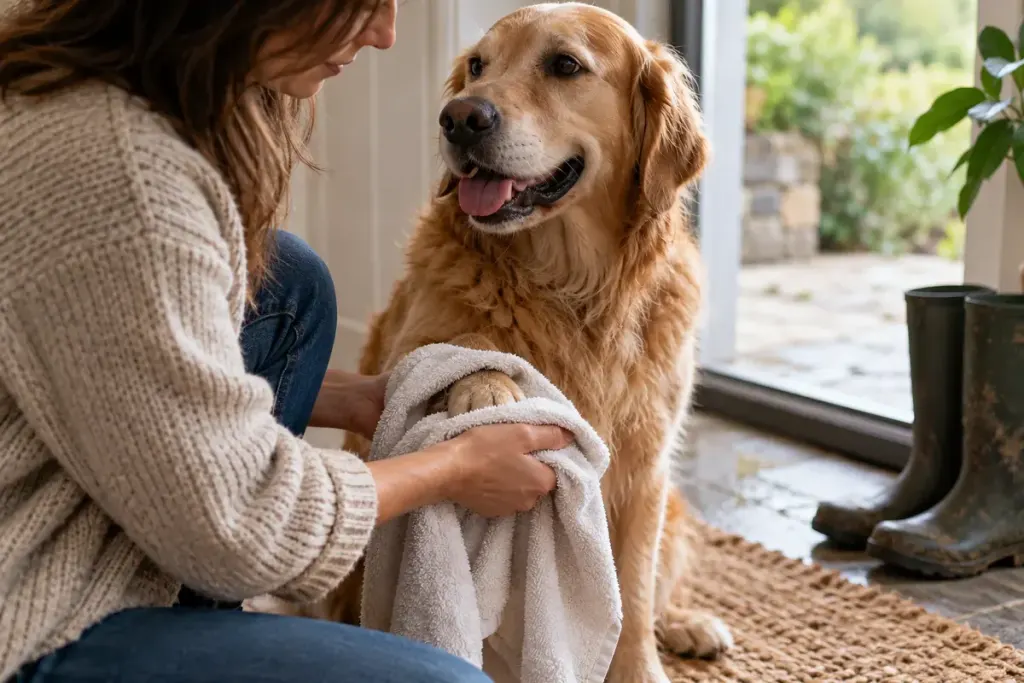
Muddy paw prints are easy to notice on a clean floor. Less obvious are grit, wet hair and debris that remain around a dog’s feet after the walk. A calm check at the doorway can help you see what needs cleaning without turning the return home into a struggle.
Prepare a stable, non-slip place and a clean towel before leaving. Blue Cross’s washing guidance emphasises secure footing, appropriate water temperature and gradual introduction to handling. A full bath is not automatically needed after every outing.
Let the dog settle into the routine
Begin with brief, comfortable handling. If your dog is worried about having a paw lifted, work on acceptance separately in short sessions and seek suitable professional guidance. Do not pin a frightened dog down simply to finish faster.
Remove ordinary mud gently using a method suitable for the dog. If a product is needed, use one intended for that purpose and follow its directions. Household cleaning sprays and improvised strong solutions do not belong in a paw-cleaning routine.
Dry gently, including damp hair around the feet where you can do so comfortably. Look rather than probe: a visible object, damaged nail, redness or an area the dog protects deserves attention. Do not dig into the skin or attempt to remove an embedded object yourself.
Notice a change in behaviour
Persistent licking, limping, swelling or pain should prompt veterinary advice. Do not assume that more washing will solve the problem, or apply a cream because it helped another animal.
If the walk involved an unknown chemical, road treatment or other potentially harmful substance, contact a veterinarian promptly for advice about exposure and cleaning. The ordinary mud routine is not a universal response to contamination.
Keep a separate towel for the dog and wash it as needed. A small basket containing the permitted cleaning supplies and fresh towels makes the routine easier to repeat without searching while the dog waits.
The aim is a brief, predictable transition back indoors. Stop while handling is still calm, reward cooperation appropriately and record any recurring sore area for the vet. Clean floors are welcome, but the dog’s comfort is the more useful measure of whether the routine works.