
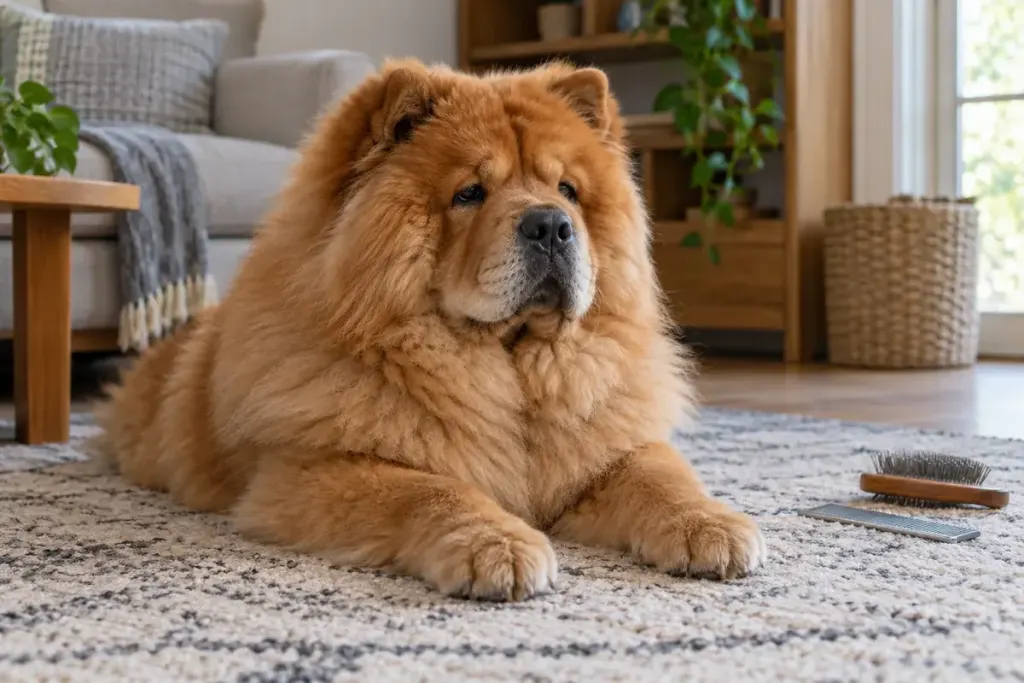
Looking only at the nails that touch the floor can leave part of a dog’s paw unchecked. A dewclaw sits higher on the leg, and coat can make it easy to overlook. On a Chow Chow, take time to see what is actually there rather than feeling through fur with clippers.
The American Kennel Club’s dewclaw explanation recommends caring for these nails as part of ordinary nail maintenance. Individual anatomy differs, so ask your vet or experienced groomer to identify the nails on your own dog.
Begin with looking and comfortable handling
Choose a calm moment and let the dog remain on a stable, comfortable surface. If it is accustomed to paw handling, gently inspect one area at a time. Stop if the dog shows discomfort or distress. Completing every paw in one sitting is less important than avoiding a struggle.
Look for a nail curving toward the skin, a split, swelling or signs that the dog is licking the area unusually. Pain, bleeding or an embedded nail needs veterinary attention. Do not try to dig a nail out or treat an injury with a grooming tool.
Get the trimming method demonstrated
If you are unsure where to cut, especially with dark nails, ask a qualified professional to demonstrate on your dog. Nail shape, the sensitive quick and the dog’s tolerance all affect the task. A photograph of another dog’s paw cannot establish a safe cutting point for yours.
Record any handling preferences that help, such as a particular position or short breaks. Share them when booking a grooming appointment. Also mention a previous nail injury rather than expecting the groomer to discover it during the trim.
Add dewclaws to a regular visual check instead of waiting until the dog catches one on fabric. The aim is a comfortable paw-care routine with timely professional help whenever the nail or the dog’s response makes the next step uncertain.