
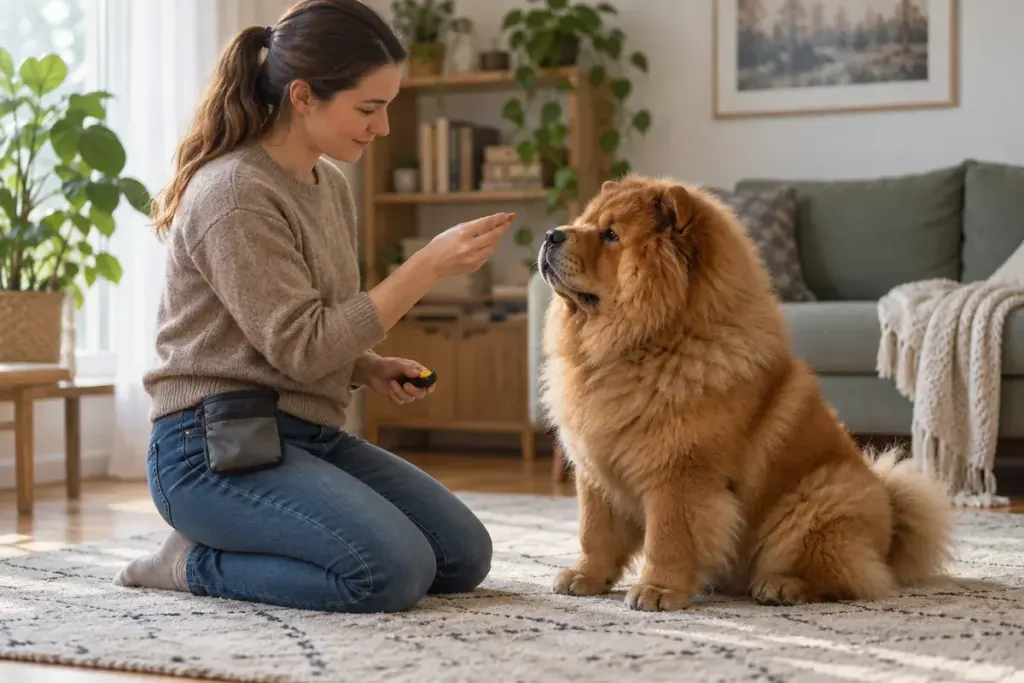
Your dog sits, you search a pocket, the dog stands, and the treat finally appears. The food is welcome, but the sequence may not make clear which moment you wanted to encourage. A reward marker helps you identify that moment before the practical business of delivering the reward.
A marker can be a short word or a clicker sound. Dogs Trust explains how to introduce a marker by pairing it with a reward. The marker needs a consistent meaning; it is not a substitute for the promised reward.
Keep the first practice simple
Choose a quiet place and a reward your dog values. Prepare small suitable treats so you are not opening a noisy packet after every success. If food is unsuitable for your dog, seek guidance on an appropriate alternative and any dietary restrictions.
Practise noticing one easy, observable behaviour. For example, when all four paws are on the floor, mark that moment and then deliver the reward. Avoid waiting until the dog has jumped again. If your timing is late, make the next attempt simpler instead of scolding the dog for the confusion.
Separate the marker from a request
A cue asks for a behaviour; a marker identifies a successful moment. Repeating the marker to call a distracted dog changes the job you are asking that sound to perform. Keep everyday chatter separate from the chosen signal.
Short sessions make it easier to observe your own timing. Stop while the dog is comfortable and engaged, and count training treats as part of the day’s food where appropriate. For fear, aggression or behaviour that creates a safety concern, work with a qualified, reward-based professional. Good timing is useful, but it does not replace assessment of why a dog is struggling.