
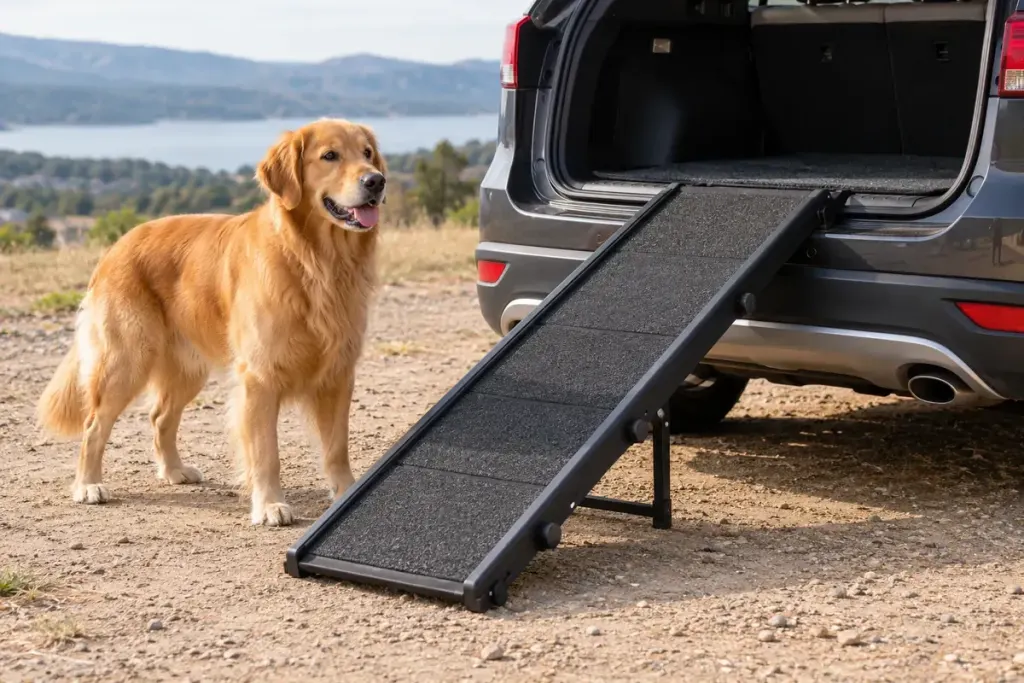
A car ramp is a new surface before it is a way into a vehicle. Asking a dog to use it for the first time when everyone is ready to leave adds pressure to an unfamiliar task. Plan a quiet introduction separately from the journey.
First check the ramp manufacturer’s instructions, load rating, attachment method and suitability for your vehicle. If pain, weakness or mobility changes are the reason for buying it, ask your vet about an appropriate access arrangement. Training cannot make an unsuitable ramp safe.
Make the first encounter easy
Where the product instructions allow, begin with the ramp stable and flat on a non-slip surface. Let the dog approach and investigate voluntarily. Reward calm interest and small steps without dragging, pushing or repeatedly luring the dog beyond its comfort.
Keep sessions short enough to finish before frustration builds. A dog that moves away is giving useful information. Return to an easier stage rather than holding it in position until it complies.
Add the real setup gradually
Only progress to the fitted ramp when the earlier surface is familiar and the equipment can be secured correctly. Have another adult help manage the environment if needed. Prevent access to traffic, keep the vehicle stationary and avoid a crowded or slippery location.
Watch the whole journey across the ramp, including the transition into the vehicle and the return down. A dog may be comfortable going up but uncertain about coming down. Do not assume one successful direction establishes the other.
- Inspect the walking surface and fastenings before use.
- Allow enough space for the dog to approach straight on.
- Stop if the ramp shifts or the dog appears distressed.
- Seek a qualified reward-based trainer if progress stalls.
Keep the first successful trip simple. Pack away and secure the ramp according to its instructions before driving, and use an appropriate vehicle restraint for the dog. Familiarity with the ramp is one part of travel preparation, not a replacement for safe transport arrangements.