
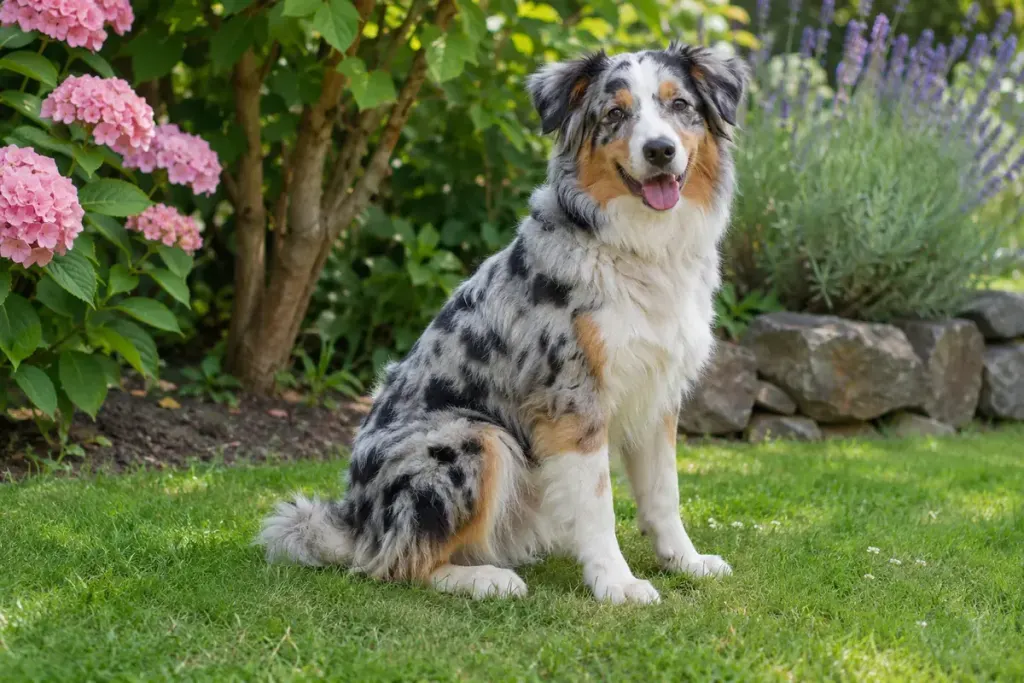
A dog with irregular patches of diluted and darker colour may be described as merle. That word concerns a coat-pattern trait; it is not a breed name or a complete description of the dog’s ancestry.
It also should not be used as a shortcut to a health conclusion. Visible colour and genetic information answer related but different questions.
The pattern can vary
The UC Davis Veterinary Genetics Laboratory’s merle information explains the genetic basis and variation associated with merle. The appearance can differ, and some genetic variants are not reliably identified from a casual visual assessment.
This matters when a seller labels a puppy from photographs alone. A flattering image under coloured lighting is especially poor evidence for interpreting a coat pattern. It cannot substitute for documented parentage, appropriate testing or a veterinary examination.
Keep breeding questions separate from colour preference
UC Davis also describes health concerns associated with particular merle combinations, including increased risks affecting hearing and vision. A responsible breeding discussion requires understanding the actual genetic results and their implications; it is not solved by matching two attractive coats.
If you are considering a puppy, ask what testing was performed, which laboratory issued the result and which dog the report identifies. Have a veterinarian or appropriately qualified genetics professional explain anything unclear. Do not assume that a colour name on an advertisement is a laboratory result.
A practical record for an existing dog
For your own dog, keep coat descriptions, identification details, health records and any genetic reports together. They serve different purposes. A coat description helps identify the animal; a test report addresses a defined genetic question; a clinical examination assesses health.
An illustrative mistake would be to see two differently coloured eyes and conclude that every relevant genetic or health question has been answered. It has not.
If a dog shows a new hearing, vision or eye problem, seek veterinary advice regardless of coat colour. Merle can be an interesting part of canine genetics, but the individual dog deserves attention beyond the pattern people notice first.