
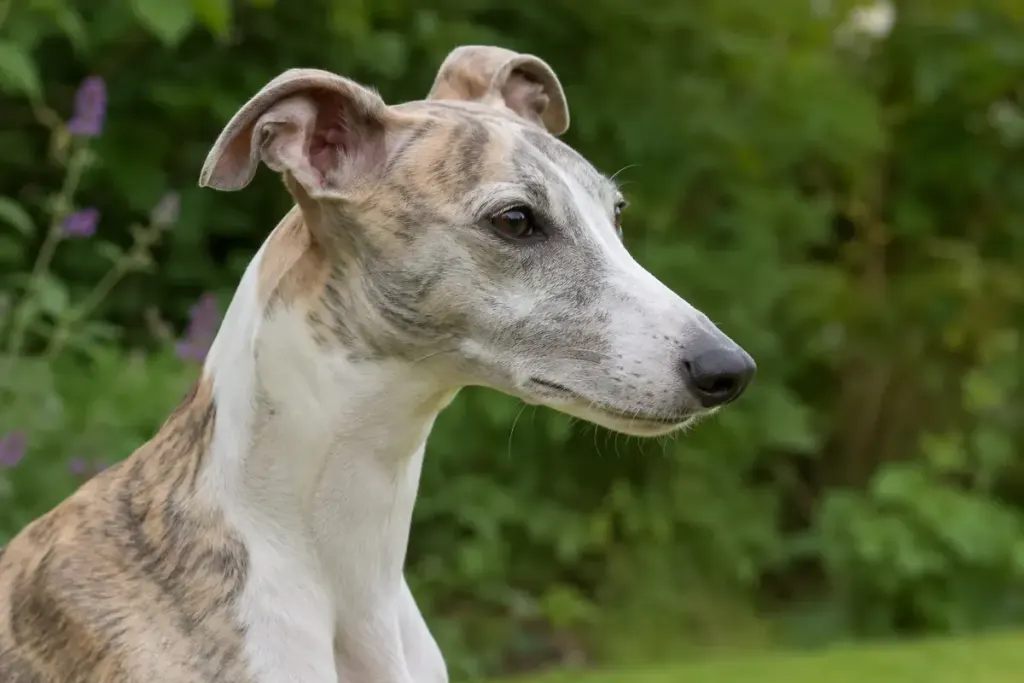
Dog-ear descriptions can sound decorative until you know what to look for. A button ear folds forward over the opening. A rose ear folds back in a way that exposes more of the inner ear. These terms describe natural shape and carriage, not whether a dog is listening or how friendly it feels.
The American Kennel Club glossary defines button ears through their forward fold. Its Pug study guide compares rose and button forms within one breed, making the distinction easier to see than a list of unrelated dogs.
Look at the fold, not only the outline
Observe a relaxed dog from the front and side without manipulating the ear. Where does the flap turn, and how much of the opening remains visible? A photograph taken during movement may show a temporary position rather than the usual carriage.
For a simple observation exercise, sketch the outer shape and mark the fold line. Then compare it with a reliable breed reference. You are learning descriptive vocabulary, not proving ancestry from a single feature. Mixed-breed dogs and individual variation make that an especially important distinction.
Shape is separate from health
A breed-standard preference is a judging convention. It does not mean an owner’s healthy dog needs its ears changed to match a picture. Do not tape, fold or otherwise manipulate an ear on the basis of a glossary description.
Likewise, a new change deserves attention for its own reasons. If an ear suddenly hangs differently, looks swollen, smells unusual or seems painful, describe the change to a veterinarian rather than explaining it away as a different ear type. Avoid putting tools or cleaning products into the canal without appropriate advice.
The vocabulary is most useful when it sharpens an ordinary observation: “The flap usually folds back, but today this side is swollen.” That tells a professional more than a guessed label and keeps the dog’s comfort ahead of a diagram.