
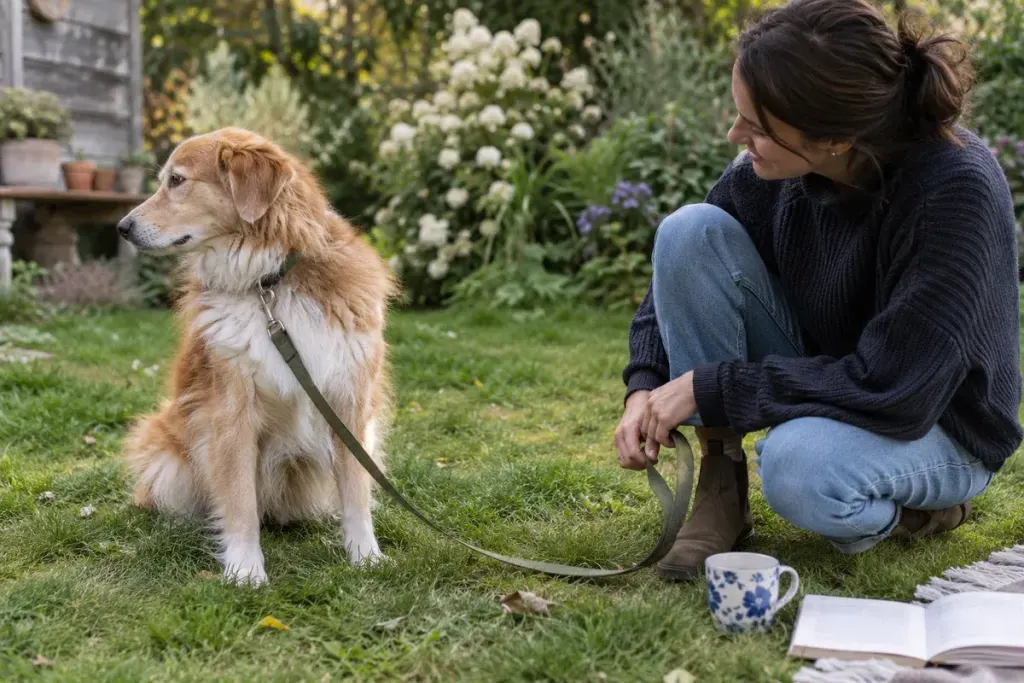
You have covered only one street and the dog has stopped at the third patch of grass. From the human end of the lead, the walk can feel unproductive. From the dog’s perspective, that pause may be one of the most interesting parts.
A walk can provide movement, sensory information and time together. Distance is only one way to describe it. Giving a dog appropriate opportunities to sniff can make an ordinary route richer without turning every outing into a longer physical challenge.
Leave room for the dog’s interests
Dogs Trust’s enrichment guidance includes scent-based activities and opportunities to sniff on walks. The point is to offer suitable experiences, not to require every dog to investigate the same object or tolerate a busy environment.
Choose safe places where stopping will not obstruct traffic or bring the dog close to hazards. Keep an appropriate lead arrangement and follow local access rules. Sniffing does not mean allowing the dog to eat unknown material or approach animals and people without space or consent.
Separate a purposeful journey from a leisure walk
Sometimes you need to reach a destination. On another outing, you may have time to move slowly. Recognising the difference can reduce frustration: plan a suitable sniffing stop rather than repeatedly pulling the dog away from every interesting patch.
For example, an unhurried loop around a quiet green space may provide more suitable enrichment than a fast march along a crowded pavement. That is an illustration of adapting the outing, not a prescription that one route suits all dogs.
Watch the individual, not the breed stereotype
Age, health, weather, mobility and temperament affect what is appropriate. Ask a veterinarian about exercise needs when there is a health concern. Do not use sniffing time as an excuse to ignore fatigue, heat stress or difficulty moving.
Notice whether the dog can explore with a loose body and recover comfortably after the outing. If a location consistently produces fear or overexcitement, choose a calmer option and seek qualified behavioural support when needed. Forcing more exposure is not automatically helpful.
Try describing the walk afterwards without mentioning kilometres: where the dog explored, what seemed comfortable and where you needed more space. Those notes can help you plan an outing around the animal in front of you. A slower walk is not necessarily a lesser walk.