
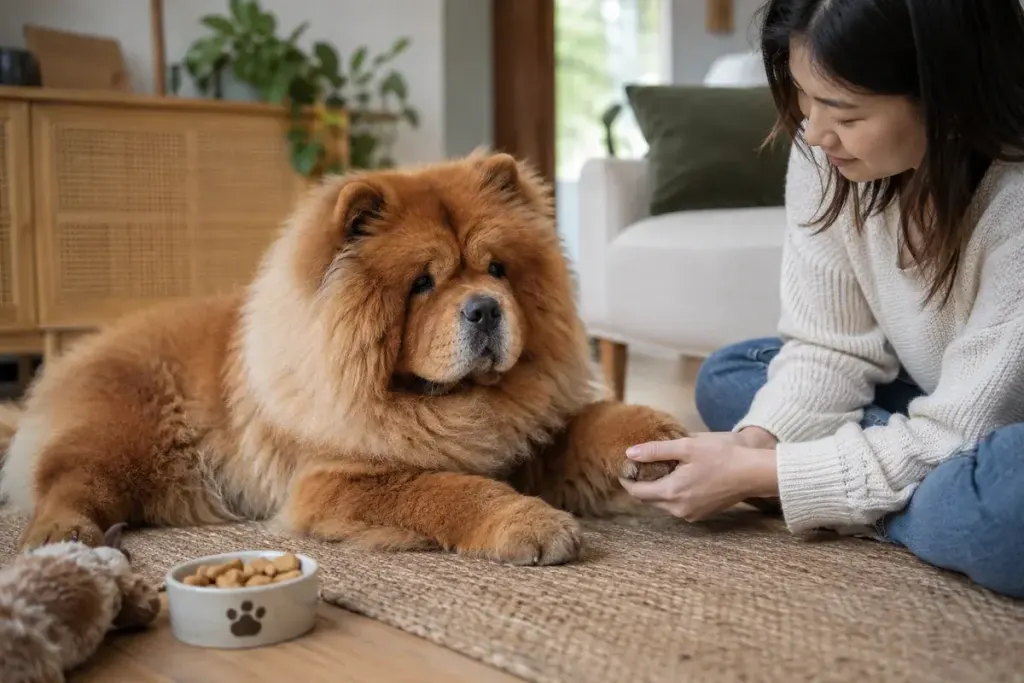
The clippers appear and your dog leaves the room. It is easy to focus on the unfinished nail trim, but the more useful question may be how the whole routine became something the dog wants to avoid.
Practising comfortable handling is separate from cutting nails. You can work on the first without attempting the second, and a veterinary professional or appropriately qualified groomer can help when the dog is fearful, painful or difficult to handle safely.
Begin before the paw needs to be held
Choose a calm place with secure footing. Keep the session brief and let the dog move away. Start with a type of touch the dog already accepts, then stop and reward calmly. The aim is a comfortable response, not a long period of stillness achieved by holding on.
Dogs Trust’s handling guidance recommends gradual, positive introductions to touch. Apply that principle at a level appropriate to your own dog; a dense coat or a placid expression does not tell you that a Chow is comfortable with its feet being handled.
Break the job into smaller experiences
Seeing the equipment, hearing it, having a leg touched and briefly offering a paw are different steps. Introducing everything at once makes it difficult to know which part is worrying the dog. Work on one manageable element and finish while the experience remains easy.
A fictional practice session might involve the dog choosing to remain on a mat while the owner briefly touches the shoulder, removes the hand and offers a reward. It need not progress to the paw that day. The next step depends on the dog’s response, not the number of sessions completed.
Notice the request for space
Turning away, withdrawing a paw or trying to leave are reasons to pause. Avoid escalating restraint to complete a training exercise. If behaviour changes suddenly or touching a limb seems painful, seek veterinary assessment rather than assuming the dog is being stubborn.
Keep children out of the handling task and ask a professional for help if there is any risk of a bite. Do not use this article as a nail-cutting guide; the safe technique and amount to trim depend on the nails and the individual animal.
Give the professional a useful starting point
Tell the groomer or veterinary team what the dog currently tolerates, what causes concern and what rewards are suitable. Ask how you can practise between visits without making the next appointment harder. A small, honest description is more helpful than saying the dog is “usually fine” when the experience has been difficult.
Progress may look modest: a relaxed look at the clippers, a willingly offered paw or a shorter, calmer visit. Those changes are worth noticing. Comfortable cooperation is built through repeated manageable experiences, not by winning a struggle over one nail.