
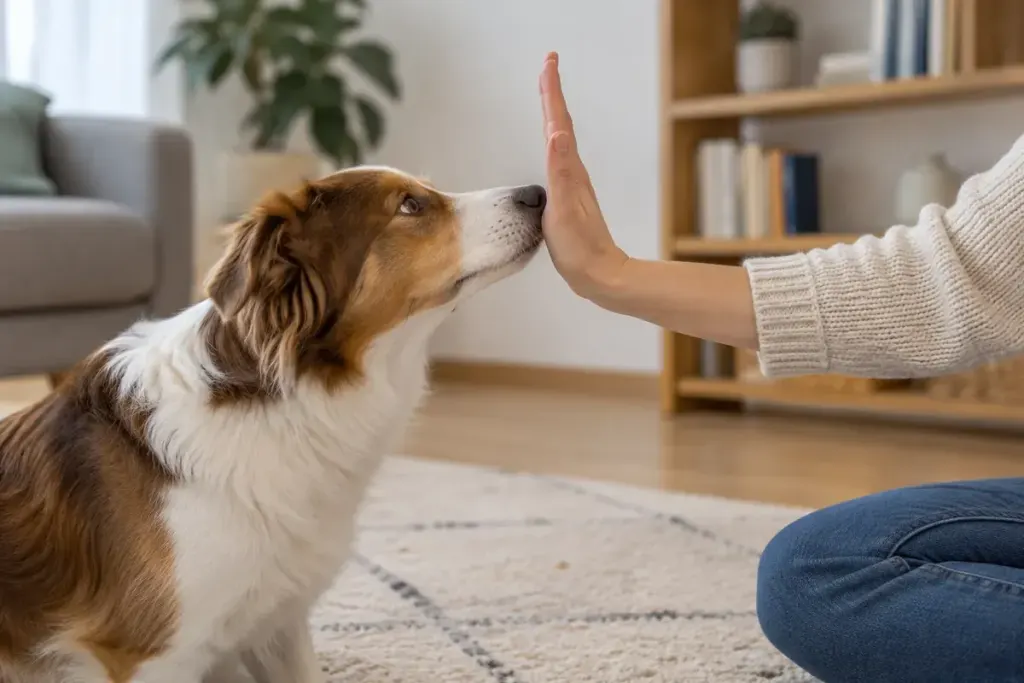
A hand target asks a dog to move its nose towards your offered hand. The useful part is the dog’s voluntary movement. Pushing your palm into its face may create contact, but it does not teach the same action.
Choose a quiet place and a moment when your dog is comfortable. Have small rewards ready and decide which brief word or click will mark the action you want. Keep the first practice easy enough that you can notice success immediately.
Offer, mark, reward
Present an empty hand close enough for a curious sniff without crowding the dog. When its nose touches the hand, mark that moment and give the reward. Withdraw the hand before offering it again, so each attempt has a clear beginning.
The American Kennel Club’s targeting guide describes building the nose touch with rewards and adding a verbal cue once the action is becoming reliable. Follow the dog’s response rather than increasing difficulty because a certain number of minutes has passed.
If the dog turns away, freezes or looks uncomfortable, stop and give it space. You can try an easier arrangement later. Do not chase its nose with your hand, restrain its head or withhold normal care to obtain a response.
Change one detail at a time
Once the simple touch is familiar, you might move the hand slightly to one side. Keep other details similar. Asking for a longer distance, a new room and a busy environment together makes it harder to know what caused confusion.
A brief note after practice can be useful: where you stood, how far away the hand was and whether the dog approached readily. End while the interaction remains pleasant rather than demanding one more repetition after interest has faded.
A hand target can become a cooperative movement cue, but it does not replace a lead, safe fencing or recall training. Use it within an environment where a missed cue will not put the dog at risk.