
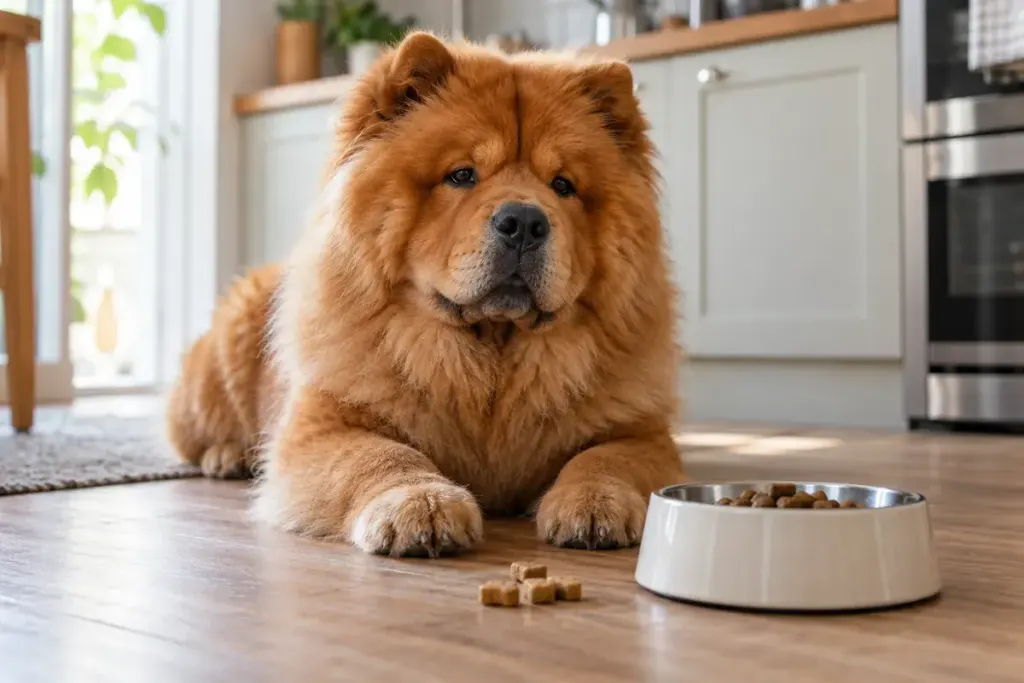
A handful of rewards can disappear during a good training session. Another family member then offers a chew, and dinner arrives as usual. Each person sees a small treat; the dog receives the total.
Make the day’s rewards visible
Set aside the planned training portion in a labelled container, away from the main food supply. Let everyone who trains the dog know which rewards are included. This is an organisation method, not a universal feeding allowance: the appropriate amount depends on the dog’s diet, size, health and veterinary advice.
Blue Cross’s feeding guidance explains that treats contribute to the day’s food intake. If your dog follows a prescription diet or has dietary restrictions, ask the veterinary team which rewards can be used and how they should fit into the plan.
Reward the behaviour, not the size of the snack
For a simple skill your dog is learning comfortably, small suitable pieces can make repeated rewards easier to manage. Choose a size and texture that are safe for that dog. Do not introduce an unfamiliar rich treat simply because a long training session is planned.
Some dogs will happily work for part of their usual food in an easy setting. Others may value play, access to a sniffing spot or another appropriate reward. Observe what helps your dog participate without turning every interaction into an extra meal.
Keep sessions short enough that the dog remains comfortable and interested. If the dog repeatedly refuses a normally valued reward, consider the environment and how the dog feels rather than escalating the food indefinitely. A change in appetite or other health concern deserves veterinary attention.
At the end of the day, compare the planned portion with what was actually used, including chews and treats from visitors. The aim is not to make training joyless. It is to keep a useful reward from becoming an invisible part of the feeding routine.