
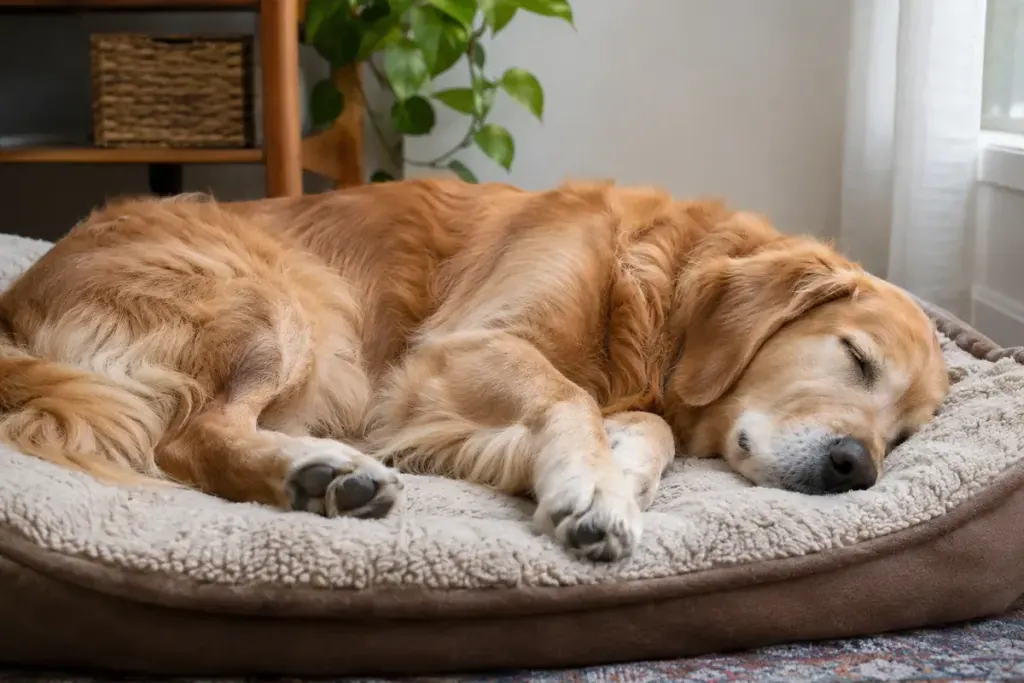
A breathing observation is most useful when you can describe the conditions around it. A dog panting after a walk and a dog asleep in a comfortable room are not giving you comparable measurements.
VCA’s veterinary guidance on home breathing-rate checks explains how resting or sleeping observations can support care, particularly for pets with heart disease. Ask your own veterinarian whether monitoring is appropriate and what change should trigger a call for your dog.
Keep the observation quiet
Watch from a position that does not wake or disturb the dog. One rise and fall of the chest counts as one breath. Follow the counting interval your veterinarian recommends and use a timer rather than estimating how long you have watched.
Record the result with the date, time and context: sleeping or awake, recent activity, room conditions and any other change you noticed. If the dog becomes alert, starts panting or moves around, note that rather than presenting the number as an undisturbed sleeping measurement.
A short video can help the veterinarian understand what you mean by a changed pattern. Capture it only if doing so does not delay care or stress the animal.
A number does not replace the whole picture
Look for changes in effort as well as rate. Difficulty breathing, collapse, or blue or very pale gums calls for urgent veterinary attention. Do not wait to complete a tidy series of readings when the dog appears distressed.
For non-urgent changes, a dated record can help the vet decide what assessment is needed. Avoid changing prescribed medication on the basis of a home count unless you have an explicit veterinary plan for doing so.
The purpose is to become a clearer observer, not to diagnose a heart or lung condition at home. A familiar baseline, taken under consistent conditions, can make a later conversation much more precise.