Everyday Dog Health
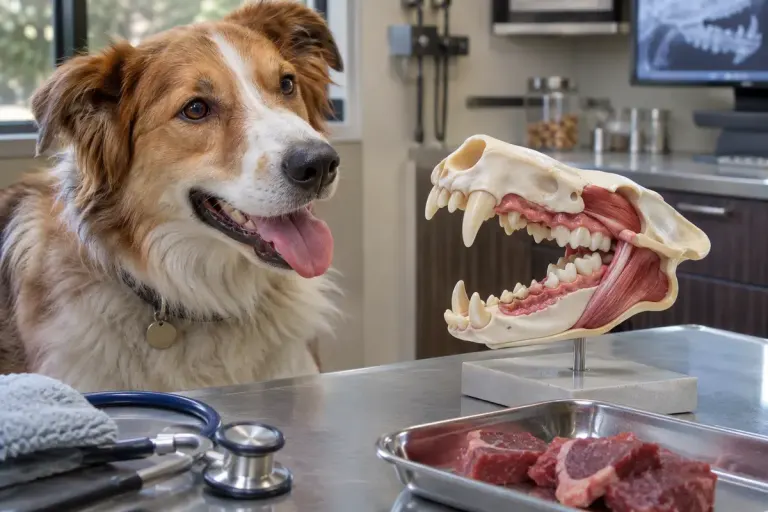
A dog’s carnassial teeth cut food with a shearing action
A dog’s carnassial teeth are a particular upper-and-lower pair. Learn where they sit and why a chewing change deserves a veterinary conversation.

Understand the dog beside you.
A dog’s carnassial teeth are a particular upper-and-lower pair. Learn where they sit and why a chewing change deserves a veterinary conversation.

Snorting and noisy breathing in short-muzzled dogs should not be dismissed as normal for the breed. Learn which observations help a veterinary assessment.

Front, rear and double dewclaws can differ in attachment and function. Learn why counting claws alone cannot explain an individual dog’s anatomy.

The small pad higher on a dog’s front leg is the carpal pad. Learn how to recognise it and describe a change without confusing it with a claw or new growth.

Heterochromia describes different iris colours. Learn how to separate a familiar appearance from a new eye change that needs veterinary attention.

Antibody titres can inform some canine vaccination discussions, but their meaning depends on the disease, test and veterinary context.

Repeated scooting can have several causes. Record the signs and arrange veterinary advice rather than attempting anal-gland treatment yourself.

A dog’s elimination diet can be disrupted by treats, chews or flavoured medicines. Build a veterinary-led plan that everyone in the household can follow.

A sudden snorting episode can be alarming. Learn which observations help a vet assess possible reverse sneezing and when breathing needs urgent care.