
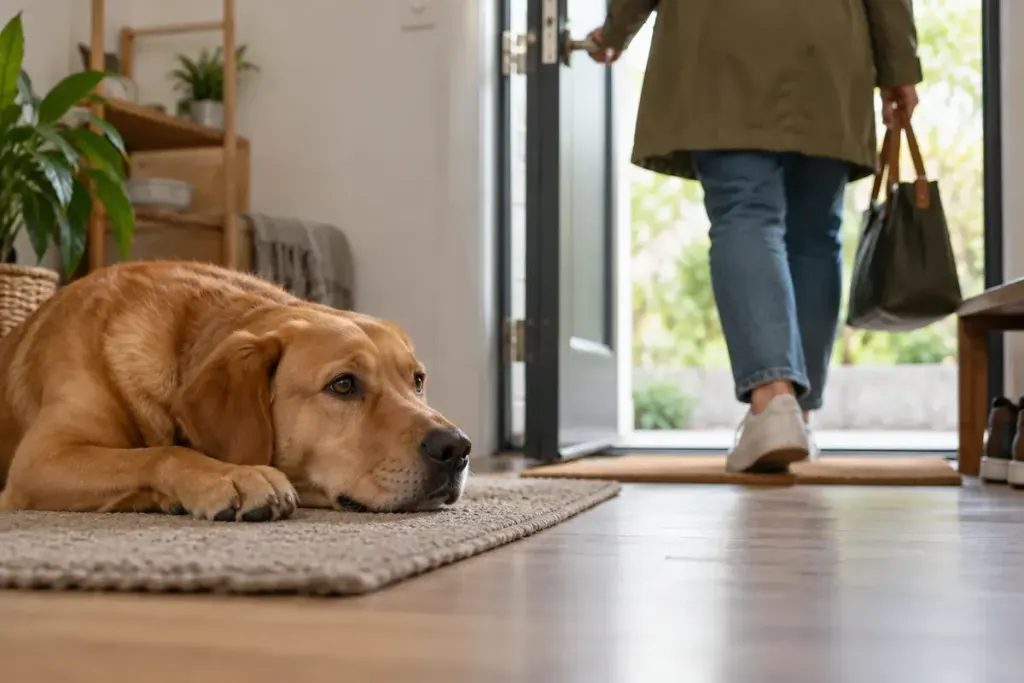
A dog that follows you from room to room may not be ready for a sudden long absence. Practising short periods apart gives you a chance to observe the dog’s response while the situation is still easy to adjust.
Dogs Trust’s time-alone guidance recommends gradual, positive practice and attention to signs that the dog is struggling. There is no single schedule that suits every dog. Persistent distress calls for support from a vet and an appropriately qualified behaviour professional.
Watch what happens, not just how long you were away
Begin with a safe, familiar setup and an absence short enough for the individual dog to manage calmly. Returning to a quiet room does not necessarily show that the entire absence was comfortable. Where appropriate, a camera can help you observe pacing, vocalising, or other changes without repeatedly opening the door.
Keep a simple log: what happened before you left, the approximate duration, the dog’s behaviour, and how they settled afterwards. “Rested, then stood by the door” is more useful than “good.” Look for patterns rather than judging a whole training plan from one attempt.
If the dog becomes distressed, shorten or reconsider the next practice instead of extending it to force adaptation. Do not punish behaviour that may be connected to fear. An arrangement for company or care may be needed while a professional helps you plan suitable training.
For a Chow Chow, as for any breed, use the dog’s actual behaviour rather than a stereotype about independence. A dog that enjoys quiet time near you can still find being left alone difficult. Progress should be measured by comfortable behaviour in a manageable routine, not by reaching a convenient number of hours as quickly as possible.