
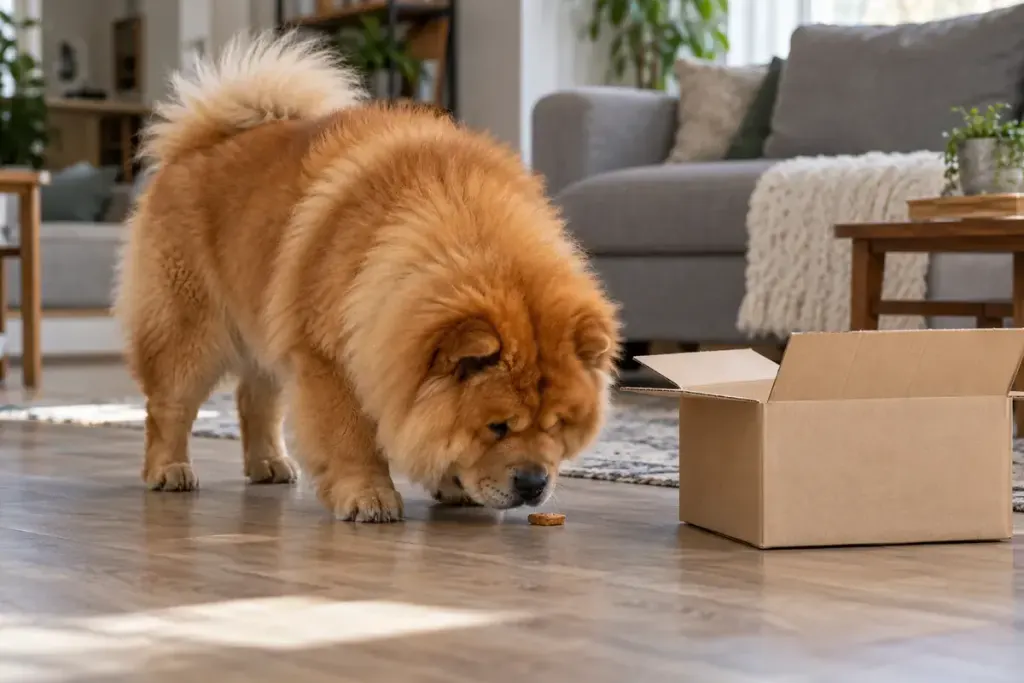
A scent game does not need to begin with a treat hidden behind furniture. For a dog learning the idea, an obvious reward in an easy place can be the most useful first search.
Dogs Trust’s enrichment suggestions include searching for treats or toys as a safe outlet for sniffing. Adapt the activity to your dog’s health, diet and preferences, and use veterinary advice where food restrictions or mobility issues apply.
Make the first find easy
Choose a quiet, clear area and a small suitable reward. Let the dog see you place it on the floor nearby, then allow them to approach. Avoid physically steering the nose towards it or repeating a cue while the dog is confused.
After several comfortable successes, make one small change: place the reward a little farther away or beside an open box. Keep the container safe, stable and free of staples, tape or pieces the dog might swallow. Supervise throughout, especially with a dog that likes to chew packaging.
Let behaviour set the difficulty
A dog searching steadily is having a different experience from one pawing frantically or abandoning the area. If the task becomes frustrating, reveal an easier reward and reduce the challenge next time. The aim is engagement, not proving how clever the dog is.
Keep other pets separate if food or toys might create competition. Count edible rewards within the dog’s normal food plan, and finish while the game is still comfortable. A short successful session is easier to repeat than a long search that leaves everyone impatient.
Make a simple note of the setup your dog enjoyed: surface, reward and hiding difficulty. Over time, that gives you several predictable indoor activities for ordinary days. It also helps distinguish a new task being too hard from a change in behaviour that may deserve a professional conversation.