
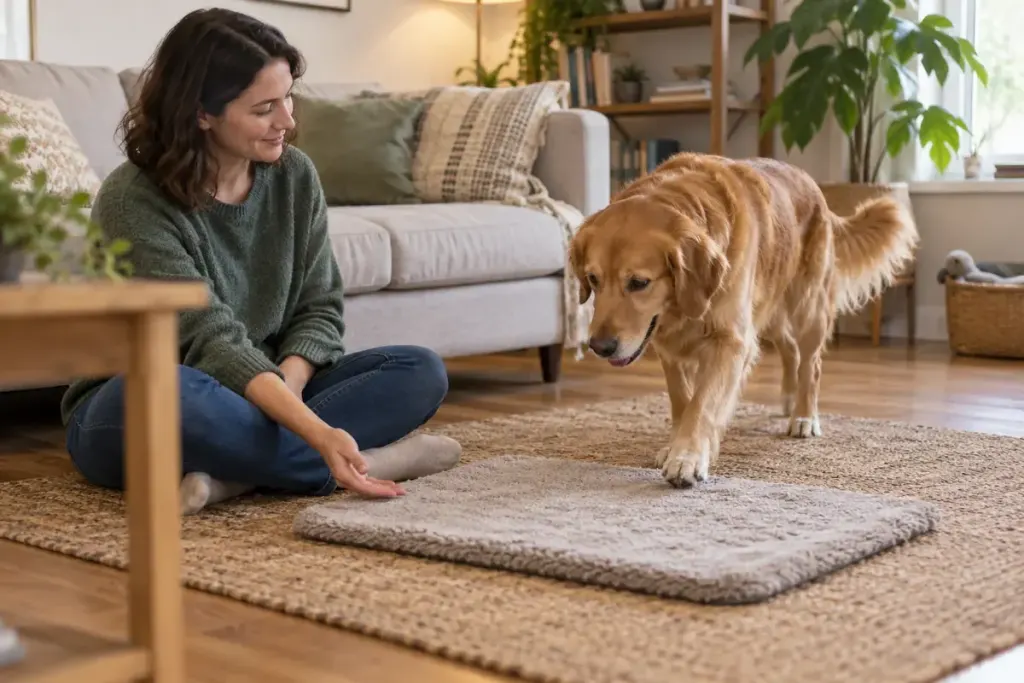
A mat can give your dog a familiar place to pause while you read, prepare a bag or talk to a visitor. The useful behaviour is relaxed settling, not simply staying still under pressure. Start when the household is quiet and your dog is comfortable enough to learn.
Dogs Trust’s guidance on restlessness includes creating a comfortable resting place and building relaxation through reward-based practice. A mat is one possible resting place; it should not become a penalty spot.
Make approaching the mat worthwhile
Put a non-slip mat on a stable surface away from busy doorways. Let your dog investigate. Quietly reward an interested look, a step onto the mat or a comfortable pause. Keep rewards small and suitable for the dog’s normal diet. Avoid placing the dog physically into a position or repeatedly telling them to lie down.
Once the mat is familiar, notice quieter choices: a loose body, a comfortable hip position or remaining there without scanning for the next instruction. Deliver a reward gently enough that it does not turn the exercise into an excited game. A few successful moments can be enough for an early session.
Change one part of the scene
Practise with you sitting in a different chair before adding a visitor or moving into a noisy room. If the dog repeatedly gets up, the session may be too difficult, too long or poorly timed. Give them a break and make the next attempt easier. Leaving the mat should remain possible.
Do not use the mat to keep a dog close to something that frightens them. Distance and professional support may be needed for that problem. New restlessness, discomfort when lying down or a marked change in behaviour also warrants a veterinary conversation rather than more training repetitions.
A successful mat routine is ordinary: the dog can rest, the person can continue a quiet activity, and neither needs constant reminders to make it happen.