
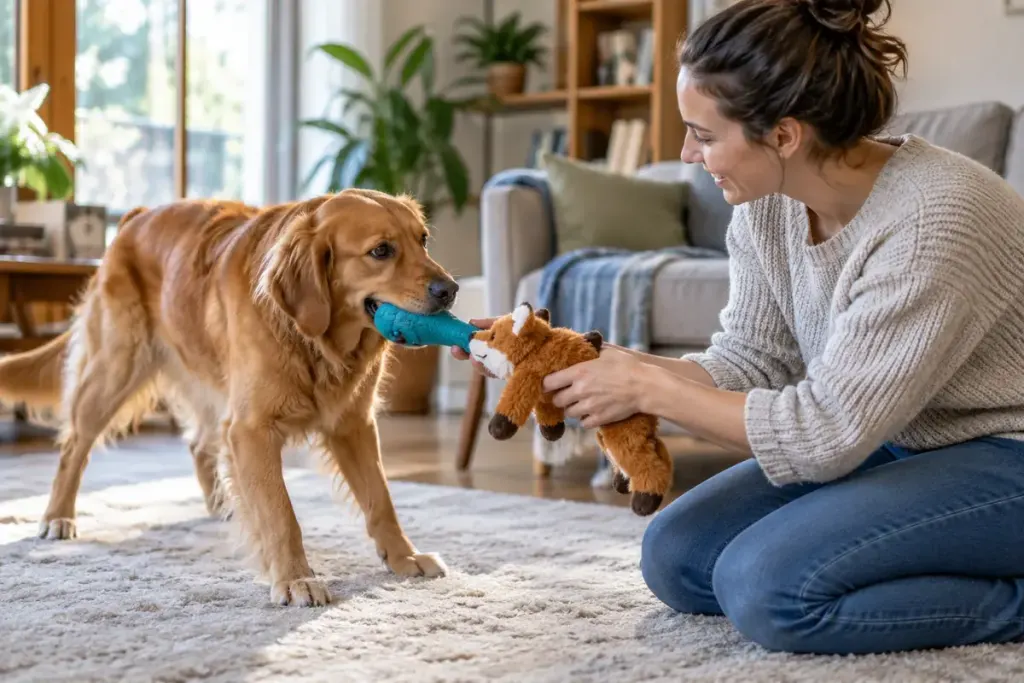
A dog picks up a toy, and a hand immediately reaches to take it away. Repeating that exchange can turn an ordinary object into something worth protecting. A planned trade gives the dog a different experience: letting go can lead to something pleasant, and it does not always end the game.
Dogs Trust’s seasonal safety advice recommends teaching a drop cue by exchanging a toy for a treat, a useful skill when dogs encounter unsuitable objects outdoors. Practise the skill with safe items before expecting it to work during a stressful moment.
Begin where the stakes are low
Choose a familiar, low-value toy and a quiet space. Have a suitable reward ready before approaching. Offer the exchange without looming over the dog, chasing them or pulling against their mouth. When the dog releases the toy, reward that release. A qualified reward-based trainer can help you introduce and time the verbal cue consistently.
When it is safe, returning the toy after the reward can help make the exchange feel less like the permanent loss of something enjoyable. Keep practice brief. One relaxed exchange is more useful than repeated attempts after the dog has become frustrated or stopped participating.
Watch the dog, not just the object
Imagine practising with a soft toy on the living-room floor. The dog releases it easily, takes the reward and waits for the next game. That success does not establish that you can reach for a food bowl, a stolen bone or an unfamiliar object with the same confidence. Context and value matter.
Freezing, stiffening, growling or moving away with an object are reasons to give space. Do not punish a warning or test how close your hand can get. Seek help from a qualified behaviour professional if guarding occurs, and manage the environment so children cannot approach the dog around valued possessions.
If the object may be poisonous, sharp or already swallowed, contact a veterinarian promptly for advice. A training exercise is not a treatment for an emergency. The everyday aim is a cooperative skill that you rehearse when everyone is calm, with the dog’s body language setting the pace.