
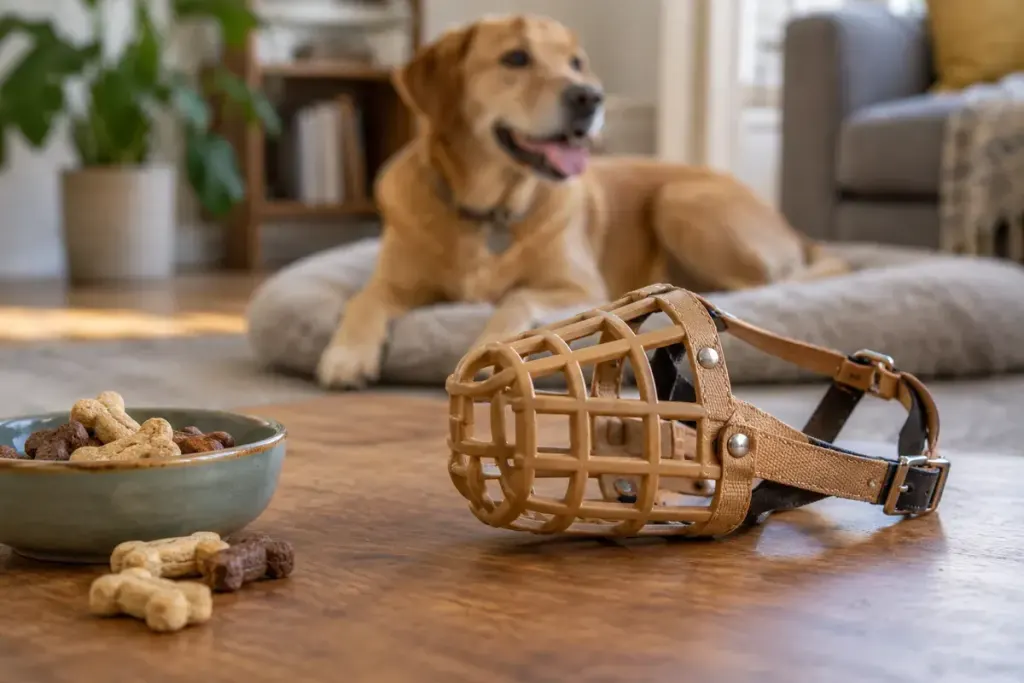
A muzzle is easier to introduce in a quiet practice session than at the moment a frightened dog urgently needs one. Familiarity gives the dog an opportunity to learn what the equipment feels like before it is combined with an unfamiliar place or procedure. Wearing a muzzle is not, by itself, a statement about a dog’s character.
Dogs Trust’s muzzle-training guidance describes a gradual, reward-based introduction. Battersea also explains the importance of fit and patient training. Choose equipment appropriate to the dog and intended use; a suitable basket design should allow necessary activities such as panting and drinking. Ask a qualified professional for help with fit or behavioural concerns.
Let the dog investigate before fastening
Begin with the muzzle present at a comfortable distance. Reward calm interest, then progress in small steps toward voluntary nose entry. Avoid pushing the dog’s face into it or using food to lure the dog into a situation that immediately becomes frightening. Short sessions can end while the dog is still comfortable.
Fastening and wearing duration are later steps, not the opening move. Watch the whole dog for signs that the exercise is becoming too difficult. If the dog repeatedly withdraws, freezes or struggles, simplify the session and get advice rather than tightening the equipment or increasing pressure.
Practise in easy settings before expecting the same response at a veterinary appointment or other challenging location. Discuss the visit with the veterinary team in advance; they may want a particular handling plan. A muzzle does not remove the need to reduce distress or manage the environment.
Never use it as punishment or leave a muzzled dog unattended. Continue to provide appropriate supervision, space and care. The useful goal is a dog that recognises the equipment and can participate in a calm routine, with professional support where needed. Training should make necessary handling more manageable, not make discomfort invisible.