
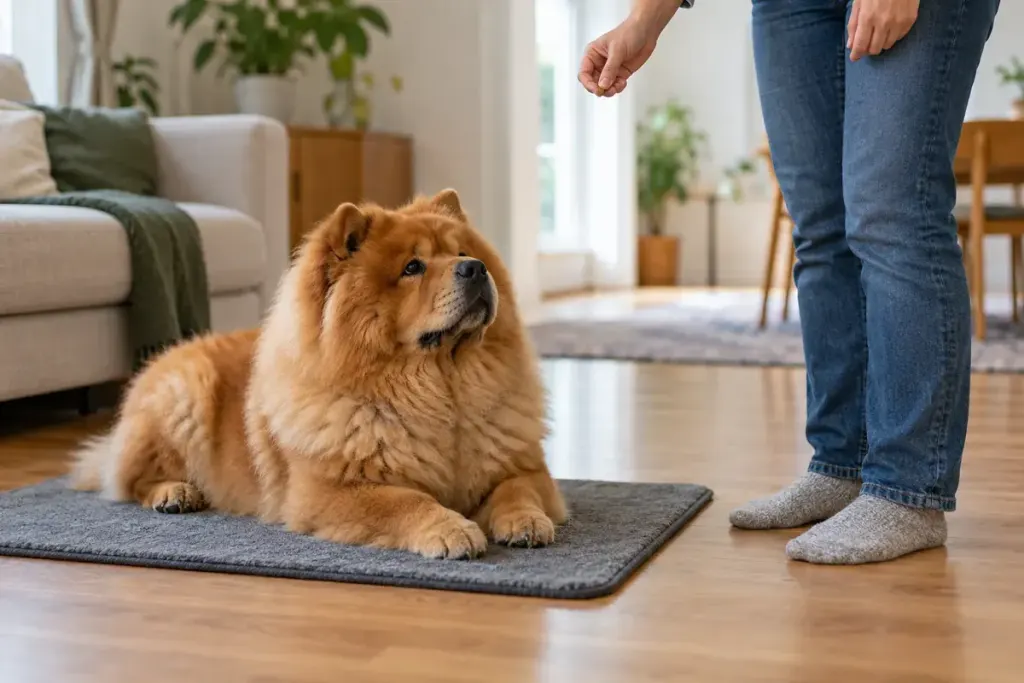
“Stay” tells a dog to remain in place. Something also needs to explain when that job is finished. Without a clear ending, the dog may learn to leave whenever you reach for a lead, look away or move your hand.
The American Kennel Club’s stay guide describes a release cue as the signal that the dog is free to move. Choose a word you can use consistently and avoid one you say casually throughout the day if that would create confusion.
Make the first repetitions very small
Practise in a quiet, safely enclosed place. Ask for a comfortable position your dog already knows, reward a brief successful pause, then give the release cue and encourage movement. Keep the exercise short enough that you are teaching the ending, not testing endurance.
Notice your body language. If you always step away before saying the word, your movement may become the signal. A qualified reward-based trainer can help you make the cue clear without adding pressure.
If the dog gets up early, calmly reset and make the next repetition easier. Do not punish a misunderstanding or keep increasing the waiting time until the dog struggles.
Separate practice from real-world safety
A release cue is not a substitute for a lead, gate or other appropriate management near roads. Build the skill in controlled conditions before adding distractions. Increase duration, distance and distraction separately, rather than changing all three at once.
Tell everyone in the household which word you use and what it means. One person releasing with “free” while another expects the dog to infer an ending from a gesture makes the task harder.
End on a manageable success and give the dog a break. The useful result is a shared signal with a predictable meaning, not a long, motionless performance. If waiting appears uncomfortable, review the position and seek veterinary advice where pain or mobility could be involved.