
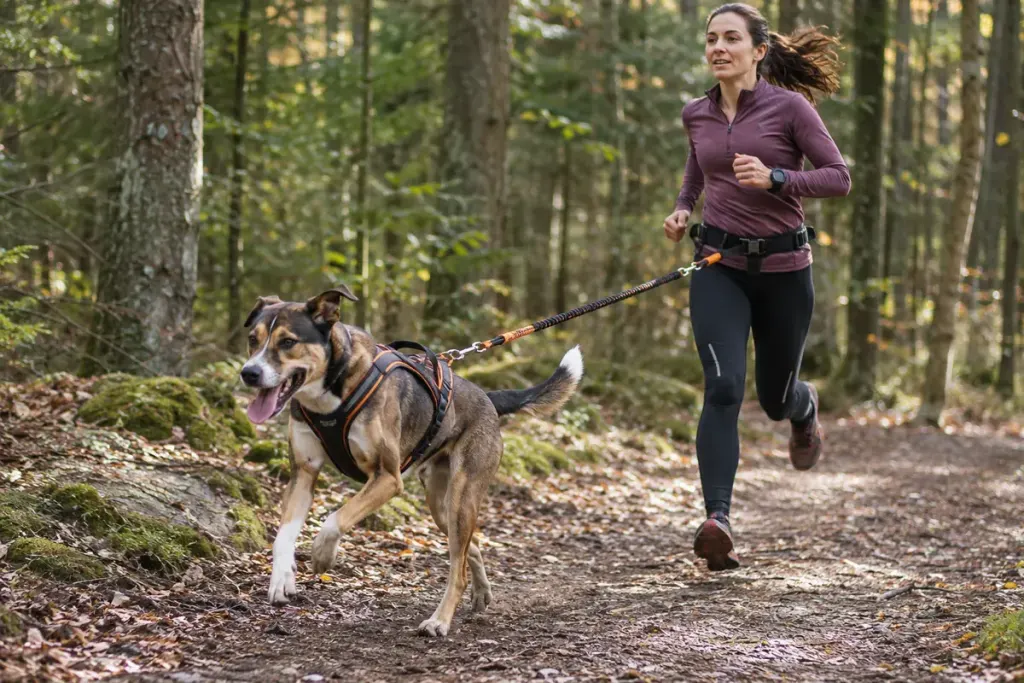
Running while holding a dog’s ordinary lead is not the same setup as canicross. In canicross, the dog runs ahead in a suitable harness, connected through an elastic line to a belt worn by the runner. The equipment is intended to work as one system.
Fit both ends of the line
The Royal Kennel Club’s introduction to canicross describes the harness, bungee line and waist-belt arrangement. The dog’s harness should be chosen for the activity and fitted with knowledgeable help; an everyday walking harness is not automatically a pulling harness.
The runner’s belt matters too. Its fit and connection should be assessed together with the dog’s size, the line and the conditions. Copying the appearance of another pair does not tell you whether your own equipment is appropriate.
Begin with communication, not distance
A coached introduction can establish how you will start, slow down, turn and stop. Practise those cues in a manageable setting before adding other teams, narrow paths or a race atmosphere. A dog should not have to discover the meaning of a sudden change of direction through a jerk on the line.
Ask a veterinarian whether the activity suits your dog’s age, health and current condition. Heat, surface and individual fitness also affect what is sensible on a particular day. The goal is an enjoyable shared activity, not reaching a mileage target despite the dog’s signals.
Plan for other path users
Choose a permitted route and think about passing before the path becomes crowded. Allow room for walkers, cyclists, wildlife and dogs that do not want a close greeting. A well-controlled short session offers more useful learning than a long run spent untangling encounters.
Afterward, inspect the harness contact areas and notice whether either partner moved comfortably. If the dog seems sore, reluctant or unusually tired, stop and seek appropriate advice rather than increasing the training.
Competition rules, age limits and required equipment vary. Check the current organiser’s requirements before entering. A local canicross club can help connect the equipment, handling and welfare decisions into a progression that makes sense for both dog and person.