
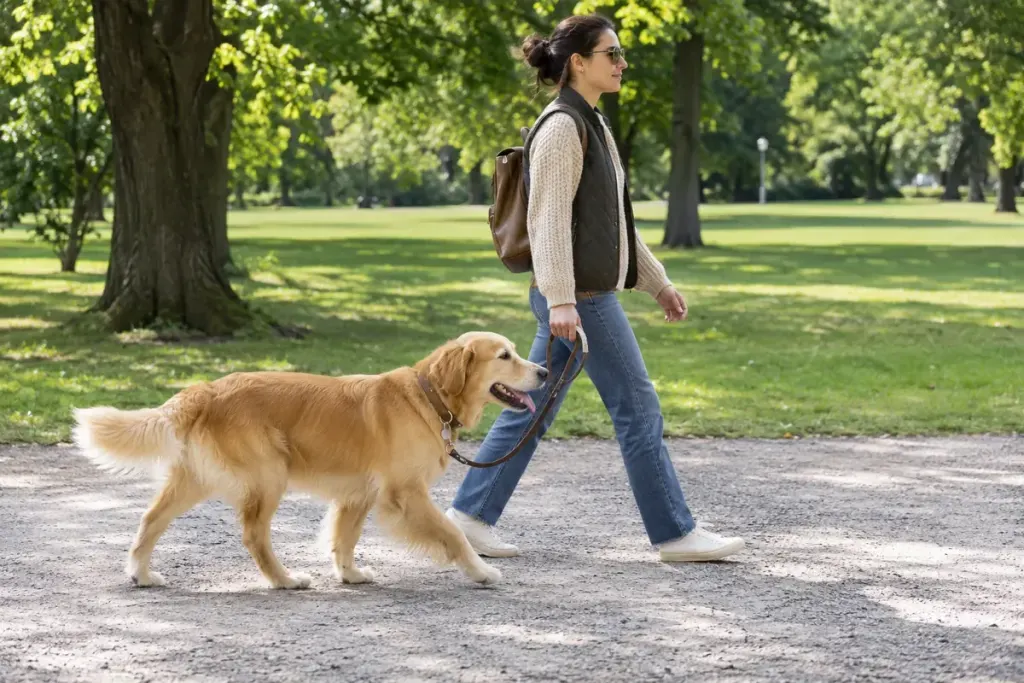
A dog walking beside you may briefly settle into a loose, easy rhythm that looks different from a tidy trot. Watch the feet rather than judging the movement from the sway of the coat. You may be seeing an amble.
The American Kennel Club glossary describes the amble as a gait in which the legs on one side move nearly, but not quite, together. It is often seen during transitions between walking and other gaits. The timing is the useful detail: nearly paired is different from perfectly simultaneous.
Observe at a comfortable pace
On an ordinary walk, notice when the rhythm appears. Is the dog matching a person’s slow pace, changing speed or moving around an obstacle? A short side-on video can help you see the sequence, provided filming does not distract from handling the dog safely.
Choose level, secure ground and let the dog move comfortably. There is no need to pull the lead tight, chase the dog or repeat a movement until it becomes tired. A clip that includes the approach and departure is more informative than a single still image of lifted paws.
Keep description separate from diagnosis
“The same-side feet almost move together for a few strides” is an observation. “The joints are healthy” or “the dog has a particular disorder” would require evidence that a casual gait description does not supply. Breed, body shape, speed and circumstances can all affect what a viewer notices.
If the movement is new, the dog appears painful, limps, struggles to bear weight or is reluctant to move, seek veterinary advice rather than treating a gait name as reassurance. Save a brief recording of the change if it can be made without delaying care.
Learning the word amble should sharpen your attention, not turn every walk into a performance assessment. The most useful comparison is often with that individual dog’s comfortable, familiar movement over time.