
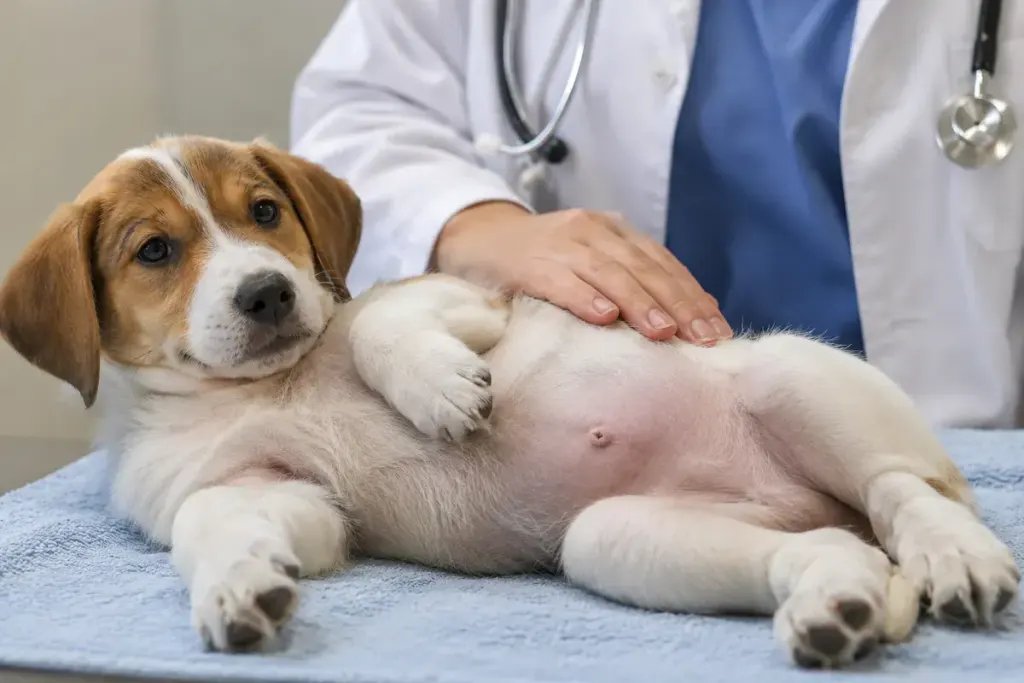
A small bump at a puppy’s belly button can be easy to dismiss if the puppy is eating and playing normally. It still deserves a veterinary check. Appearance alone cannot tell an owner what is inside the swelling or whether treatment is needed.
VCA’s explanation of umbilical hernias describes tissue protruding through the area of the umbilicus. The opening can involve abdominal fat or other tissue, and the veterinary assessment determines the appropriate plan.
Describe what you noticed
Tell the vet when the bump was first seen, whether it appears to have changed and whether the puppy seems uncomfortable. A dated photograph can support the history, but it does not replace an examination. Avoid repeatedly pressing the area to see whether it changes shape.
Do not tape a coin over the bump, bind the abdomen or attempt to push tissue back yourself. Those approaches do not establish a diagnosis and can create additional problems. Ask the vet what observations are useful while you wait for the appointment.
Make the follow-up specific
If the recommendation is monitoring, ask what change should trigger an earlier call and when the planned recheck will happen. If surgery is recommended, ask about the timing, preparation, recovery arrangements and any relationship to other planned procedures. A neighbour’s puppy may have had a different-sized defect or a different clinical situation.
Pain, a rapidly changing swelling, vomiting or a puppy becoming markedly unwell calls for prompt veterinary advice. Do not wait for a routine check because the bump has previously seemed harmless.
For a newly acquired puppy, request the existing examination notes and tell the new practice what was recorded. “The breeder said it was fine” is not as useful as a dated veterinary assessment and a clear follow-up recommendation.
The practical aim is neither panic nor reassurance from a photograph. It is to have the swelling identified, understand the advice for this puppy and know what to do if the picture changes.