
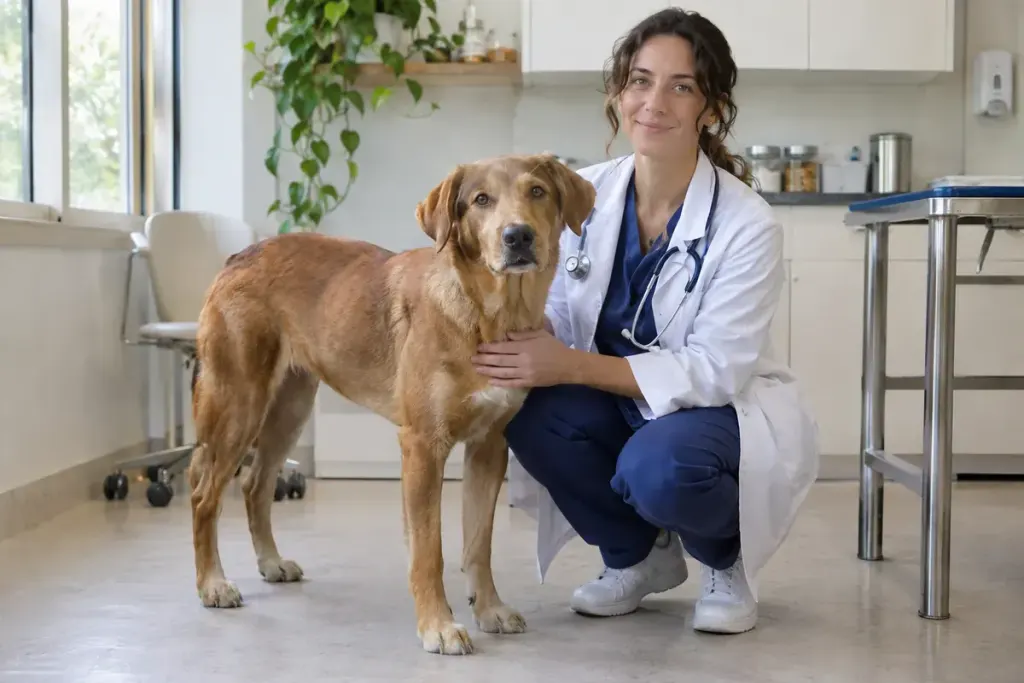
A dog briefly skips on a hind leg, then returns to an ordinary stride. It is tempting to give that movement a name after watching a video online. One possible cause is patellar luxation, but a skipping step alone is not a diagnosis.
The patella is the kneecap. With luxation, it moves out of the groove where it normally tracks. VCA’s guide to luxating patella explains the condition, its grading, and the range of management decisions. A veterinarian assesses the knee and the dog as a whole, rather than identifying a grade from a walking clip.
Make the observation useful
If the change is occasional and the dog is comfortable, note when you first saw it, which leg appears involved, and whether it happens during a turn, after rest, or on a particular surface. A short video of an episode that occurs naturally may help the consultation.
Do not repeatedly exercise the dog to reproduce the movement, and do not try to push a kneecap back into place yourself. If the dog is painful, suddenly cannot bear weight, or has a marked change in mobility, seek prompt veterinary advice instead of waiting for a better recording.
A grade does not replace an individual plan
Patellar luxation is commonly described using four grades, but the number is only part of the assessment. Symptoms, comfort, limb function, and other findings influence the advice. A diagnosis does not mean every dog automatically needs the same operation or exercise restriction.
At the appointment, ask what the examination showed, what activity is appropriate now, and which changes should prompt an earlier review. If surgery is being discussed, ask about the reason for recommending it for this dog and the recovery arrangements you would need to manage.
A simple home record can then focus on the agreed observations: comfortable walking, changes in use of the leg, and the effect of the prescribed plan. It is more informative than repeatedly trying to decide whether a gait “looks like” someone else’s dog on a screen.