
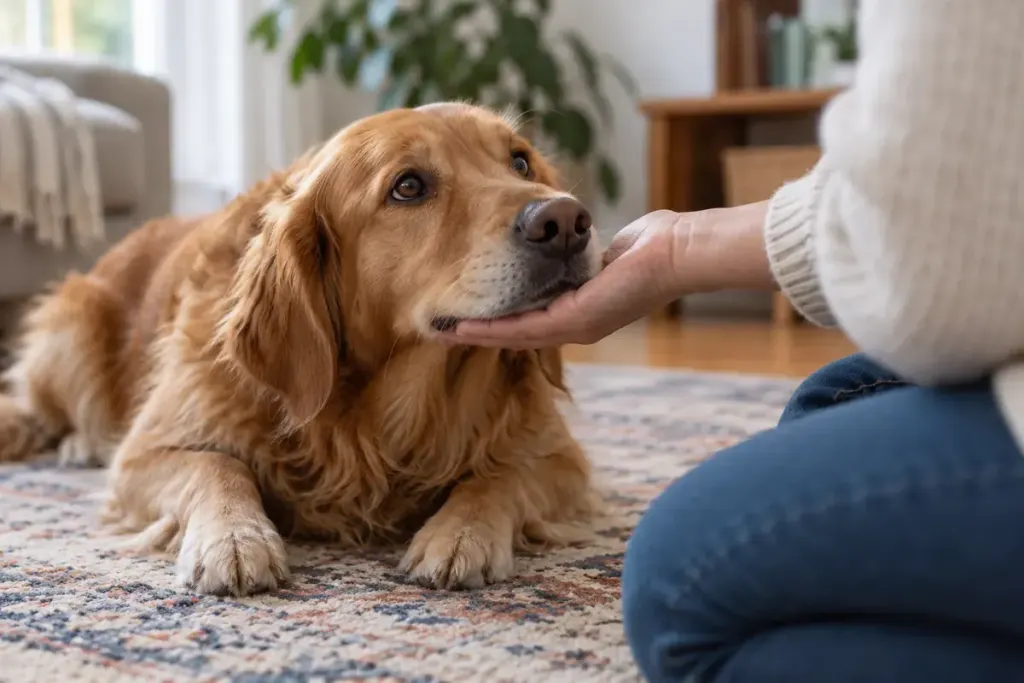
A dog resting its chin in your palm creates a small, useful moment of stillness. The value is not that you can hold the head in place. It is that the dog can learn a familiar position for gentle handling practice—and leave it when uncomfortable.
Dogs Trust includes a reward-based chin-rest exercise in its guidance on preparing dogs for mouth care. The organisation also recommends gradual preparation for veterinary examinations. The position is a training tool, not permission to perform a painful procedure at home.
Make the first version almost uneventful
Choose a quiet place and a comfortable standing or sitting position. Offer an open palm at a natural height. Reward a brief, voluntary contact, then reset. A food lure can help introduce the movement, but work towards the dog choosing the position without food held against its nose.
Begin with a moment of contact rather than a long hold. When that is comfortable, practise a tiny increase in duration. Adding duration, a new room and handling all at once makes it difficult to discover which change worried the dog.
Do not close your fingers around the muzzle or push the head down. If the dog lifts away, pause the handling practice. Watch the whole body as well: stiffness, avoidance or repeated attempts to leave matter even if the chin briefly touches your hand.
Keep a simple practice note
A useful entry might read: “Kitchen, two short chin rests, comfortable until my other hand moved.” That gives the next session a clear starting point. It is more informative than recording that the dog was “good” or “difficult.”
For a dog with pain, a bite history or strong fear of touch, ask the veterinary team for an individual plan. Necessary treatment may need a different approach. At home, the aim is a predictable, low-pressure routine that helps you notice discomfort early—not a way to make the dog endure more handling.