
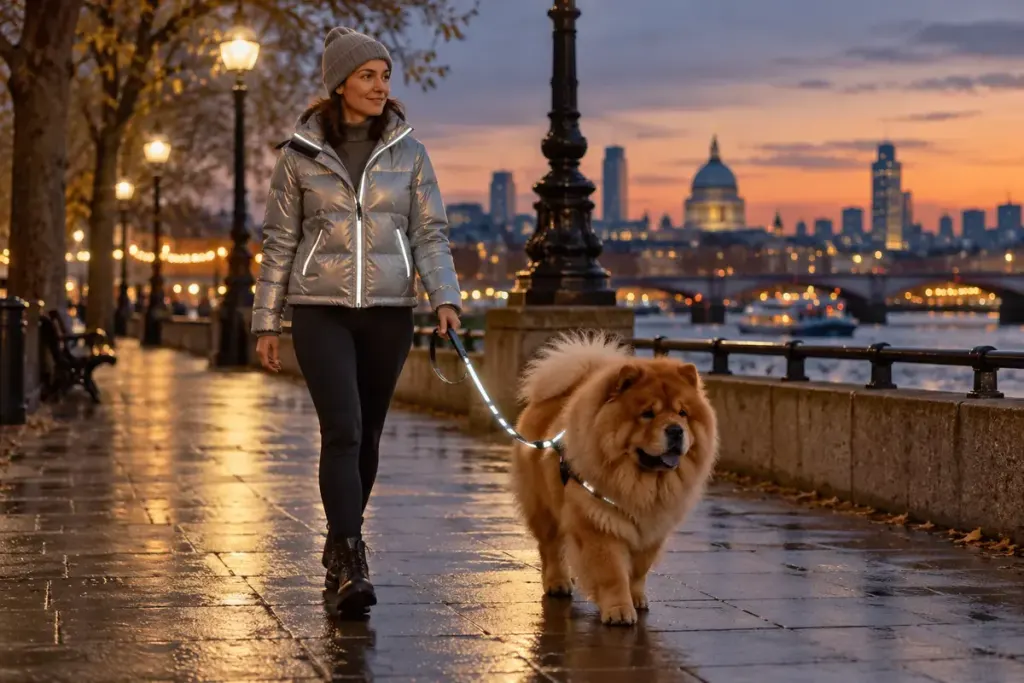
A familiar pavement changes after sunset. Parked cars hide movement, a dark coat blends into the background and a lead may be almost invisible to someone approaching. Planning for visibility helps both the dog and the person holding the lead.
Choose a route with usable lighting and safe places to cross. A shorter, familiar loop may be more comfortable than a long unlit path. Check the surface for obstacles and leave enough time to walk without hurrying.
Check the whole outline
A reflective accessory on the dog is useful only when it can be seen. Thick fur can cover a narrow collar, so check the fit and visibility of any equipment on your own dog. Use products intended for pets and avoid anything that restricts movement, breathing or normal lead attachment.
Make yourself visible too. Reflective details and a suitable light can help, but do not assume they guarantee that a driver has noticed you. Keep crossings deliberate and avoid stepping between parked vehicles without a clear view.
Hold the lead at a length that lets you respond calmly to nearby traffic and other walkers. A long line stretched across a dark path can become a trip hazard. Do not wrap it tightly around your hand or attach improvised lights where they interfere with the fastening.
- Check that the lead, harness and clips are sound before leaving.
- Carry a charged phone while keeping attention on the route.
- Use a light to inspect the ground without shining it into faces.
- Allow extra space when another dog approaches.
Watch your dog’s behaviour rather than insisting on the usual distance. Hesitation may mean something in the environment feels unfamiliar. Turn back or choose a quieter section when needed.
After the walk, wipe or check the equipment as appropriate and place the light where it can be charged. The best preparation for tomorrow’s evening walk often takes less than a minute when you return today.