
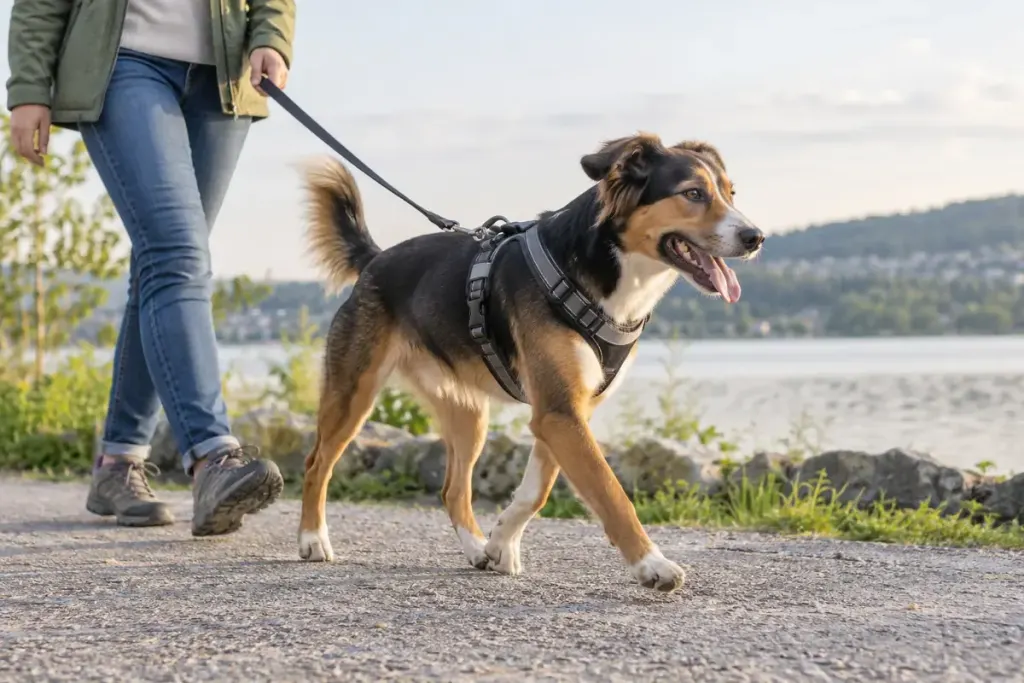
A harness can look tidy while a dog stands still and then shift when the walk begins. A fitting check should include gentle movement in a secure setting, not just a photograph of the straps at rest.
Start with the manufacturer’s measurements and fitting instructions for that design. Neck and chest shapes vary, and a size label is not a universal measurement. A thick coat can also make it harder to see where a strap actually sits.
Watch the straps as the dog moves
After fitting the harness, allow a few calm steps in a safe enclosed place. Look for twisting, rubbing behind the front legs, a shifting chest section or a fastening that sits awkwardly. Do not pull hard on the lead to create an artificial test.
Check that the dog can move naturally and that the harness remains secure according to its design. If the fit is uncertain, ask a qualified professional or the manufacturer for help before relying on it near traffic or in an unfamiliar place.
Make adjustments gradually
Change one adjustable section at a time and check again. A tighter strap is not automatically a better solution; it may simply move pressure elsewhere. Stop if the dog shows discomfort or the equipment appears damaged.
Inspect buckles, stitching and attachment points regularly. Recheck fit after growth, a coat change or a noticeable change in body condition. Keep the fitting guidance so a second person does not undo the adjustment by guessing.
A harness is equipment, not a substitute for training or a way to solve pain. If walking suddenly becomes difficult, or you notice soreness, seek veterinary advice. The everyday goal is a secure, comfortable arrangement that works when the dog moves, with no need to struggle against the straps to complete the walk.