
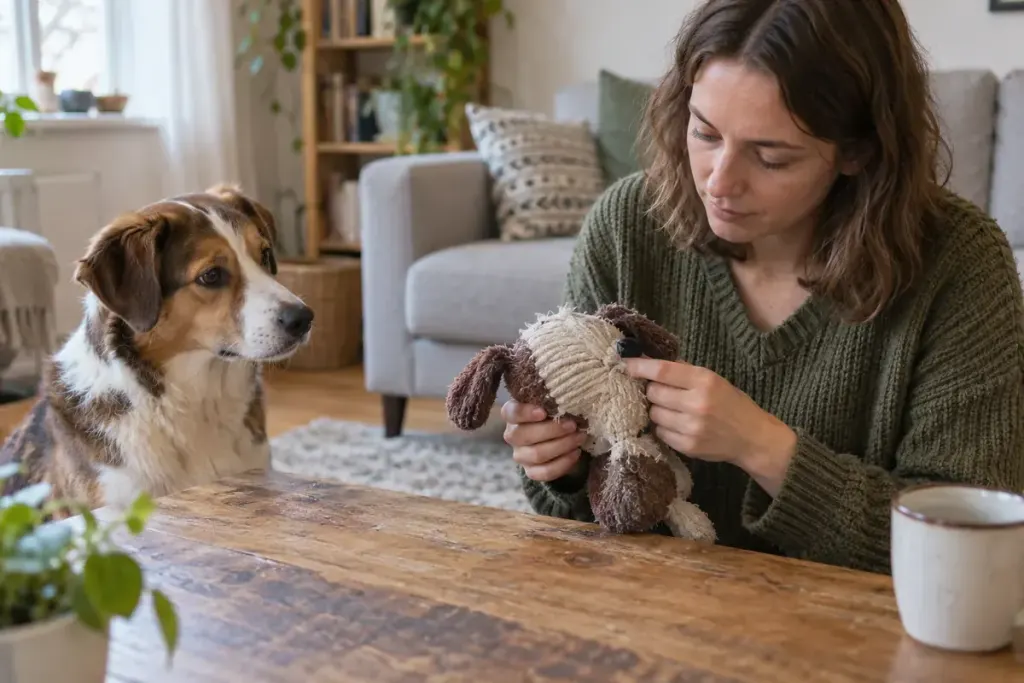
A favourite dog toy can change gradually enough that its damage becomes familiar. A small split becomes a flap, the flap becomes a loose piece, and the toy still gets thrown across the room because the dog enjoys it. Make inspection part of putting toys away, while the object is already in your hand.
Look at the parts your dog grips most often. Check seams, handles, squeakers, rope strands, and the edges of hollow rubber toys. A toy that has become small enough to swallow is a different object from the one you originally chose.
Watch the way your dog uses it
A toy suitable for supervised retrieving may not be appropriate for prolonged chewing. Blue Cross explains that dogs can damage toys and ingest pieces, and emphasises choosing suitable items and supervising use. No label replaces watching what your particular dog actually does.
Remove a damaged toy calmly, using a familiar exchange with a safe alternative if needed. Do not turn the removal into a chase that encourages the dog to grab or swallow the object. If taking items away regularly creates tension, ask a qualified behaviour professional for help with a safe exchange routine.
A quick repair may create another loose part
Tape, glue, or a hurried stitch does not establish that a chew toy is safe again. Follow the manufacturer’s replacement and cleaning guidance. When structural damage exposes stuffing or creates detachable pieces, retiring the item is often the clearer decision.
Keep unsuitable toys out of reach, including in the rubbish. Replace the activity as well as the object: a dog that enjoyed carrying a soft toy may want a different option from one that enjoyed a supervised tug game.
If you think your dog swallowed part of a toy, contact a vet promptly for advice. Describe the material, approximate missing size, and when it happened. Do not wait for a routine toy inspection to resolve a possible ingestion.