
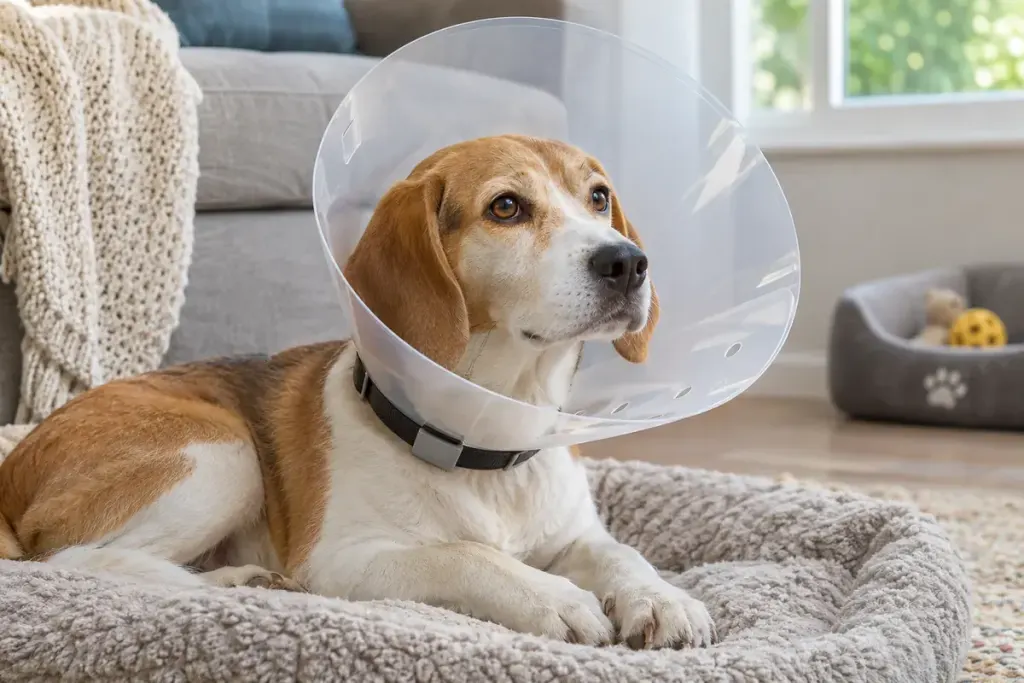
A recovery collar has a practical job: stop a dog reaching an area that needs protection. Its success is not measured only by whether the dog tolerates it for a few minutes. It must also protect the right place without creating a new problem.
VCA’s guidance on Elizabethan collars explains their use in preventing licking, chewing or scratching. It recommends checking the fit, including room for two fingers between the collar and the neck. Your veterinary team’s instructions take priority for your dog’s condition and the specific device.
Check function as well as size
During a supervised check, watch whether the dog can still reach the wound or irritated area. A collar that looks substantial may protect one body location but not another. If the dog reaches the site, ask the clinic to reassess the arrangement rather than simply tightening the neck fastening.
Observe breathing, swallowing and movement. Ask the clinic how to adapt meals and drinking while keeping the prescribed protection in place. Do not leave the collar off because a bowl is inconvenient without agreeing a safe plan.
Make the room easier to navigate
Remove unnecessary obstacles from the route to the resting place. Give the dog time to turn around a chair or doorway instead of pulling them through it. These are practical environmental adjustments, not replacements for checking medical fit.
Keep a short note for the vet: the device used, the protected area, whether the dog can reach it, and any difficulty you observed. A photograph or brief video can help the clinic understand a fit problem without relying on “the cone seems wrong.”
Inflatable collars, soft collars and recovery garments are not interchangeable for every injury. Discuss alternatives with the treating team, particularly if the current collar causes distress or fails to prevent access.
Seek prompt advice if there is breathing difficulty, marked swelling, rubbing injury or worsening wound trouble. The best collar is the one that safely performs the job your dog currently needs, with a plan for everyday care around it.