
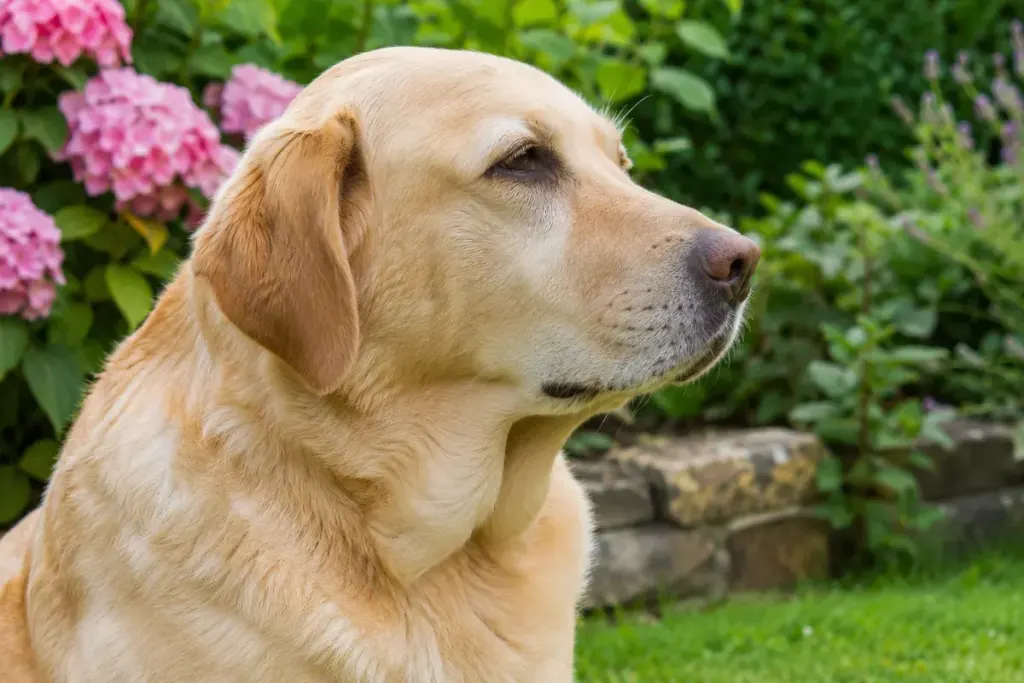
A dewlap is a loose fold of skin beneath the jaw or neck. Seeing one does not, on its own, identify an illness. What matters for everyday care is knowing your dog’s usual appearance and noticing a change without trying to diagnose it from a photograph.
A familiar soft fold and a newly swollen area are not observations to describe in the same way. If something has appeared suddenly, is painful or is changing, contact your veterinary practice rather than assuming it is simply normal loose skin.
Look gently, without turning a check into a struggle
During a calm moment, notice whether the skin looks comfortable and whether the dog reacts differently to normal handling. Do not pull hard on the fold or restrain a distressed dog to obtain a better photograph. A description of the behaviour is useful information too.
VCA’s veterinary guidance on pyoderma explains that closely apposed skin folds can create warm, moist conditions in which infection develops. Redness, odour, moisture, itching or discharge warrant a veterinary conversation; the cause cannot be established by the shape of the fold alone.
Keep a short record of when you first noticed the change and whether it followed bathing, a new product or another event. Describe the sequence without assuming the event caused the problem. Photographs taken in similar light can help show a visible change, provided taking them does not upset the dog.
Avoid borrowing a treatment from another dog
Do not apply household disinfectant, essential oils or leftover medication to the area. Ask the vet whether cleaning is needed and which product and method suit this dog. A care routine prescribed for one animal’s folds may be unsuitable for another.
Sudden neck or facial swelling with breathing difficulty requires urgent veterinary help. For less urgent concerns, arrange an assessment and bring the observations you have collected.
The useful habit is familiarity: know what the area normally looks like, then report a meaningful difference. A descriptive word such as dewlap helps identify a location; it does not replace an examination.