
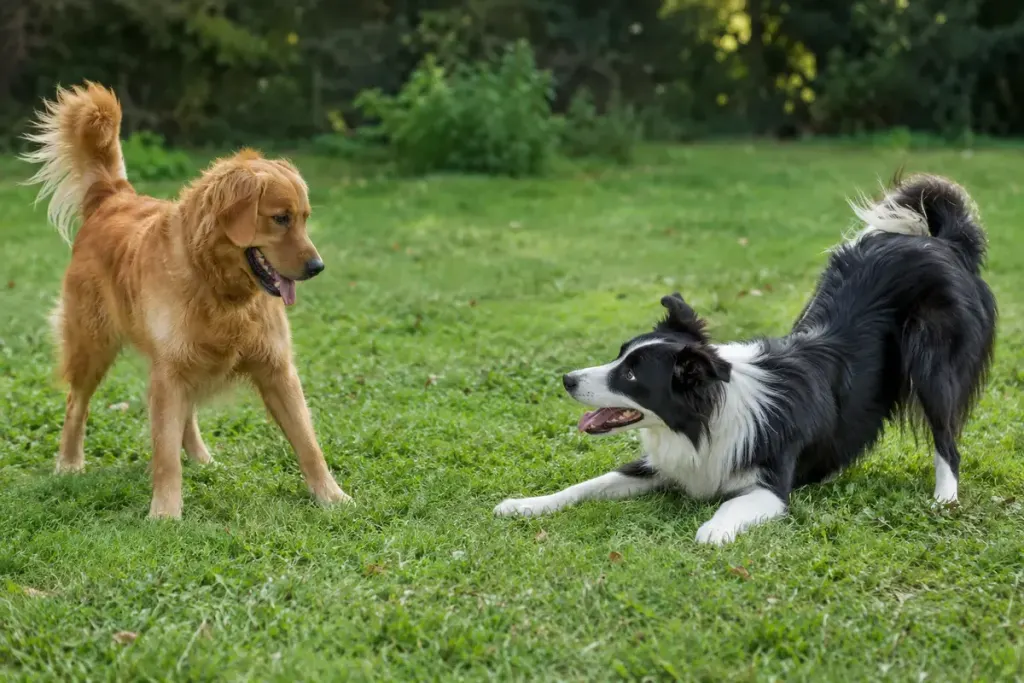
Front legs reach down, the rear stays raised, and the dog springs sideways. A play bow can be a recognisable invitation. The interesting part is what happens around it: how the other dog responds and whether both animals continue to look comfortable.
ASPCApro’s body-language guidance describes play bows alongside loose, bouncy movements and brief pauses. It also stresses assessing the whole animal in context. A single photograph cannot establish that an entire encounter is enjoyable.
Read an exchange, not a pose
Observe a few seconds before and after the bow from a suitable distance. Does the approaching dog move loosely? Does the other dog choose to engage, pause or move away? Avoid treating the invitation as an obligation for its recipient.
Body size, familiarity and the surroundings can change what is manageable. An open space with room to disengage is different from a narrow passage where one dog cannot get past the other. A cheerful-looking first moment does not guarantee that the next minute remains comfortable.
- Watch both dogs rather than following only the more active one.
- Notice pauses and opportunities to move away.
- Take stiffness, repeated avoidance or escalating distress seriously.
- Keep supervision and a safe separation plan appropriate to the dogs involved.
Do not stage a greeting to obtain the signal
There is no need to bring unfamiliar dogs together simply to see whether they bow. Observe familiar, suitable interactions and follow professional advice when introductions are uncertain. Do not reach between dogs or force contact because an earlier posture looked playful.
If you are concerned about repeated interactions, describe the sequence to a qualified reward-based behaviour professional. A safely obtained video can be useful, but recording should never delay an appropriate intervention or place anyone closer to a conflict.
The bow is one part of a conversation. Let the other dog’s response—and the freedom to stop—remain part of your interpretation.