
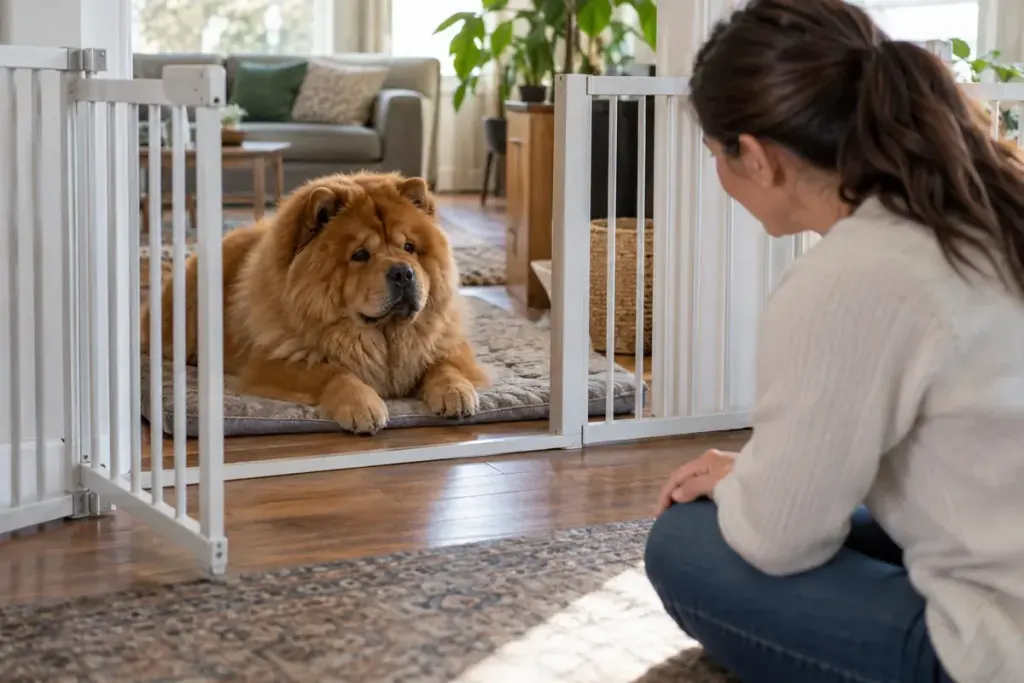
A household gate can create a useful boundary during a visit, but installing it as guests arrive gives a dog several new things to handle at once. Practise the arrangement beforehand, when the house is quiet and you can pay attention to the dog’s response.
Make the space familiar first
Choose a safe area with enough room and a comfortable resting place. Check that the gate is suitable for the dog’s size and behaviour, securely fitted and free from obvious trapping hazards. A dog that climbs or forces barriers needs a different management plan, not a more difficult challenge.
Begin with the gate open. Let the dog investigate and move freely while you remain nearby. Reward relaxed engagement in a way that suits the dog. The first session does not need to include closing the gate at all.
When the arrangement is familiar, try a very brief closure while staying close, then open it again. Keep practice easier than the eventual visitor situation. Increase difficulty gradually rather than changing distance, duration and household activity together.
Watch the dog, not the clock
Repeated pacing, attempts to escape or escalating vocalisation are reasons to reassess. Do not wait for a predetermined number of minutes while distress grows. Return to an easier arrangement and seek advice from a qualified, reward-based behaviour professional if separation or barriers consistently cause difficulty.
- Practise before the day of the visit.
- Keep useful items such as water and bedding accessible.
- Tell visitors not to crowd the gate or reach over it.
- Plan supervision and an alternative quiet arrangement.
The gate is a management aid, not a lesson the dog must pass during a busy gathering. Short, comfortable practice helps you discover whether the setup is suitable before other people and unfamiliar activity make that judgment harder.