
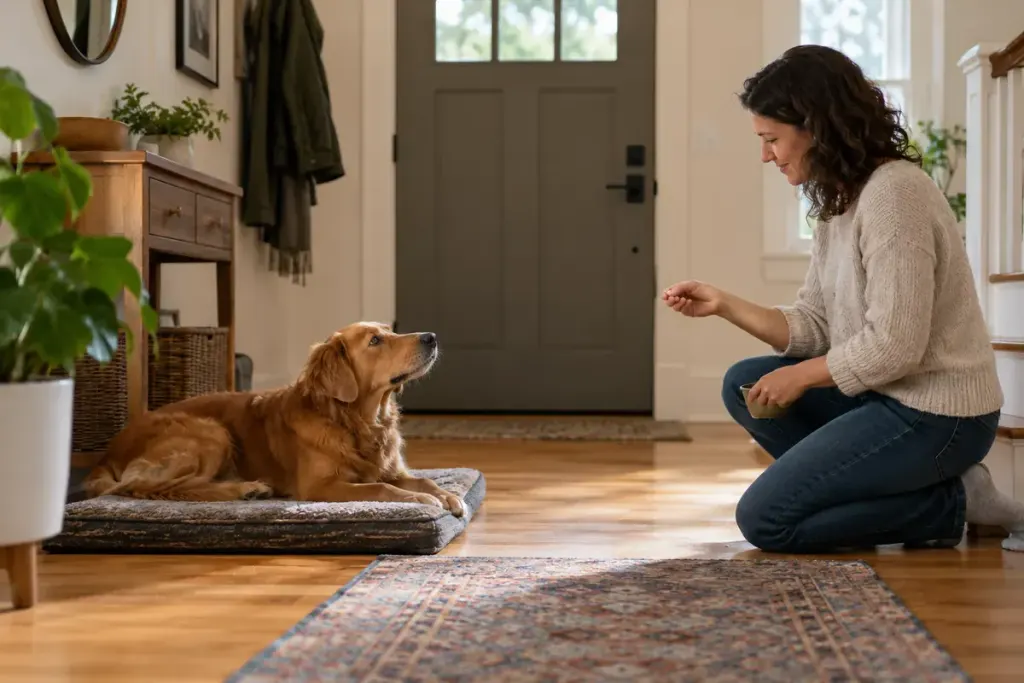
The doorbell predicts several things at once: a sound, people moving quickly and a stranger arriving. Practising only when a guest is already waiting makes the lesson harder for both the dog and the household.
Begin when nobody needs to enter. Choose a familiar resting area away from the doorway and decide which person will handle the door. Keep the exit secure so practice cannot turn into an escape opportunity.
Separate the parts of the arrival
First reward the dog for settling in the chosen area without any bell. Then introduce an easy version of the sound at a level the dog can comfortably handle. A quiet recording may help create a manageable starting point, though the real bell can still feel different.
Keep sessions short. If the dog becomes highly aroused, cannot take a familiar reward or repeatedly rushes toward the door, make the setup easier rather than repeating the same difficult version.
Add a helper gradually
Ask a familiar adult to help with one part of the routine. They might approach the door without entering, then later practise a brief arrival. Agree the sequence beforehand so nobody surprises the dog or opens the exit at the wrong time.
Give visitors simple instructions, such as allowing the dog space and avoiding immediate reaching or crowding. Not every dog needs to greet every guest, and a comfortable separate area can be a sensible arrangement.
Record the easiest successful version: sound level, distance and what happened next. That gives the next session a clear starting point. Progress is not measured by how quickly you can create a busy doorway.
If the dog shows fear, aggression or a history of biting, obtain qualified behavioural guidance and use appropriate management. A calm rehearsal is meant to reduce uncertainty, not to test how much pressure the dog can tolerate.