
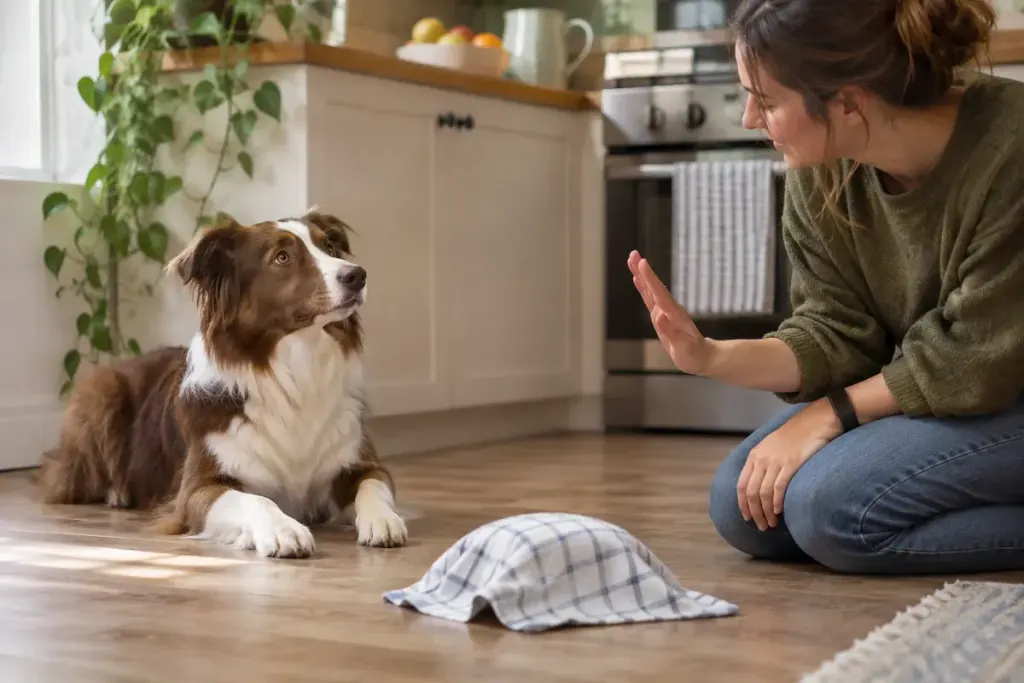
A dropped item becomes much easier to manage when a dog has practised turning away from something interesting. The aim is a voluntary change of attention, not a contest over who can shout “leave it” most loudly.
Dogs Trust’s leave-training guidance uses rewards and gradual practice. Follow a suitable step-by-step programme with safe objects. A real medicine tablet, sharp object or unsafe food is never a training prop.
Make the first success easy
Choose a calm moment and a low-distraction place. Have an appropriate reward ready. Protect the practice item so that the dog cannot obtain it while you are teaching the alternative. Reward the decision to move attention away, then reset before the exercise becomes frustrating.
A useful training note records what the dog could manage: a covered item nearby, a brief glance away, or a response in a slightly busier room. These are different stages. Success beside the kitchen chair does not prove that the same cue will work beside discarded food outdoors.
Leave and release are separate situations
Once something is already in the mouth, the problem has changed. A separately taught exchange or release can help, but do not chase, corner or force the mouth open as an ordinary training method. If guarding is present, seek qualified, reward-based behavioural help rather than increasing confrontation.
For a suspected harmful ingestion, contact a veterinarian promptly and describe the item and timing. Do not rely on a training cue to solve an emergency or induce vomiting without veterinary direction.
Meanwhile, make prevention boring and reliable: clear dropped items, secure rubbish and manage access during food preparation. Training adds another useful skill; it does not make the dog responsible for recognising human hazards. A calm turn toward you is worth practising precisely because you can reward it long before a difficult real-life moment arrives.