
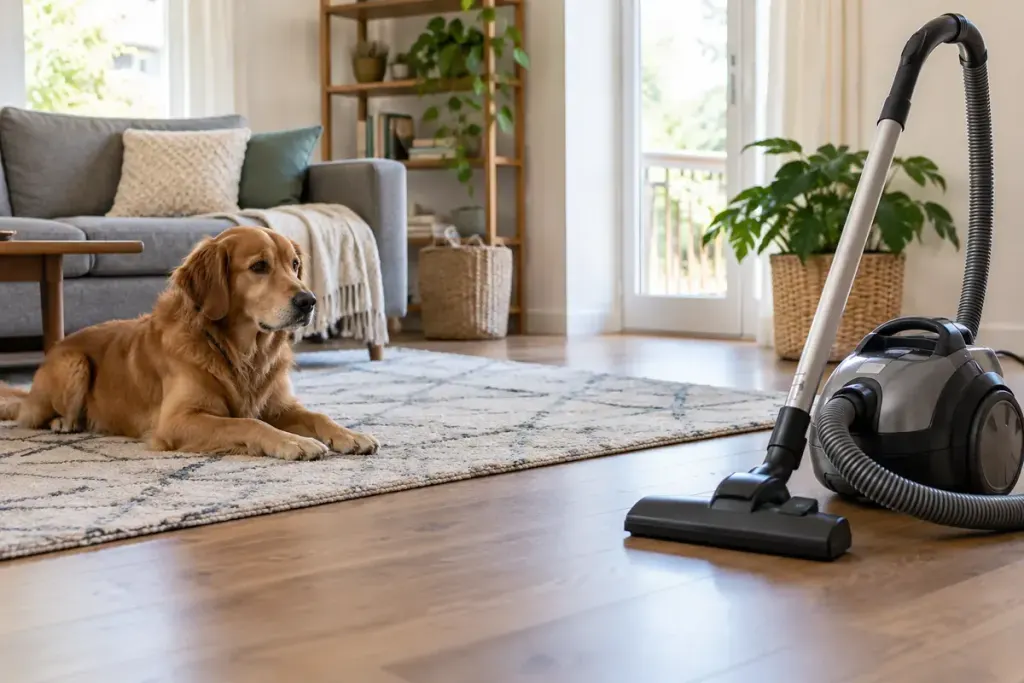
A new vacuum may seem like a replacement for an old appliance to you. To a dog, it can be a different shape, movement and sound arriving together. Let those features become familiar gradually instead of switching it on beside the dog’s bed and waiting for them to get used to it.
Begin with the appliance safely switched off. Give the dog room to choose distance and investigate without being lured into a corner. Keep cables and accessories out of chewing reach, and do not turn the machine into a moving game that encourages chasing.
Dogs Trust’s vacuum introduction guidance separates familiarisation with the object from exposure to its sound. It advises reducing the challenge if the dog becomes worried, including making the sound quieter by moving the machine to another room.
Watch the dog, not the stopwatch
Keep practice brief and use rewards the dog comfortably accepts. Notice whether they can move normally, disengage and settle. A dog that freezes, retreats or stops taking a usual reward may need more distance or a pause. Do not punish barking or physically hold the dog close to the appliance.
Sound and movement can be introduced separately. A stationary machine heard from a distance is a different experience from one being pushed across the floor nearby. Increase only one part of the challenge at a time, following suitable reward-based guidance.
Make ordinary cleaning manageable
Training is not the only arrangement needed. Give the dog access to a comfortable place away from cleaning when practical. Let household members know where the dog is so a closed door is not unexpectedly opened into the noisy area.
If fear is intense, persistent or newly appears, seek veterinary advice and appropriate qualified behaviour support. The aim is not to make every dog indifferent to every sound. It is to help this dog remain comfortable while the household uses the equipment it needs.