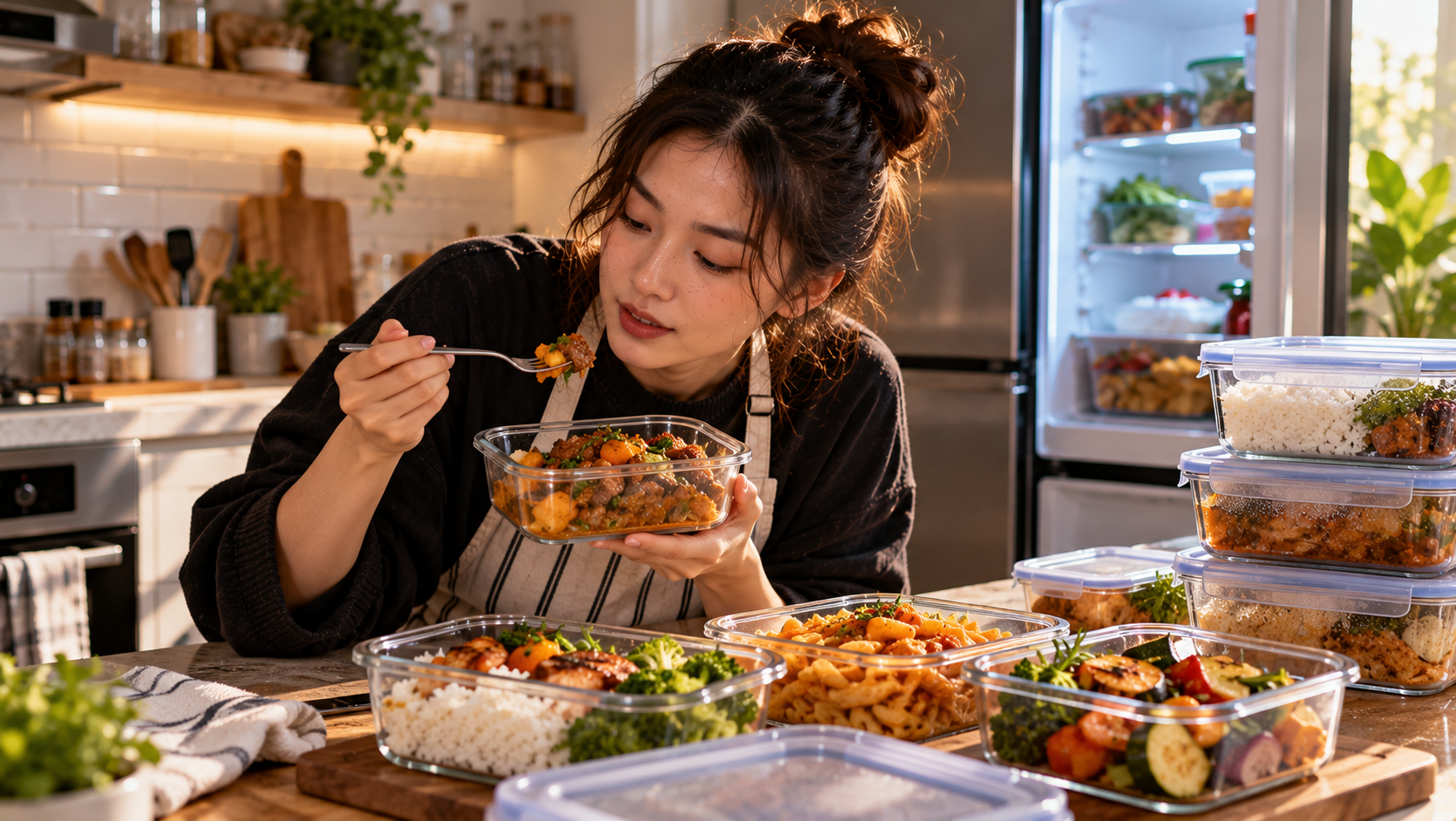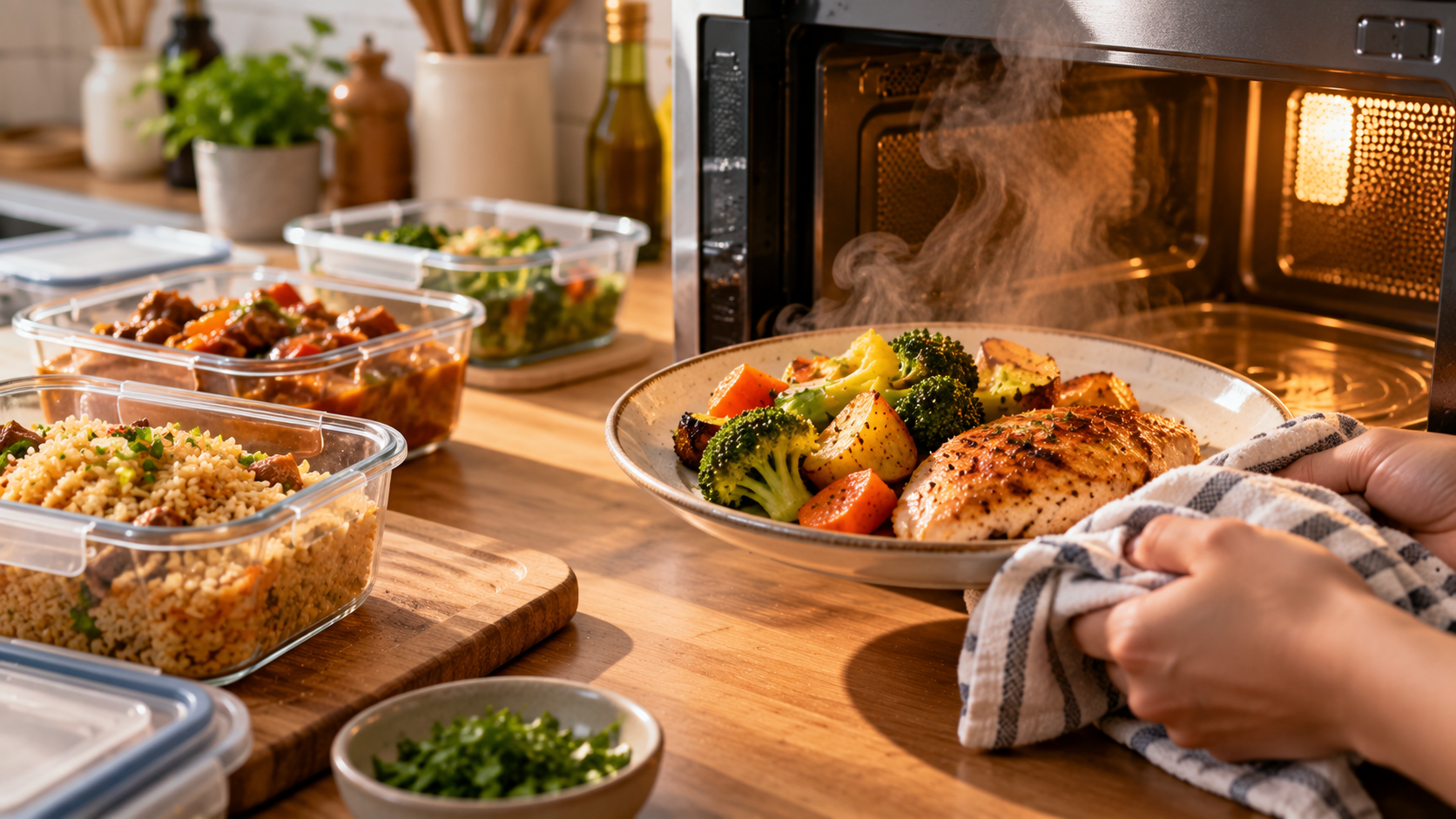
Why Reheated Food Tastes Different: What Happens to Flavor and Texture Overnight

You cook dinner, taste it straight from the pan, and everything seems exactly right. The aroma is strong, the vegetables still have texture, the sauce feels balanced, and the food tastes fresh.

Then you put the leftovers in the refrigerator.

The next day, you reheat the same meal using the same plate. Nothing has been added, yet something has clearly changed.

Sometimes the difference is disappointing. Fried food loses its crunch, meat becomes dry, pasta feels softer, and delicate aromas seem weaker. However, other dishes appear to improve overnight. Stews taste deeper, curries feel more integrated, and sauces can seem richer than they did immediately after cooking.

There is a reason reheated food tastes different.

Food does not become chemically and physically frozen in time simply because it enters the refrigerator. Cooling, storage, moisture movement, oxidation, starch changes, fat behavior, and reheating all continue to affect what eventually reaches our mouth.

Understanding those changes explains why yesterday’s dinner can sometimes taste better—and why other leftovers never quite return to their original form.

Why Reheated Food Tastes Different Even When the Recipe Has Not Changed

Flavor is much more than the ingredients listed in a recipe.

Temperature matters.

Texture matters.

Aroma matters.

Moisture distribution matters.

Even the way fat behaves at a particular temperature can influence how strongly we perceive certain flavors.

Freshly cooked food exists in a particular physical state. Heat has created aromas, softened ingredients, melted fats, evaporated water, and produced specific textures.

Once that food cools, the state begins to change.

Reheating can reverse some of those changes, but not all of them.

That is the basic reason leftovers rarely taste exactly like the original meal.

Temperature Changes the Way We Experience Flavor

Imagine eating a spoonful of sauce directly from the refrigerator.

Now warm the same sauce.

The second spoonful will probably smell and taste more intense.

One reason is that heat encourages volatile aroma compounds to reach the air. Those compounds travel toward the nose, contributing significantly to what we experience as flavor.

Cold food releases many aromas less readily.

As food warms, those aromas become easier to detect.

This is why a dish can seem bland when tasted cold but much more expressive after reheating.

Aroma Is a Huge Part of What We Call Taste

Our tongue detects fundamental taste sensations, but much of the detailed identity of food comes from aroma.

Think about the difference between tasting something while your nose is clear and tasting it while heavily congested.

The basic sensations remain.

However, identifying subtle flavors becomes more difficult.

When freshly cooked food leaves a hot pan, it releases a large amount of aromatic material into the surrounding air.

That first experience is difficult to reproduce completely the following day.

Some Aromas Are Lost During Storage

Not every aromatic compound remains equally stable.

Some gradually escape into the air inside the storage container.

Others change through chemical reactions.

As a result, delicate fresh aromas can become weaker after several hours or overnight.

Fresh herbs provide an obvious example.

A dish finished with aromatic herbs can smell bright and lively immediately after cooking.

After refrigeration and reheating, that freshness may become less prominent.

The ingredients are technically still present, but the sensory experience has changed.

Reheating Creates Another Round of Aroma Loss

Heating leftovers does not merely restore their original temperature.

It exposes them to heat again.

During that second heating cycle, additional volatile compounds can escape.

This is particularly noticeable when food is reheated aggressively for too long.

Instead of simply becoming hot, the food continues cooking.

The result can be a meal that smells less fresh and has a flatter flavor profile.

Moisture Moves Through Food During Storage

One of the biggest changes in leftovers involves water.

Water does not necessarily remain exactly where it was when the dish was first cooked.

During storage, moisture can migrate between different components.

A crisp coating can absorb moisture from a filling.

Bread can absorb liquid from a sauce.

Pasta continues interacting with surrounding moisture.

Rice changes as it cools.

These movements dramatically affect texture.

That matters because texture contributes strongly to our perception of food quality.

Why Crispy Leftovers Become Soft

A crisp crust usually depends on relatively low moisture at its surface.

Fresh fried chicken, roasted potatoes, pastry, and other crisp foods have a contrast between a dry exterior and a softer interior.

Once placed in a container, steam and moisture become trapped.

That moisture can migrate toward the crust.

The dry structure begins absorbing water.

Eventually, the crisp surface becomes soft.

Reheating has to remove some of that moisture if we want the texture to return.

The Microwave Cannot Restore Every Texture

Microwaves are excellent for speed.

However, they heat food differently from a dry oven or hot pan.

When reheating something that should be crispy, a microwave can make the food hot without sufficiently drying and recrisping the exterior.

That is why leftover fried foods may emerge hot but still soft.

For foods where crispness matters, dry heat often produces a result closer to the original texture.

The ideal method therefore depends on the food.

An Oven Can Be Better for Crisp Foods

An oven or air fryer exposes the surface to hot, relatively dry air.

This helps remove some surface moisture.

As the exterior dries and heats, crispness can partially return.

Roasted potatoes, pizza, breaded foods, and pastries often benefit from this approach.

However, excessive reheating can dry the interior.

The goal is not maximum heat.

It is restoring the desired contrast without overcooking the food.

A Pan Can Restore Texture Quickly

Some leftovers respond especially well to a skillet.

Pizza is a familiar example.

A pan can crisp the bottom while gently warming the toppings.

Rice dishes can also benefit from direct contact with a hot surface because slight browning adds texture and aroma.

The technique works because the pan provides something a microwave cannot easily reproduce: concentrated dry heat at the surface.

Saucy Foods Behave Differently

Crisp foods often suffer during storage.

Saucy dishes can do the opposite.

Stews, braises, curries, chili, and similar foods sometimes taste more cohesive the following day.

Their texture does not depend on maintaining a dry crust.

Instead, ingredients sit together in a moist environment.

During storage, flavors continue redistributing throughout the dish.

When reheated carefully, the result can feel more integrated.

Why Some Leftovers Taste Better the Next Day

People often say certain dishes need time for the flavors to “marry.”

The phrase is informal, but it describes a real sensory experience.

A freshly cooked stew may contain several distinct aromatic elements.

After cooling and resting, those components become distributed differently through the liquid and solid ingredients.

Strong individual notes can feel less isolated.

The dish may seem more unified.

That does not mean every food automatically improves overnight.

It means certain preparations are particularly suited to resting.

Spices Can Feel More Integrated

Freshly added spices can sometimes stand out sharply.

After several hours in a moist dish, their aromatic compounds have more opportunity to disperse through fats and liquids.

When the dish is reheated, the flavor can seem more evenly distributed.

Curries are a common example.

The next-day version may feel rounder because individual components no longer appear as separate.

Again, the ingredients have not magically become stronger.

Their distribution and perception have changed.

Fat Helps Carry Flavor

Many aromatic compounds dissolve readily in fat.

That makes fats important carriers of flavor.

Butter, cooking oils, dairy fat, and fat released from meat can distribute aroma compounds through a dish.

During cooling, some fats solidify.

This changes both texture and the way aromas are released.

When the dish is reheated, those fats melt again.

However, the final distribution may not be identical to the freshly cooked state.

Cold Fat Changes Mouthfeel

Think about refrigerated stew.

The fat may appear firm on the surface.

Cold cheese becomes firmer.

Butter hardens.

Meat fat can feel waxy when eaten directly from the refrigerator.

As these fats warm, they soften or melt.

Consequently, a dish can taste dramatically different at refrigerator temperature compared with serving temperature.

This is another reason evaluating leftovers while they are still cold can be misleading.

Sauces Can Thicken Overnight

Many sauces become noticeably thicker after refrigeration.

Several mechanisms can contribute.

Fat solidifies.

Gelatin can set.

Starches change structure.

Water continues interacting with ingredients.

A sauce that flowed easily while hot may become almost solid when cold.

When reheated, some of that texture returns toward its original state, although it may still need adjustment.

A Small Amount of Liquid Can Help Certain Leftovers

Some dishes lose moisture during storage and reheating.

Adding a small amount of water, stock, milk, or another appropriate liquid can help restore consistency.

The correct choice depends on the dish.

Pasta sauce might benefit from a splash of water.

A creamy preparation may require something different.

The key is moderation.

Too much liquid can dilute flavor and destroy texture.

Pasta Keeps Absorbing Sauce

Fresh pasta coated in sauce has a particular balance.

During storage, the pasta can continue absorbing surrounding moisture.

By the next day, the sauce may appear much thicker or nearly disappear into the pasta.

Reheating without adjustment can make the dish feel dry.

A small amount of liquid combined with gentle heat can help loosen it.

Still, the texture of the pasta itself may not return completely to its freshly cooked condition.

Overcooked Pasta Becomes Even More Noticeable the Next Day

If pasta was already very soft when first served, storage gives it little room to maintain a pleasant texture.

After absorbing additional moisture and being reheated, it can become mushier.

This is why pasta intended for meal preparation may benefit from careful initial cooking.

The first cooking stage affects how well the food survives the second heating stage.

Thinking ahead can improve leftovers substantially.

Rice Changes as It Cools

Cooked rice undergoes noticeable textural changes during refrigeration.

Fresh hot rice is soft because its starch has absorbed water and changed during cooking.

As it cools, starch molecules begin reorganizing.

The grains become firmer.

This is why refrigerated rice feels very different from freshly steamed rice.

Reheating can soften it again, especially when enough moisture is present, but the texture may still differ.

Cold Rice Can Be Useful for Other Dishes

A change is not always a defect.

Firmer refrigerated rice can be useful for fried rice because the grains separate more easily than freshly cooked, very moist rice.

Instead of trying to make yesterday’s rice behave exactly like fresh steamed rice, cooks can use its changed texture to their advantage.

This is an important principle for leftovers.

Sometimes the best solution is transformation rather than restoration.

Bread Also Changes During Storage

Bread becomes stale through more than simple moisture loss.

Its starch structure changes after baking.

That is why bread can become firm even when it has not completely dried out.

Heating can temporarily improve softness and aroma.

However, reheated bread may firm again relatively quickly as it cools.

Different storage and reheating methods therefore produce noticeably different results.

Refrigeration Is Not Ideal for Every Bread

Many people automatically refrigerate food to keep it fresh.

Bread is more complicated.

Refrigeration can accelerate some changes associated with staling.

For short-term storage, other approaches may be preferable depending on the bread and environment.

For longer storage, freezing is often useful.

The important point is that “colder” does not always mean “better texture.”

Pizza Demonstrates Almost Every Leftover Problem at Once

Pizza is an excellent example because it contains several contrasting components.

The crust should have structure.

Cheese contains fat.

Sauce contains water.

Toppings release moisture.

During refrigeration, these elements interact.

The crust can absorb moisture and become chewy or soft.

The cheese firms as its fat cools.

A good reheating method must warm the toppings while restoring some structure to the base.

That is why the method makes such a noticeable difference.

Meat Can Become Dry During Reheating

Cooked meat has already experienced heat once.

When reheated aggressively, it cooks further.

Additional moisture can be lost.

Proteins tighten.

A piece of meat that was juicy during dinner can therefore become dry the following day.

Gentler reheating helps reduce this problem.

The exact technique depends on the cut, thickness, and preparation.

Thin Slices Heat More Quickly

A large cold piece of meat takes time for heat to reach the center.

By the time the center is warm, the exterior may have become overcooked.

Slicing can shorten the distance heat needs to travel.

However, slices also expose more surface area and can lose moisture quickly.

There is always a trade-off.

Choose the method according to the food rather than applying one reheating technique to everything.

Sauce Can Protect Meat During Reheating

Meat stored in sauce often reheats better than a dry piece sitting alone.

The surrounding liquid helps distribute heat and provides moisture at the surface.

Braises and stews therefore tend to be forgiving leftovers.

A grilled steak is more challenging.

The difference comes from the physical environment surrounding the meat.

Chicken Can Develop a Distinct Leftover Flavor

Some people notice that refrigerated cooked meat, especially poultry, develops a recognizable flavor after storage and reheating.

Oxidation of fats is one contributor to changes in stored cooked meat.

The effect can be more noticeable in relatively mild foods because there are fewer strong sauces or spices to mask it.

Proper storage matters, but some flavor evolution is still possible even when food is handled correctly.

This is another example of why reheating cannot always reproduce the original dish exactly.

Oxidation Continues After Cooking

Exposure to oxygen can change food.

Fats are particularly relevant because oxidation can generate new flavor compounds.

Sometimes these changes are subtle.

In other cases, they produce stale or unpleasant notes.

Storage containers that reduce unnecessary air exposure can help preserve quality.

However, food chemistry does not stop completely inside the refrigerator.

Refrigeration Slows Change; It Does Not Stop It

This distinction is important.

Cold temperatures slow many biological and chemical processes.

They do not suspend food in time.

Texture can continue changing.

Aromas can migrate.

Oxidation can occur.

Moisture can redistribute.

That is why leftovers are different even when they have been refrigerated promptly.

The Refrigerator Has Its Own Environment

Food stored uncovered can lose moisture.

It can also absorb odors from surrounding foods.

A strongly aromatic ingredient elsewhere in the refrigerator may influence poorly covered leftovers.

Meanwhile, condensation inside containers can increase surface moisture.

Good storage therefore affects not only food safety but also sensory quality.

Airtight Containers Help Preserve Quality

A suitable container reduces moisture loss and limits exposure to surrounding refrigerator odors.

It also helps prevent the surface from drying excessively.

However, sealing very hot food immediately can trap large amounts of steam.

Storage practices need to balance cooling, food safety, and quality.

Use appropriate containers and follow safe cooling practices rather than leaving cooked food at room temperature for extended periods.

Food Safety Comes Before Perfect Texture

A crispy crust is not worth unsafe storage.

Leftovers should be cooled and refrigerated using safe food-handling practices.

Perishable food should not remain at room temperature simply because someone wants to preserve texture.

When reheating, food also needs to be heated appropriately for safe consumption.

Quality matters, but safety is the first requirement.

Smell Alone Cannot Confirm Food Safety

People sometimes smell leftovers and decide they are safe because nothing seems unusual.

That is not a reliable safety test.

Food can contain harmful microorganisms without producing an obvious smell, appearance, or taste.

Follow appropriate storage times, refrigeration practices, and reheating guidance.

If there is genuine doubt about whether perishable food was stored safely, avoiding it is wiser than trying to rescue it.

Repeated Cooling and Reheating Can Damage Quality

Every heating cycle creates another opportunity for moisture loss and texture changes.

Imagine reheating an entire container of stew, eating one portion, cooling the rest again, and repeating the process tomorrow.

Even apart from safe-handling considerations, quality will usually decline.

A practical approach is to reheat only the portion needed.

The remainder can stay refrigerated until required.

Portioning Leftovers Makes Reheating Easier

Instead of storing one enormous container, divide food into practical portions when appropriate.

Smaller portions cool and reheat more predictably.

They also reduce the need to repeatedly heat the entire batch.

This is particularly useful for soups, stews, curries, and cooked grains.

Planning storage is part of planning good leftovers.

Microwave Reheating Is Often Uneven

Anyone who has reheated food in a microwave knows the experience.

One side is extremely hot.

Another is still cold.

Microwave heating patterns depend on the food, container, amount, and appliance.

Stirring and rotating food can improve temperature distribution.

Allowing a short resting period can also help heat redistribute.

The goal is even heating rather than simply using maximum power for as long as possible.

Lower Microwave Power Can Be Useful

Maximum power is not automatically the best setting.

Gentler heating can provide more time for temperature to spread through the food.

This can be useful for dishes that dry out or split easily.

Instead of blasting leftovers until the edges overcook, shorter intervals and stirring often produce better results.

Speed remains one of the microwave’s strengths, but control matters.

Covering Food Can Reduce Moisture Loss

A suitable cover can trap some steam during microwave reheating.

This can help rice, pasta, and similar foods retain moisture.

However, foods that should remain crisp generally need a different strategy.

Again, there is no universal reheating rule.

Moist foods and crisp foods have opposite needs.

Steam Is Helpful Until It Is Not

Steam can restore softness to rice.

It can help prevent certain dishes from drying.

Yet the same steam destroys crispness.

This is why reheating leftovers becomes easier when we identify the desired texture first.

Do we want moisture?

Or do we need to remove moisture from the surface?

The answer determines the method.

Separate Components When Possible

Meal-prep containers often combine everything.

That is convenient, but different foods may need different reheating methods.

A crispy cutlet sitting directly on sauce will soften during storage.

Salad obviously should not be reheated with hot rice.

Fresh garnish loses its character when microwaved.

When practical, store components separately.

Assembly after reheating can produce a fresher result.

Keep Fresh Garnishes Fresh

Herbs, scallions, crunchy onions, toasted nuts, citrus zest, and similar finishing ingredients provide contrast.

Heating them repeatedly can reduce that contrast.

Instead, store suitable garnishes separately and add them after the main dish is reheated.

A small fresh component can dramatically improve the perception of leftovers.

It adds aroma and texture that storage may have removed.

Acidity Can Wake Up a Reheated Dish

Sometimes leftovers do not need more salt.

They need brightness.

A small amount of lemon juice, vinegar, or another appropriate acidic ingredient can make a rich reheated dish feel more lively.

During storage, flavors may seem heavier or more integrated.

Acidity restores contrast.

Of course, the correct addition depends on the cuisine and recipe.

Fresh Herbs Can Restore Top Notes

Slow-cooked food often has deep flavors.

Fresh herbs provide a different layer: bright aromatic notes.

Those delicate notes are among the easiest to lose during storage and reheating.

Adding fresh herbs at serving time can restore complexity.

This is particularly effective with soups, curries, pasta, and grain dishes.

Texture Contrast Can Make Leftovers Feel New Again

A soft leftover dish can become more interesting with a crunchy element.

Toasted breadcrumbs.

Nuts.

Seeds.

Fresh vegetables.

Crispy onions.

The exact choice depends on the dish.

The point is that reheating does not have to reproduce the original meal perfectly.

We can create a new balance.

Leftovers Can Be Treated as Ingredients

Yesterday’s roast chicken can become today’s sandwich.

Cooked vegetables can enter a frittata.

Rice can become fried rice.

Roasted meat can become a filling.

Bread can become croutons or another preparation.

Once we stop insisting that leftovers must return to their original state, many texture problems become opportunities.

Transformation Often Works Better Than Restoration

Some foods simply do not reheat beautifully.

French fries are a classic example.

You can improve them with dry heat, but reproducing the exact texture from the fryer is difficult.

Instead of fighting the change, repurpose them where appropriate.

The same principle applies to bread, meat, vegetables, and grains.

Cooking with leftovers is partly about understanding what the food has become.

Soup Is One of the Most Forgiving Leftovers

Soup generally does not depend on crisp surfaces.

Its components are already surrounded by liquid.

Gentle reheating can restore serving temperature without dramatically changing the basic format.

However, ingredients such as noodles can continue absorbing liquid during storage.

Therefore, even soup can change.

Broth may need adjustment, and delicate garnishes are best added fresh.

Stews Often Benefit from Resting

Slow-cooked dishes contain many ingredients sharing the same liquid environment.

Over time, flavors redistribute.

Gelatin and fats change as the dish cools.

When reheated gently, the texture can become rich and cohesive.

This explains why some people intentionally prepare stews a day before serving.

The resting period becomes part of the cooking plan.

Curry Can Become More Cohesive Overnight

Curries frequently contain spices, aromatics, fats, vegetables, proteins, and sauces interacting together.

After resting, sharp individual notes may become more integrated.

Reheating releases aromas again.

A fresh garnish or acidic finish can then restore brightness.

The combination of rested depth and fresh finishing notes can make the second serving especially satisfying.

Tomato-Based Sauces Often Reheat Well

Tomato sauces generally tolerate storage and reheating because their desired texture is already moist.

Flavor can become more cohesive overnight.

However, reduction during reheating can make the sauce too thick or salty.

Use gentle heat.

Add a small amount of liquid if necessary.

Taste only after the sauce reaches serving temperature.

Cream Sauces Require More Care

Emulsified or dairy-based sauces can behave differently.

Excessive heat can cause separation.

The sauce may become oily or grainy.

Gentle reheating and frequent stirring are usually preferable to intense boiling.

If the sauce thickened significantly in the refrigerator, a small amount of suitable liquid may help restore consistency.

Cheese Changes Dramatically with Temperature

Cold cheese is firmer.

Warm cheese softens.

Some cheeses melt smoothly.

Others release oil or become rubbery after repeated heating.

That is why cheese-heavy leftovers can have very different textures depending on the reheating method.

Pizza again provides a familiar example.

The goal is to warm the cheese without destroying the crust underneath it.

Vegetables Can Lose Their Original Bite

Cooked vegetables continue to face heat during reheating.

If they were perfectly tender during the first meal, another long heating cycle can push them into softness.

This is especially noticeable with vegetables that were originally meant to retain some bite.

Shorter reheating helps.

In meal preparation, some cooks intentionally leave vegetables slightly firmer during initial cooking because they know reheating will continue the process.

Roasted Vegetables Prefer Dry Heat

Roasting creates browned surfaces and concentrated flavor.

Microwaving can warm those vegetables but may soften the exterior.

Returning them briefly to an oven, air fryer, or pan can restore some surface character.

The best method depends on the vegetable and size.

Avoid reheating so long that the interior dries out.

Fried Food Needs Airflow

When fried food sits against a flat surface while reheating, moisture can remain trapped underneath.

A rack can improve airflow in an oven.

Air fryers use circulating hot air for a similar reason.

The goal is to expose more surface area to dry heat.

Better airflow helps moisture leave the crust instead of remaining trapped.

Do Not Overcrowd the Reheating Tray

Crowding food closely together traps steam.

Pieces shield one another from hot air.

Instead of crisping, they may soften.

Spread foods in a single layer when crispness is the goal.

This is the same principle used during roasting.

Surface exposure matters.

Reheated Food Can Need Different Seasoning

Storage and temperature changes alter perception.

A dish that was perfectly balanced yesterday may seem slightly muted today.

Before automatically adding salt, taste it at proper serving temperature.

Then consider what is actually missing.

Salt?

Acidity?

Fresh aroma?

Heat from spices?

Texture?

Diagnosing the problem produces better results than simply adding more seasoning.

Salt Does Not Disappear Overnight

If a dish tastes dull after refrigeration, that does not necessarily mean the salt vanished.

Temperature and aroma affect overall flavor perception.

Once the food is hot again, the balance may become clearer.

This is why seasoning cold leftovers aggressively can backfire.

After reheating, the dish may become too salty.

Taste at the stage when it will actually be eaten.

Spicy Heat Can Feel Different the Next Day

Spiced foods often seem different after resting.

Part of this comes from redistribution of flavor compounds through the dish.

Fat-soluble components may spread.

Other aromas become less prominent.

As a result, the balance between heat, sweetness, acidity, and savory flavors can shift.

Fresh additions at serving time can restore contrast.

Sweet Foods Change Too

Leftover behavior is not limited to savory meals.

Cake dries or firms.

Custards set more fully.

Chocolate changes texture with temperature.

Pastries lose crispness.

Cookies absorb or lose moisture depending on storage.

Desserts therefore have their own reheating and storage challenges.

Sometimes room temperature, rather than active reheating, produces the best result.

Cake Often Tastes Different After Resting

Fresh cake can have a very tender crumb while still warm.

After cooling completely, the structure stabilizes.

Some cakes develop a more even flavor after several hours.

Others begin losing moisture during storage.

Frosting also changes depending on temperature.

A refrigerated butter-based frosting can feel firm and less aromatic until allowed to warm appropriately.

Brownies Demonstrate the Importance of Temperature

A chilled brownie can feel dense and firm.

At room temperature, it softens.

Warm it slightly, and chocolate aromas become more pronounced while the center can feel fudgier.

It is the same brownie.

Yet the sensory experience changes substantially.

Serving temperature is therefore part of the recipe experience, even after baking is complete.

Pastry Is Difficult to Reheat Perfectly

Many pastries rely on layers and crispness.

Refrigeration introduces moisture challenges.

Microwaving can make pastry soft.

Dry heat usually performs better when restoring flakiness, but excessive heating dries the interior.

Short, controlled reheating is often preferable.

The original texture may not return completely, but it can be improved.

Refrigerated Desserts Should Not Automatically Be Heated

Cheesecake, mousse, pudding, and similar desserts are designed around cold or cool textures.

Their flavors still change with temperature, but reheating would destroy the intended structure.

Sometimes the appropriate “reheating strategy” is simply allowing a dessert to sit briefly at a suitable serving temperature.

Understanding the intended state of the food matters more than following a universal rule.

Freezing Introduces Another Set of Changes

Freezing can preserve many foods for longer periods, but ice formation can affect texture.

Foods with high water content may become softer after thawing.

Sauces can separate.

Certain vegetables lose firmness.

On the other hand, soups, stews, baked goods, and many prepared dishes can freeze successfully when handled properly.

The suitability depends heavily on the food’s structure.

Freeze Food with Its Future Use in Mind

If a large batch is meant for freezing, portion it before storage.

Use containers appropriate for freezing.

Label portions clearly.

Consider whether garnishes or delicate ingredients should be added only after thawing.

Planning for reheating during the original cooking process usually gives better results than treating storage as an afterthought.

Reheating Starts When You Cook the First Meal

This may sound strange, but good leftovers begin during initial preparation.

If pasta will be reheated tomorrow, avoid overcooking it today.

If vegetables will go through another heating cycle, consider their initial tenderness.

If crispy components will be stored with sauce, separate them.

If a stew tastes even better after resting, perhaps cook it ahead intentionally.

Thinking one meal ahead changes how leftovers perform.

Match the Reheating Method to the Original Cooking Method

This is a useful starting principle.

Roasted food often responds well to an oven.

Pan-fried food may benefit from a skillet.

Steamed rice benefits from moisture.

Soup returns naturally to a saucepan.

This is not an absolute rule, but it helps identify what made the food appealing originally.

Then choose a reheating method capable of restoring those qualities.

Ask What Made the Dish Good the First Time

Was it crispness?

Juiciness?

Creaminess?

Fresh aroma?

A contrast between hot and cold?

A browned crust?

A tender interior?

Once you identify the defining characteristic, reheating becomes easier.

Protect that characteristic first.

A method that works perfectly for soup may be terrible for fried chicken because the goals are completely different.

Separate “Hot” From “Properly Reheated”

Food can be hot and still disappointing.

A microwave can make pizza extremely hot while leaving the crust soft.

An oven can make chicken hot while also drying it out.

Temperature alone is not the goal.

Proper reheating attempts to restore a desirable combination of temperature, moisture, aroma, and texture.

That requires a little more attention.

Use Gentle Heat When Texture Is Delicate

High heat is useful for restoring a crust.

It is less appropriate for delicate sauces or meats that dry easily.

For those foods, slower or gentler heating can reduce damage.

Stir when appropriate.

Add moisture when appropriate.

Cover when appropriate.

The method should respond to the structure of the food.

Use Stronger Dry Heat When Crispness Matters

When the problem is excess surface moisture, gentle steaming is unlikely to help.

Crisp food needs the surface to dry.

An oven, skillet, or air fryer can provide stronger surface heat.

Keep the reheating period controlled.

Once the exterior has regained texture and the center is warm, additional heating usually creates diminishing returns.

Do Not Expect Every Leftover to Become “Fresh” Again

Some transformations are effectively irreversible in a home kitchen.

A salad that has sat in dressing cannot become freshly dressed lettuce again.

Overcooked pasta cannot become al dente.

A soggy fried coating may improve with dry heat but not perfectly return to its original state.

Accepting this makes leftover cooking more practical.

Instead of chasing an impossible reset, aim for the best version of the food in its current state.

Sometimes the Best Reheating Method Is No Reheating

Certain foods are enjoyable cold or at room temperature.

Roasted meats can become sandwiches.

Cooked vegetables can enter salads.

Some noodles work in cold preparations.

Cake may taste better after warming naturally from refrigerator temperature rather than entering a microwave.

The question is not always “How do I make this hot?”

It can be “What is the best way to eat this now?”

Good Leftover Cooking Reduces Waste

Learning to use leftovers well has a practical benefit.

Food that tastes disappointing is more likely to be discarded.

If we understand how to store, reheat, and transform it, more of the original meal can be enjoyed.

This saves ingredients, cooking effort, and money.

It also encourages more thoughtful meal planning.

Cooked Food Has a Second Life

Leftovers should not automatically be viewed as inferior food.

They are ingredients that have already undergone one stage of cooking.

Their properties have changed.

A skilled approach recognizes those changes and works with them.

Cold rice has advantages.

Rested stew has advantages.

Cooked chicken is ready for a new dish.

Stale bread can be transformed.

The second meal does not have to imitate the first.

The Refrigerator Is Part of the Cooking Story

We often imagine cooking ends when the stove turns off.

In reality, food continues changing as it cools and rests.

The refrigerator becomes another stage in the journey.

Starches reorganize.

Fats solidify.

Moisture moves.

Aromas redistribute.

Some compounds oxidize.

These processes explain why tomorrow’s plate can never be an exact copy of tonight’s dinner.

Reheating Is Another Cooking Process

This is perhaps the most useful mindset.

Reheating is not pressing a button that returns food to an earlier state.

It is applying heat again.

That means we are cooking again, even if only briefly.

Once we recognize that, decisions become more intentional.

How much heat?

What type?

For how long?

Does the food need moisture or dryness?

Should it be stirred?

Should components be separated?

Those questions lead to better leftovers.

Why the Same Dish Can Taste Better and Worse at the Same Time

A stew may develop deeper flavor overnight but contain vegetables that are softer.

Pizza sauce may taste good while the crust becomes less crisp.

Curry may become more cohesive while fresh herb aromas disappear.

Leftover quality is rarely one-dimensional.

Some characteristics improve.

Others decline.

The final experience depends on which qualities matter most for that particular dish.

Flavor Is an Experience, Not a Fixed Number

It is tempting to imagine that a dish contains a fixed amount of “flavor.”

But perception is dynamic.

Temperature affects aroma.

Texture affects how long food stays in the mouth.

Fat influences aromatic release.

Moisture affects structure.

Fresh garnishes create contrast.

The same ingredients can therefore produce different experiences depending on their physical state.

This is why leftovers are such an interesting part of food science.

A Simple Leftover Strategy

Before reheating, look at the food and identify its main characteristic.

If it should be crispy, use a method that removes surface moisture.

If it should be moist, protect it from drying.

If it contains a delicate sauce, use gentler heat.

If it has become too thick, consider whether a small amount of appropriate liquid is needed.

If it tastes heavy after warming, consider a fresh finishing element.

If its original texture cannot realistically return, transform it into another dish.

This approach is more reliable than automatically putting everything into the microwave for the same amount of time.

Conclusion

There is a simple reason reheated food tastes different: the food itself has changed.

Cooling and refrigeration affect starches, fats, moisture, aromas, and textures. Crispy surfaces absorb moisture. Pasta continues interacting with sauce. Rice becomes firmer. Fats solidify. Delicate aromas can fade, while flavors in stews and curries may become more integrated.

Then reheating introduces another transformation.

Heat releases aromas again, but it can also evaporate moisture, overcook proteins, soften crisp surfaces, separate sauces, or continue cooking vegetables.

That is why the reheating method matters so much.

Microwaves are useful for moist foods and convenience. Ovens and air fryers can help restore dry, crisp surfaces. Skillets provide direct heat. Saucepans work naturally for soups and sauces. Meanwhile, some leftovers are better transformed into an entirely new meal rather than forced back into their original form.

Once we understand why reheated food tastes different, leftovers become easier to manage.

Instead of asking how to make yesterday’s food exactly fresh again, ask a better question:

What does this food need now?

Sometimes it needs moisture.

Sometimes dry heat.

Sometimes a fresh herb or touch of acidity.

And sometimes yesterday’s dinner simply needs a new role.
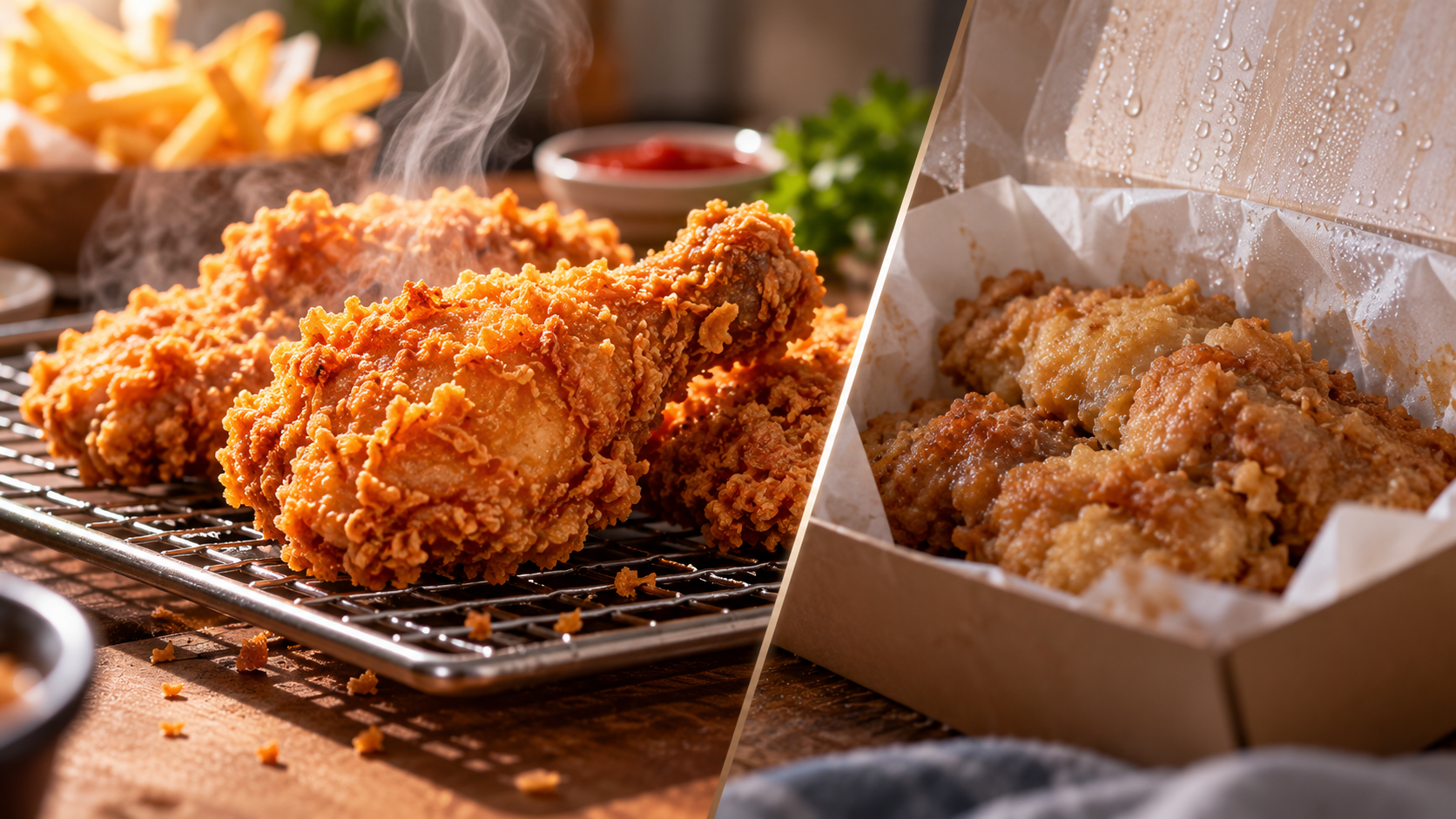
Why Does Crispy Food Turn Soggy? The Science of Keeping Food Crunchy

Why Does Crispy Food Turn Soggy? The Science of Keeping Food Crunchy

There is a frustrating moment almost every home cook has experienced. Fries leave the oil golden and crisp, fried chicken makes a satisfying crackle when it reaches the plate, or roasted potatoes develop a beautifully crunchy exterior. Then, only a short time later, that texture begins to disappear.

The fries become limp. The coating on the chicken softens. Tempura that once shattered with every bite starts bending instead. Even foods that were cooked correctly can lose their crunch surprisingly fast.

It is tempting to blame temperature. After all, crispy food often tastes best while it is hot.

However, cooling is only part of what happens.

The bigger issue is moisture.

A crisp surface exists because cooking removes enough water from the exterior to create a dry, rigid structure. Yet the inside of the food usually remains moist. Once cooking ends, that moisture does not simply stay where it is. Steam continues moving outward, humidity builds around the food, and the dry crust begins absorbing water again.

That is the basic reason crispy food turns soggy.

Still, the process becomes much more interesting when we look at what happens during frying, cooling, serving, storage, and reheating. Understanding those stages can help you protect crunch without relying on excessive oil or simply cooking food longer.

What Actually Makes Food Crispy?

Crispiness is largely about structure and moisture.

Think about the difference between a raw potato and a French fry. The raw potato contains plenty of water and has a dense, firm texture. During frying, heat rapidly changes the outer layers.

Water near the surface begins evaporating. Meanwhile, starches change structure, the exterior dries, and browning reactions develop flavor and color.

Eventually, the surface becomes rigid enough to fracture when bitten.

That fracture produces the crunch we associate with crispy food.

A similar principle applies to breaded chicken, battered fish, tempura, roasted vegetables, toasted bread, crackers, and many other foods. Their ingredients differ, but successful crispness generally requires a surface that contains much less available moisture than before cooking.

The important detail is that the entire food does not become dry.

Only the exterior needs to become dry enough to create the desired texture.

Inside, we usually want exactly the opposite.

Good fried chicken should remain juicy. A French fry should have a fluffy interior. Tempura vegetables should retain tenderness beneath the batter.

That contrast makes crispy food enjoyable.

Unfortunately, it also creates the conditions that eventually destroy the crunch.

Moisture Begins Moving as Soon as Cooking Stops

Imagine a freshly fried piece of chicken.

The coating is extremely hot and relatively dry. Beneath it sits hot, moist meat.

After the chicken leaves the fryer, heat remains trapped inside. Water within the meat continues evaporating and producing vapor.

That vapor naturally moves outward.

Eventually, some of it reaches the crust.

If steam can escape freely into the surrounding air, the exterior may stay crisp for a reasonable period. However, if moisture becomes trapped around the chicken, humidity rises near the surface.

The crust then begins absorbing water.

As it absorbs moisture, its rigid structure becomes softer and more flexible.

Crunch gradually disappears.

This explains something that initially seems strange: food can become soggy without anyone adding water to it.

The water was already inside the food.

It simply moved.

Steam Is the Hidden Enemy After Frying

During cooking, steam can be useful.

Rapid evaporation helps remove water from the surface and contributes to the formation of a crisp crust.

After cooking, however, the same steam can work against you.

Place freshly fried food in a deep bowl and watch what happens.

The pieces at the bottom become surrounded by hot food. Steam rises from every surface, but airflow around the lower pieces remains limited.

As a result, humidity increases.

The pile effectively creates its own small, warm, moist environment.

Now compare that with food spread in a single layer on an elevated rack.

Steam has multiple directions in which it can escape. Air reaches the top, sides, and underside.

The difference may look minor, yet it can have a major effect on texture.

This is why handling food after frying matters almost as much as the frying itself.

Why Stacking Crispy Food Makes It Soft Faster

A large pile of fries looks generous and appealing.

From a texture perspective, however, it creates problems.

Every contact point between two fries reduces exposed surface area. Moisture that would otherwise escape becomes trapped between them.

The same thing happens with fried chicken pieces stacked in a bowl.

Food at the bottom receives steam from everything above it while having relatively little access to moving air.

Furthermore, its own moisture has difficulty escaping.

Consequently, the bottom of the pile often becomes soft first.

Whenever maintaining crunch matters, spreading food out usually works better than piling it high.

You do not necessarily need enormous amounts of space. Even reducing the number of pieces touching one another can help.

A Flat Plate Can Trap Moisture Underneath

Suppose you remove a perfectly crisp cutlet from the pan and place it directly on a ceramic plate.

The top remains exposed to air.

The bottom does not.

Steam escaping downward meets the plate and becomes trapped between the hot crust and the solid surface. Meanwhile, small amounts of oil and moisture may collect underneath.

After several minutes, the upper surface can remain reasonably crisp while the underside becomes noticeably softer.

This is one reason a wire rack works so well.

A rack elevates the food.

Air can move underneath, allowing steam to escape rather than accumulating against the crust.

For foods where the bottom surface matters—fried chicken, cutlets, tempura, waffles, roasted potatoes, and similar items—the difference can be substantial.

Paper Towels Solve One Problem but Can Create Another

Many people transfer fried food directly onto paper towels.

The logic makes sense.

Paper absorbs excess oil from the surface, which can prevent food from feeling greasy.

For a short draining period, this can work well.

However, paper also absorbs moisture.

As steam leaves the hot food, the towel underneath can become damp. If the food remains there, its bottom crust sits directly against that moisture.

Therefore, paper towels involve a trade-off.

They are useful for removing excess surface oil, but they are not always the ideal place to hold crispy food for an extended period.

A practical approach is to drain briefly when necessary and then move the food to a rack.

That gives excess oil somewhere to go while restoring airflow underneath.

Why Covering Crispy Food Usually Makes the Problem Worse

Imagine you want to keep fried chicken warm while waiting for the rest of dinner.

Covering it seems logical.

Unfortunately, a lid, tightly wrapped foil, or another sealed cover traps steam.

Hot food continues releasing moisture. Instead of escaping into the room, that moisture remains inside the enclosed space.

Humidity rises rapidly.

Some vapor may even condense on the cooler lid before falling or migrating back toward the food.

The result is excellent moisture retention—which is exactly what you do not want when preserving a dry crust.

This creates an important trade-off.

Methods that keep food moist and hot are not necessarily methods that keep it crisp.

For many fried foods, a slightly cooler but dry crust can be more enjoyable than a very hot but soggy one.

Why Takeout Fries Become Soggy So Quickly

Takeout food demonstrates this problem perfectly.

Fries leave the fryer crisp.

Almost immediately, they go into a container.

Then the container goes into a bag.

During the journey, the potatoes continue releasing steam.

If the packaging has limited ventilation, that moisture cannot escape efficiently. Instead, it increases the humidity surrounding the fries.

By the time the food reaches its destination, the fries may still be warm, but their surface has absorbed moisture.

This creates a difficult packaging problem for restaurants.

A tightly closed package helps retain heat.

Yet that same package can trap humidity.

More ventilation allows steam to escape, although the food may cool faster.

Therefore, keeping takeout food both extremely hot and extremely crisp is harder than it appears.

Why Fried Chicken Handles Waiting Better Than Thin Fries

Not every crispy food becomes soggy at the same speed.

Structure matters.

A thin French fry has a large amount of surface area relative to its size. Moisture can move through it quickly, and the crisp exterior is relatively delicate.

A thick piece of fried chicken has a more substantial crust.

Depending on the breading and cooking method, that crust may remain structurally crisp even after absorbing some moisture.

Similarly, a thick breadcrumb coating behaves differently from a delicate tempura batter.

This explains why some fried foods can sit for 20 minutes and remain enjoyable while others lose their ideal texture within minutes.

The thickness and composition of the crust influence how quickly moisture changes it.

Different Coatings Create Different Types of Crunch

“Crispy” is not a single texture.

Breadcrumbs can create a coarse, crunchy exterior.

A flour coating may produce irregular flakes and ridges.

Starch-heavy batters can become thin and brittle.

Tempura aims for a particularly light, delicate structure.

Each coating contains different proportions of starch, protein, fat, and water.

Therefore, each reacts differently during frying and cooling.

For example, a very delicate crust may provide spectacular crunch immediately after cooking but lose it relatively quickly.

A thicker coating may not feel as light, yet it can remain crisp longer.

This is why changing a coating can dramatically alter not only how food tastes when fresh but also how well it survives waiting, delivery, or reheating.

Frying Temperature Affects the Crust From the Beginning

You cannot preserve a crust that never developed properly.

Oil temperature plays an important role.

When food enters sufficiently hot oil, surface moisture rapidly turns to vapor. The exterior begins setting while browning develops.

If the oil is too cool, the process becomes slower.

The coating may spend longer absorbing oil while moisture leaves less efficiently. Instead of developing a light, crisp structure, the exterior can become heavy.

However, hotter is not always better.

Excessive heat can darken the surface before the interior cooks properly.

The goal is controlled heat, not maximum heat.

Different foods require different conditions, which is why recipes often specify a temperature range rather than simply telling you to make the oil “very hot.”

Overcrowding the Pan Can Reduce Crispness

Even if the oil begins at the correct temperature, adding too much food at once can change it dramatically.

Cold or room-temperature ingredients absorb heat when they enter the oil.

Add a few pieces and the oil recovers quickly.

Add too many and the temperature may fall significantly.

Now the food cooks under different conditions than intended.

Moisture leaves more slowly, browning takes longer, and the coating may become heavier.

Crowding also makes pieces touch one another, which interferes with even exposure to hot oil.

Therefore, cooking in smaller batches often produces better results.

It requires more patience, but each batch experiences more stable conditions.

Double Frying Can Create a More Durable Exterior

Some foods benefit from being fried twice.

French fries are a classic example.

The first cooking stage primarily cooks the interior and begins changing the structure of the potato. After a resting period, a second fry at a different temperature can drive additional moisture from the surface and strengthen the exterior.

The result is often a more pronounced contrast between fluffy interior and crisp shell.

This does not mean every fried food should be cooked twice.

However, the technique demonstrates an important principle.

A crust becomes more resilient when its surface structure develops properly and contains sufficiently little moisture.

Sauce Changes Everything

Steam slowly introduces moisture to a crust.

Sauce can do it immediately.

Pour a liquid sauce over crispy food and it begins contacting the dry surface directly.

The crust absorbs some of that liquid.

Depending on its structure, the texture may begin changing within seconds.

This is why dishes involving both crispy food and sauce often have such a narrow ideal serving window.

The first few bites may offer dramatic crunch.

Later, the coating becomes softer as it absorbs more liquid.

Neither texture is necessarily wrong.

However, if crunch is the priority, timing becomes critical.

Serving Sauce Separately Gives You More Control

One simple way to preserve texture is to serve wet components separately.

Instead of coating every piece of fried food in advance, place sauce on the side.

Now each bite can be dipped immediately before eating.

The crust remains dry for much longer.

This approach works particularly well for foods where crunch is a central part of the experience.

Alternatively, drizzle rather than completely coat the food.

A smaller contact area allows some parts of the crust to remain dry.

Texture becomes another reason to think about how sauce is served, not just what sauce you use.

Even Steam From Other Food Can Soften the Crust

Sometimes the crispy item is not the source of the problem.

Imagine placing fried chicken next to steaming vegetables or hot rice inside a closed container.

Those foods release moisture too.

The chicken may have been perfectly crisp when packed, but now it shares a humid environment with other hot components.

Likewise, putting crunchy toppings onto steaming food too early can soften them before the dish reaches the table.

This is why restaurants sometimes package crispy garnishes separately.

Keeping dry and moist components apart until the last moment preserves contrast.

Why Crispy Toppings Should Often Be Added Last

Croutons, fried onions, tortilla strips, toasted breadcrumbs, crispy shallots, and similar toppings all depend on low moisture for their texture.

Place them on a wet salad too early and dressing begins soaking into them.

Add them to soup long before serving and they absorb broth.

Scatter them over a steaming casserole, then cover it, and condensation can soften them.

The solution is straightforward.

Add delicate crispy elements near serving time.

That way, the contrast survives long enough for diners to experience it.

Salt and Seasoning Have Their Own Timing

Freshly fried food often gets seasoned immediately.

There is a good reason for this: seasonings adhere well while the surface still carries a small amount of hot oil.

However, salt interacts with water and can influence moisture at the surface.

For food eaten immediately, this is rarely a major concern.

If crispy food needs to sit for a long period, though, timing becomes more relevant.

The ideal strategy depends on the food.

The broader lesson is that seasoning is not completely separate from texture. Ingredients placed on the surface can affect what happens there over time.

Humid Weather Can Make Crunch Harder to Maintain

The surrounding air matters too.

A dry crispy surface naturally interacts with atmospheric moisture.

When humidity is high, the difference between the dry food and moist air becomes important.

Over time, dry foods can absorb moisture from their surroundings.

You can observe this clearly with crackers or chips left uncovered.

On a dry day, they may stay crisp for quite a while.

In a humid environment, they can become noticeably softer.

Fresh fried food faces an additional challenge because moisture is also escaping from its interior.

Therefore, the exact amount of time food remains crisp can vary even when you follow the same recipe.

Why the Microwave Struggles With Crispy Leftovers

The microwave is extremely convenient for reheating food.

For crispness, however, it often disappoints.

Microwave energy heats water inside food efficiently.

That generates steam.

The food becomes hot quickly, but the environment does not necessarily dry the exterior enough to rebuild a brittle crust.

Consequently, yesterday’s fried chicken may become hot yet soft.

Pizza crust can become chewy.

Fries may feel limp rather than crunchy.

The microwave successfully solves the temperature problem while leaving the moisture problem largely unresolved.

That distinction explains why “hot” and “crispy” should not be treated as synonyms.

Why an Oven Can Restore Crunch Better

An oven reheats food using dry surrounding heat.

As the surface warms, moisture can evaporate.

Given enough airflow and appropriate temperature, the exterior begins drying again.

This can restore some of the rigidity that was lost during storage.

Using a rack may improve the process further because the underside receives more airflow.

However, reheating still requires balance.

Leave the food too long and the interior can dry out.

Remove it too early and the crust may remain soft.

The ideal time depends on the thickness and composition of the food.

Why Air Fryers Work Well for Crispy Leftovers

An air fryer applies a similar principle but uses rapidly circulating hot air in a relatively small chamber.

The moving air helps transfer heat while carrying moisture away from the surface.

That combination makes it useful for reheating many fried or roasted foods.

Leftover fries, breaded chicken, pizza, and roasted potatoes can often regain part of their original texture.

They may not become identical to freshly cooked food.

Nevertheless, the result can be substantially crisper than microwave reheating.

The reason is not mysterious.

Once again, the process comes back to surface moisture and airflow.

A Pan Can Also Revive Certain Foods

Not every leftover needs an appliance designed specifically for reheating.

Some foods respond well to a skillet.

Pizza is a good example.

Direct heat can recrisp the bottom crust while the toppings warm more gradually.

Other foods with one important crispy surface can benefit from the same idea.

The limitation is obvious: a pan mainly heats the side touching it.

Foods that need crispness across many irregular surfaces may respond better to circulating hot air.

Still, understanding which part of the food needs to become dry and crisp can help you choose the right method.

Refrigeration Changes the Crust Even When Food Is Stored Correctly

Once crispy food becomes leftovers, some texture loss is difficult to avoid.

Moisture continues redistributing during cooling and storage.

The crust absorbs water from the interior.

Condensation may develop.

Fats change consistency as temperatures fall.

Starches also undergo changes during storage.

By the next day, the food can feel completely different despite having been excellent when fresh.

This does not necessarily mean it was stored incorrectly.

Freshly fried texture is inherently temporary.

Good storage can reduce certain problems, but reheating often matters more than trying to preserve the original crunch unchanged.

Trapping Hot Food Immediately Can Increase Condensation

Suppose very hot fried food goes directly into a sealed storage container.

Steam continues escaping from the food.

Because the container is closed, the moisture remains inside.

As everything cools, some vapor condenses.

Now the crust spends its storage period in a much more humid environment.

Allowing excess steam to dissipate before sealing can reduce this issue, while perishable foods should still be handled and refrigerated appropriately rather than left at room temperature for extended periods.

The goal is not prolonged cooling.

It is simply avoiding unnecessary steam entrapment.

Freezing Can Sometimes Preserve Food Better Than Expected

Freezing introduces another interesting situation.

Certain breaded or fried foods freeze quite well, particularly when reheated with dry heat afterward.

The key is minimizing excess surface moisture and protecting the food from freezer exposure.

When reheated directly or appropriately from frozen, the exterior can sometimes become crisp again because hot air removes surface moisture while the interior warms.

Results vary considerably by food.

Still, this demonstrates that texture loss during storage does not always have to be permanent.

The reheating method can determine whether the crust stays soft or regains some of its structure.

Holding Crispy Food Warm Requires a Different Strategy

Restaurants and home cooks sometimes need to prepare several batches before serving.

Keeping the first batch warm without making it soggy can be difficult.

A low oven can help in some situations.

Rather than sealing the food in a covered dish, placing it on a rack in a warm, dry environment allows excess steam to escape while reducing heat loss.

Again, the exact temperature depends on the food.

The principle matters more than one universal setting.

Warmth should not come at the cost of trapping moisture.

Do Not Confuse Greasiness With Moisture

Soggy fried food is often described as “oily,” but oil and water create different texture problems.

A poorly fried coating may indeed absorb too much oil.

However, perfectly fried food can also become soft later because of steam.

That means adding more draining time will not necessarily solve every sogginess problem.

If the crust was crisp when it left the fryer but softened ten minutes later, post-cooking moisture is a strong suspect.

If it was heavy and soft from the beginning, frying conditions may be more important.

Knowing when the texture changed helps identify the cause.

The Interior and Exterior Are Competing With Each Other

Great crispy food often depends on an interesting contradiction.

We want the outside dry.

We want the inside moist.

For a brief period after cooking, both conditions coexist.

That is the ideal moment.

Over time, however, moisture naturally tries to redistribute.

The very thing that makes the interior juicy eventually threatens the crust.

This is why perfect crunch cannot always be preserved indefinitely.

Cooking creates a temporary imbalance between a dry exterior and moist interior.

Eventually, the system begins moving toward equilibrium.

Understanding that makes the limited lifespan of crispness much easier to appreciate.

Texture Is Also About Contrast

Why do we care so much when a crust becomes slightly softer?

Because eating is not only about flavor.

Texture creates contrast.

Crispy chicken works because a brittle exterior surrounds tender meat.

French fries combine a firm shell with a soft potato center.

A crunchy topping becomes interesting because it sits against something creamy or moist.

When the crust absorbs water, that contrast becomes weaker.

The food may contain exactly the same salt, spices, fat, and aromas.

Yet it feels less satisfying because one of its major sensory dimensions has changed.

That is why two pieces of food with nearly identical flavor can produce very different eating experiences.

Sound Contributes to the Perception of Freshness

Crunch is not experienced only through the mouth.

We hear it.

A crisp crust fractures and produces sound as we bite.

That sound contributes to our perception of texture and freshness.

When the same surface becomes soft, the acoustic feedback changes.

The bite feels quieter and less brittle.

Our brain combines that sound with pressure, resistance, aroma, temperature, and flavor.

Therefore, maintaining crunch can influence the overall perception of a dish more strongly than its physical structure alone might suggest.

The Best Strategy Depends on When the Food Will Be Eaten

There is no single technique that keeps every crispy food perfect.

Instead, think about the time between cooking and eating.

If food will be served immediately, focus on proper cooking and brief draining.

If it needs to wait 15 or 20 minutes, airflow becomes increasingly important.

If it needs to travel, packaging and ventilation matter.

If it will become leftovers, storage and reheating become the main concerns.

This way of thinking is more useful than searching for one universal “crispy food hack.”

The problem changes depending on the stage.

A Simple Way to Protect Crunch at Home

When preparing several components of a meal, plan the crispy item near the end.

Cook sauces, vegetables, grains, and other elements first whenever practical.

Then prepare the fried or roasted component closer to serving time.

After cooking, avoid immediately piling it into a bowl.

Instead, use a rack or a wide surface that allows airflow.

Keep wet sauces separate until serving when the recipe permits.

If multiple batches are necessary, hold earlier batches in conditions that allow steam to escape rather than sealing them tightly.

These small decisions can preserve more crunch without changing the recipe itself.

Crispy Food Does Not Need to Stay Crispy Forever

It is also worth accepting that some textures are temporary.

Fresh bread loses its just-baked crust.

Toast eventually absorbs moisture.

Fried food softens.

Crackers go stale when exposed to humid air.

Food constantly exchanges heat and moisture with its surroundings.

Rather than expecting a crust to remain unchanged indefinitely, good cooking often means serving food during the period when its texture is at its best.

That is why timing matters so much in professional kitchens.

The final minutes before serving can be just as important as the first stages of preparation.

Sometimes Sogginess Is Actually Part of the Dish

Interestingly, softening is not always undesirable.

Some dishes intentionally combine a crisp element with liquid and allow the texture to evolve.

A fried component may absorb sauce and become flavorful while retaining a little crunch at the edges.

Bread may soak up broth.

Crispy toppings can gradually soften into a creamy base.

These dishes use the transition itself as part of the eating experience.

Therefore, the goal is not to declare soft food inferior.

Instead, understand whether crunch is supposed to remain central to the dish.

If it is, moisture must be controlled.

If the recipe intentionally allows absorption, softening can be part of the design.

Once You Understand Moisture, Most Crispy-Food Advice Makes Sense

Many kitchen rules seem unrelated when learned individually.

Do not overcrowd the fryer.

Use a wire rack.

Avoid stacking hot food.

Do not seal fries immediately.

Keep sauce separate.

Add crispy toppings at the end.

Use dry heat to reheat leftovers.

Yet all of these recommendations point toward the same underlying principle.

Crisp surfaces need to remain relatively dry.

During cooking, heat removes water from the exterior.

After cooking, your job changes.

Now you need to prevent moisture from returning too quickly.

Once that principle becomes clear, you no longer need to memorize dozens of isolated tricks.

You can look at a situation and ask one simple question:

Where is the moisture going?

If steam has nowhere to escape, expect softening.

If a wet ingredient sits directly against the crust, expect absorption.

If air can circulate and carry moisture away, crunch has a better chance of surviving.

Conclusion

So, why does crispy food turn soggy?

The answer begins with the same ingredient that helped create the food in the first place: water.

Cooking removes enough moisture from the surface to produce a dry, rigid crust. However, the interior usually remains moist. Once the food leaves the heat, that internal moisture continues moving outward as steam.

If steam escapes, the crust can remain crisp longer.

If it becomes trapped by stacking, tight packaging, lids, flat surfaces, or other hot foods, humidity builds around the exterior. The crust absorbs moisture and gradually loses the brittle structure responsible for its crunch.

Sauces accelerate the process by placing liquid directly against the surface. Refrigeration redistributes moisture further, while microwave reheating can make the problem more noticeable because it warms water without necessarily drying the exterior.

Fortunately, the same science also suggests practical solutions.

Give freshly cooked food room to breathe. Use a rack when appropriate. Avoid stacking it immediately. Keep wet components separate until close to serving. When reheating leftovers, choose methods that can remove surface moisture as well as restore heat.

Most importantly, remember that crispy food has an ideal serving window.

A perfect crust is not a permanent state. It is a temporary balance between a dry exterior and a moist interior.

Once you understand that balance, keeping food crunchy becomes much less mysterious—and many common kitchen habits suddenly make a lot more sense.

Dinner Tasted Perfect Last Night, So Why Do the Leftovers Taste Completely Different Today?

Dinner was excellent.

The sauce tasted balanced.

The vegetables still had texture.

The meat was tender.

The aroma filled the kitchen.

You packed the remaining food into a container, placed it in the refrigerator, and expected tomorrow’s lunch to be essentially the same meal.

Then tomorrow arrives.

You reheat it.

Something has changed.

Sometimes the dish tastes even better. A stew seems richer. The spices feel more integrated. The sauce somehow has more depth than it did the night before.

Other times, the opposite happens.

The pasta tastes dry.

The fried food has lost its crispness.

The vegetables are soft.

A creamy sauce separates.

The aroma seems weaker.

Or a flavor that was barely noticeable yesterday suddenly dominates everything.

This is why leftovers taste different even when nothing new has intentionally been added.

Cooked food does not become completely static when it enters the refrigerator. Cooling, storage, moisture movement, aroma loss, fat solidification, ingredient interaction, and reheating can all change the way a dish tastes and feels.

Understanding those changes makes leftovers much easier to handle.

Instead of treating reheating as simply “making cold food hot again,” we can start treating it as another stage of cooking.

Flavor Is More Than What Your Tongue Detects

When people describe food as delicious, they often use the word “taste.”

But the experience involves much more than the basic tastes detected by the tongue.

Aroma plays an enormous role.

Texture matters.

Temperature matters.

Moisture matters.

Fat affects how flavors are carried.

Even the sound of crisp food breaking can influence how fresh it seems.

Change any of those variables and the same ingredients can create a noticeably different eating experience.

That is exactly what happens to leftovers.

Temperature Alone Can Change How Food Tastes

Take a dish directly from the refrigerator and taste it cold.

Now heat the same dish properly and taste it again.

The difference can be dramatic.

Some flavors become less noticeable when food is cold.

Fats may become firm.

Aromas are released differently.

Sauces become thicker.

Sweetness, saltiness, acidity, and spice can seem differently balanced.

This is why judging a leftover dish while it is still refrigerator-cold may give a misleading impression.

Aroma Changes When Food Cools

Hot food releases volatile aromatic compounds into the air.

That is why you can often smell dinner before entering the kitchen.

As the dish cools, the way those compounds reach your nose changes.

Some aromas become less intense.

Others disappear relatively quickly.

When food is reheated, some aroma returns, but the aromatic profile may not be identical to the freshly cooked version.

This is one reason yesterday’s meal can contain the same salt and spices yet somehow feel less flavorful.

Some Dishes Actually Improve Overnight

Not every leftover is a downgrade.

Certain dishes are famous for tasting better the next day.

Stews.

Braised dishes.

Curries.

Chili.

Some soups.

Slow-cooked sauces.

Why?

These foods contain many ingredients sharing the same moist environment.

During storage, flavors can become more evenly distributed throughout the dish.

Strong individual notes may feel less separate.

The result can seem more integrated.

“The Flavors Had Time to Marry” Is an Oversimplification

People often explain better leftovers by saying:

“The flavors had time to marry.”

It is a useful shorthand, but it does not explain everything.

Several changes can happen during cooling and storage.

Aromatic compounds move through the food.

Fats solidify and later melt again.

Ingredients continue exchanging moisture.

Some components absorb sauce.

Certain flavors become less sharp.

Others become more noticeable.

The dish you eat tomorrow is therefore not simply tonight’s meal paused for twelve hours.

Its physical characteristics have changed.

Stews Often Benefit Because They Are Already Moist

Consider a stew.

Its ingredients are surrounded by liquid.

The dish does not depend heavily on a crisp exterior.

Reheating can be done relatively gently.

The sauce can redistribute heat and moisture.

These characteristics make many stews naturally suitable for storage and reheating.

Compare that with fried chicken.

The second dish relies heavily on a dry, crisp surface.

Refrigeration works against that texture.

The difference explains why one leftover may improve while another struggles.

Texture Is Often the Biggest Casualty

Imagine perfectly crisp fries.

Fresh from cooking, their exterior is dry and crunchy while the inside remains soft.

Now place them in a container.

Moisture moves.

Steam becomes trapped.

The surface absorbs moisture.

After refrigeration, the fries no longer have the same structure.

If reheated poorly, they become soft rather than crisp.

The seasoning may be identical.

But the eating experience has completely changed.

Crispness Depends on Moisture Control

Crunchy food generally needs a relatively dry exterior.

Refrigerated storage creates challenges because food contains water.

Moisture can migrate from wetter areas toward drier ones.

Condensation can also form.

If food is sealed while still releasing a large amount of steam, moisture may collect inside the container.

That moisture eventually reaches surfaces that were previously crisp.

The crunch disappears.

This Is Why Some Foods Should Cool Slightly Before Being Sealed

Putting steaming-hot crispy food immediately into an airtight container can trap a lot of moisture.

Steam hits the cooler container.

Condensation forms.

Water returns to the surface of the food.

Crisp becomes soft.

However, food safety still matters.

Cooling should not mean leaving perishable food sitting at room temperature for an unnecessarily long period.

The goal is appropriate storage while avoiding obvious moisture traps where practical.

The Refrigerator Is a Drying Environment Too

This sounds contradictory.

If refrigeration can make crispy food soggy, why does it also dry food out?

Because different processes are happening.

A refrigerator generally has relatively dry circulating air.

Food that is poorly covered can lose moisture.

Meanwhile, food inside a sealed container can experience moisture redistribution and condensation.

So leftovers can become dry in one situation and soggy in another.

Storage method matters.

Rice Can Become Firmer in the Refrigerator

Freshly cooked rice has a particular soft texture because of what happened to its starch during cooking.

After cooling, starch structure changes.

The grains can become firmer and feel drier.

This does not necessarily mean all the original water physically disappeared.

The internal structure changed.

When reheating rice, adding or retaining a small amount of moisture can help restore a softer eating texture.

Food-safety handling of cooked rice is also important, so it should be cooled and stored appropriately rather than left sitting warm for extended periods.

Pasta Continues Interacting With Sauce

Fresh pasta coated in sauce can have a beautiful balance.

The pasta has structure.

The sauce coats the surface.

Then it sits overnight.

Pasta can continue absorbing moisture from the sauce.

Tomorrow, there may be less free sauce surrounding it.

The pasta may feel softer.

The dish may seem drier.

This is especially noticeable with pasta stored already mixed with sauce.

More Sauce Can Help—But Don’t Drown It

When reheating sauced pasta, a small amount of additional liquid may help depending on the dish.

That might mean some compatible sauce, water, stock, milk, or another appropriate ingredient.

But the goal is not to turn yesterday’s pasta into soup.

Add gradually.

Heat.

Stir.

Evaluate.

You can always add a little more.

Removing excess liquid is harder.

Cream Sauces Can Separate

A smooth cream sauce can become less cooperative after refrigeration.

Fat solidifies.

The sauce thickens.

Its emulsion may become less stable.

Then it is blasted with high heat.

Suddenly the sauce looks oily or split.

This does not necessarily mean the food was stored incorrectly.

The reheating method may simply be too aggressive.

Gentle Heat Is Often Better for Delicate Sauces

A high-powered microwave for several uninterrupted minutes may be convenient, but delicate sauces can benefit from more control.

Heat for shorter periods.

Stir between intervals.

Allow heat to distribute.

If using the stovetop, lower heat may give more control than immediately turning the burner to maximum.

Reheating is not a race.

Cheese Changes Dramatically With Temperature

Think about pizza.

Fresh pizza has melted cheese, a crisp or chewy crust, hot sauce, and aromatic toppings.

Cold pizza has:

Firm cheese.

Dense fat.

A firmer crust.

Muted aroma.

Some people genuinely enjoy that version.

But it is effectively a different sensory experience.

When reheated, the method determines how much of the original texture returns.

Microwave Reheating Prioritizes Speed

Microwaves are extremely useful.

They heat food quickly.

But speed does not guarantee restoration of the original texture.

A crispy crust may soften.

Bread can become chewy.

Different areas can heat unevenly.

Sauces may become much hotter than dense solids nearby.

That does not make microwaves “bad.”

It means the appliance has strengths and limitations.

The Best Reheating Method Depends on What You Are Trying to Restore

Before reheating leftovers, ask:

What made this food good yesterday?

Was it crispness?

Moisture?

A creamy sauce?

A browned exterior?

Tender meat?

A soft interior?

Once you identify the important quality, choose a reheating method that protects it.

This is much more useful than reheating every food the same way.

An Oven Can Help Restore Dry Heat

Foods that originally depended on baking or roasting may respond well to dry heat.

Pizza.

Roasted vegetables.

Some baked dishes.

Certain fried foods.

The oven takes longer than a microwave, but it can help remove excess surface moisture and restore texture.

The correct temperature and duration depend on the food.

The goal is reheating without unnecessarily drying the interior.

A Pan Can Be Excellent for Certain Leftovers

A skillet gives direct control.

Fried rice.

Some pasta dishes.

Pizza.

Roasted potatoes.

Cooked vegetables.

Certain meats.

The pan allows you to adjust:

Heat.

Moisture.

Fat.

Surface browning.

It also makes it easy to stir or turn the food while reheating.

Sometimes leftovers benefit from being cooked again rather than merely warmed.

The Air Fryer Is Useful When Surface Texture Matters

An air fryer circulates hot air around food.

For foods that should regain a dry or crisp exterior, this can be helpful.

But it is easy to overdo.

Small leftovers can heat quickly.

Leave them too long and crisp becomes dry.

Use the appliance because its heating style matches the food, not because every leftover needs an air fryer.

Soup Usually Wants a Different Approach

Soup does not need crispness.

Its primary concerns are:

Even heating.

Consistency.

Flavor balance.

A stovetop works naturally because the liquid can be stirred as it heats.

If the soup thickened overnight, a small amount of suitable liquid may restore the desired consistency.

Then taste again.

Do not season heavily before the soup reaches serving temperature.

Why Soup Sometimes Tastes Saltier the Next Day

Several factors can change perceived intensity.

The ingredients may have absorbed and redistributed seasoning.

Liquid may have been reduced during the original cooking.

The chilled texture can alter perception.

During reheating, additional evaporation may concentrate the soup further.

If it tastes too strong after reheating, simply adding more salt because “leftovers need seasoning” makes the problem worse.

Taste first.

Sauces Can Become Thicker Overnight

Starch-thickened sauces often become noticeably thicker when chilled.

Gelatin-rich sauces can set.

Fat can solidify.

Pasta and other ingredients may absorb liquid.

The container you open tomorrow may look dramatically thicker than yesterday’s dinner.

That does not always mean the dish is ruined.

Heat may loosen some of that structure again.

Don’t Correct the Consistency Before Reheating

A chilled sauce looks too thick.

You immediately add a large amount of water.

Then the sauce heats up.

It naturally loosens.

Now it is too thin.

Instead, begin reheating gently.

Observe what happens.

Only then adjust liquid if necessary.

Cold consistency and serving-temperature consistency are not the same thing.

Meat Can Dry Out During Reheating

The meat was perfectly cooked yesterday.

Then it is heated aggressively today until the entire piece becomes extremely hot.

The result is dry and tough.

The original cooking already changed the proteins.

Reheating adds another round of heat.

The goal is generally to bring properly stored cooked food to an appropriate serving condition without unnecessarily repeating the entire cooking process.

Thin Slices Reheat Differently From Large Pieces

A thick piece of meat takes longer for heat to reach the center.

The exterior may become overcooked before the inside is sufficiently heated.

Slicing it can speed reheating, but that also exposes more surface area.

The best approach depends on the dish.

Meat sitting in sauce behaves differently from a dry roast.

Again, there is no universal reheating button.

Sauce Can Protect Leftover Meat

Meat stored and reheated in a sauce or braising liquid often retains a pleasant texture more easily than dry pieces.

The surrounding liquid helps distribute heat and moisture.

This is one reason braised dishes frequently make excellent leftovers.

The food was designed around a moist cooking environment from the beginning.

Chicken Breast Is Less Forgiving Than Many Braised Cuts

Lean meat has less margin for aggressive reheating.

A chicken breast that was perfectly cooked initially can become dry quickly when reheated too long.

Instead of using maximum heat, control the process.

If appropriate to the dish, reheating sliced chicken with sauce or another source of moisture can help.

The objective is not to “cook it again.”

Vegetables Can Lose Their Original Texture

Yesterday’s broccoli was tender-crisp.

Today it is reheated for several minutes.

Now it is soft.

The problem may not be storage alone.

It has effectively received additional cooking.

Vegetables that were already near your preferred doneness when originally served have limited room for more heat.

This is why leftovers sometimes benefit from slightly different reheating strategies for different components.

One Container Is Convenient but Not Always Ideal

Dinner consists of:

Roast chicken.

Crispy potatoes.

Vegetables.

Sauce.

Everything goes into one container.

Tomorrow everything goes into the microwave together.

Convenient?

Absolutely.

Optimal for texture?

Not necessarily.

Each component may respond differently to storage and reheating.

If texture matters, separating certain components can preserve more control.

Store Crispy Components Separately From Wet Ones

Imagine fried food placed directly under sauce overnight.

There is almost no reheating technique that can completely recreate the original crisp exterior.

The moisture has already migrated into the coating.

If possible, keep dry crispy elements separate from wet sauces until serving.

This principle applies to many foods:

Croutons.

Fried toppings.

Crunchy garnishes.

Some roasted ingredients.

Sauces.

Separation preserves options.

Salads Demonstrate the Same Principle

A fresh salad can be crisp and bright.

Add dressing.

Store overnight.

Tomorrow the leaves may be limp.

The dressing contains water, oil, acid, salt, and other ingredients that interact with the vegetables over time.

For meal prep, keeping dressing separate until closer to serving often protects texture.

The ingredients did not suddenly become poor quality.

Their interaction simply began too early.

Acid Continues Influencing Food During Storage

Lemon juice.

Vinegar.

Tomato.

Wine-based sauces.

Pickling liquids.

Acidic ingredients can continue interacting with food after cooking or mixing.

Sometimes this improves flavor.

Sometimes it softens texture more than desired.

This is especially noticeable in dishes where acid is intentionally used to alter proteins or vegetables.

Time is an ingredient too.

Onions and Garlic Can Change Character

Freshly cooked garlic may have a particular aromatic profile.

After refrigeration and reheating, the aroma can feel different.

Raw onion stored inside a dish may also become more dominant or change how other ingredients are perceived.

These ingredients contain many volatile compounds.

Their character depends on:

How they were cut.

Whether they were cooked.

How long they cooked.

What they were stored with.

And how the dish is reheated.

Herbs Don’t All Survive Storage Equally

Fresh herbs can make a finished dish feel vibrant.

Basil.

Parsley.

Cilantro.

Dill.

Mint.

Their freshness often comes partly from delicate aromas.

After being mixed into a dish, refrigerated overnight, and reheated, those aromas may become less pronounced.

One solution is not necessarily adding huge amounts initially.

Sometimes adding a small amount of fresh herb at serving restores the top notes that storage reduced.

Separate “Cooking Seasoning” From “Finishing Flavor”

Professional-tasting food often has layers.

Some seasoning is built during cooking.

Other flavors are added near the end.

Fresh herbs.

Citrus.

A drizzle of oil.

Freshly ground spice.

A crunchy garnish.

When meal prepping, consider storing certain finishing elements separately.

Tomorrow’s leftovers can then regain contrast instead of tasting like every ingredient has merged into one flavor.

Contrast Makes Food Feel Fresh

Imagine a rich stew.

It is deep, warm, and savory.

Tomorrow it may taste even richer.

But that richness can also feel heavy.

Add something fresh at serving:

Herbs.

An appropriate acidic element.

A crisp garnish.

Now the dish has contrast again.

The stew itself may not have needed major correction.

It simply needed a fresh top layer.

Don’t Automatically Add Salt to Leftovers

Leftovers taste flat.

Salt shaker comes out.

But flatness may come from lost aroma or lack of acidity rather than insufficient salt.

If the original dish was already properly seasoned, adding more salt every time it is reheated can gradually make it overly salty.

Before adjusting, ask what is actually missing.

Salt?

Acid?

Aroma?

Freshness?

Texture?

Heat?

Different problems need different solutions.

Acidity Can Wake Up a Heavy Leftover

A small amount of an appropriate acidic ingredient can sometimes make a rich leftover taste brighter.

Lemon.

Lime.

Vinegar.

Another acidic component suited to the dish.

The important word is appropriate.

Do not add lemon juice to everything simply because acidity can brighten flavor.

It should make culinary sense within the dish.

Fresh Fat Can Also Change Perception

A small finishing drizzle of good oil can restore aroma and richness to certain dishes.

Butter can help some reheated foods.

Cream may restore another.

But again, use the ingredient that belongs in the dish.

The goal is not to “fix leftovers” using a universal formula.

The goal is to understand what changed.

Spice Heat Can Feel Different Tomorrow

Chili-based dishes sometimes seem hotter or more integrated after resting.

The relationship between capsaicin, fats, liquids, and other ingredients changes the experience over time.

Meanwhile, the aromatic freshness of certain spices may decline.

This can produce an interesting result:

The dish feels hotter but less aromatic.

Adding more chili powder would not necessarily restore what was lost.

A fresh aromatic component might be more useful.

Ground Spices and Whole Spices Behave Differently

A dish containing whole spices may continue extracting flavor during storage.

Ground spices are distributed differently.

Toasted spices produce different aromatic profiles from raw additions.

Understanding the original cooking method helps explain why a leftover develops the way it does.

“Spice” is not one category with one behavior.

Fat Solidification Can Make Cold Leftovers Look Unappetizing

Open a container of refrigerated stew.

There is a pale solid layer on top.

It looks dramatically different from dinner.

Often this is simply fat that was liquid when hot and solidified in the refrigerator.

Once reheated appropriately, it melts again.

Do not judge the final texture of a fat-rich dish solely by its cold appearance.

Gelatin Can Turn Sauces Into Jelly

Braised meat juices or stocks rich in gelatin can become firm in the refrigerator.

For someone unfamiliar with it, the texture can look strange.

Heat it.

The gel melts back into liquid.

In fact, this can be a sign that the cooking liquid contains substantial gelatin extracted from connective tissue.

Cold texture and hot texture can be completely different states of the same food.

Bread Has Its Own Leftover Problem

Bread can become stale even when it has not visibly dried out.

Staling involves changes in starch structure as well as moisture movement.

This is why bread can become firm and less pleasant over time.

Different breads respond differently to storage and reheating.

Some can regain pleasant texture with heat.

Others are better repurposed.

Stale Bread Is Not Automatically Waste

Bread that is no longer ideal for eating plain can become:

Croutons.

Breadcrumbs.

Bread pudding.

French toast.

Stuffing.

Other dishes designed around drier bread.

This is an important leftovers principle.

Not every food needs to be restored to yesterday’s exact state.

Sometimes transformation is the better option.

Leftover Rice Can Become Better Fried Rice

Freshly cooked hot rice contains significant surface moisture and softness.

For many styles of fried rice, cooled rice can actually be advantageous because the grains are firmer and easier to separate.

What looked like a storage disadvantage becomes useful in a different cooking technique.

This is the difference between reheating and repurposing.

Stop Trying to Make Every Leftover Become the Original Meal

Yesterday:

Roast chicken with vegetables.

Today:

You could simply microwave the plate.

Or the chicken could become:

A sandwich.

A wrap.

A salad topping.

A soup addition.

A rice bowl.

A pasta component.

Once you stop demanding perfect restoration, leftovers become ingredients.

That opens far more possibilities.

Planned Leftovers Are Better Than Accidental Leftovers

Accidental leftovers happen because too much food was cooked.

Planned leftovers are intentional.

You cook extra chicken knowing tomorrow it becomes another dish.

You make additional roasted vegetables for lunch.

You prepare a larger batch of stew because it stores well.

The difference is mindset.

When leftovers are planned, storage and portioning can be designed around tomorrow’s meal.

Cook Components With Tomorrow in Mind

If part of dinner will become lunch, you can make choices during cooking.

Keep some sauce separate.

Do not dress all the salad.

Store crunchy toppings independently.

Avoid overcooking vegetables because they will receive heat again.

Portion food before it gets repeatedly served and returned.

Planning improves quality.

Repeated Heating and Cooling Is Not a Good Meal-Prep Strategy

A large container holds five portions.

Day one: heat the entire container.

Eat one portion.

Cool the rest.

Day two: heat the entire container again.

Repeat.

Apart from food-safety considerations, repeated heating can progressively damage texture.

A better approach is often portioning food so only the amount needed is reheated.

Portioning Makes Leftovers Easier

Individual portions have practical advantages.

They cool more efficiently than one enormous dense mass.

You can take only what is needed.

Different people can eat at different times.

Reheating becomes more controlled.

For meal prep, portion size is part of food quality management.

Use Containers That Match the Food

A giant container with a tiny amount of food leaves lots of headspace.

A container that is too small crushes delicate components.

A shallow container may help some foods cool more efficiently.

A deep container works differently.

Container choice does not need to become complicated.

Simply match the storage method to the quantity and type of food.

Airtight Storage Protects More Than Moisture

Properly sealed containers help reduce exposure to refrigerator air and prevent foods from easily picking up odors from nearby items.

A slice of cake stored uncovered beside strongly aromatic food may not remain neutral.

Refrigerators contain many aromas.

Storage protects flavor identity.

Labeling Leftovers Is Surprisingly Useful

You open the refrigerator.

There are four containers.

What is inside?

When was it cooked?

Nobody remembers.

Now food gets ignored until everyone becomes uncertain about it.

A simple date label reduces guessing.

This becomes especially useful in households that cook frequently or meal prep several dishes at once.

Food Safety Comes Before Flavor Rescue

No reheating technique can make improperly stored food safe simply because it smells normal.

Foodborne hazards are not always detectable through smell, appearance, or taste.

Perishable leftovers should be handled, cooled, stored, and reheated according to appropriate food-safety guidance.

If you are uncertain whether food has been stored safely, protecting health matters more than avoiding waste.

Don’t Use “It Smells Fine” as Your Only Safety Test

Humans are good at detecting some forms of spoilage.

But not every food-safety hazard announces itself with an unpleasant smell.

A dish can look ordinary and still have been handled improperly.

Good storage practices reduce the need to make risky guesses later.

Don’t Leave Dinner on the Table All Night

It happens.

Dinner ends.

Conversation continues.

Everyone gets tired.

The food remains on the table.

The next morning someone suggests:

“Just put it in the fridge now.”

Refrigeration cannot reverse hours of inappropriate storage.

Plan cleanup as part of dinner rather than something that happens whenever somebody remembers.

Large Pots Need Thoughtful Cooling

A huge pot of hot soup holds heat for a long time.

Placing an enormous volume directly into storage can mean the center cools much more slowly than a smaller portion would.

Dividing large quantities into suitable smaller or shallower containers can help with more effective cooling.

For exact food-safety limits and procedures, follow current guidance from the relevant food-safety authority where you live.

Reheating Should Be Even, Not Just Hot Somewhere

Microwave leftovers.

The edge is scorching.

The center is cold.

Technically, the dish has been “heated.”

But not evenly.

Stirring, rotating, rearranging, or allowing standing time where appropriate can improve heat distribution.

Dense foods need particular attention because their center may heat more slowly.

Covering Food During Microwave Reheating Can Help Moisture

An appropriate microwave-safe cover can reduce splattering and help retain moisture.

This can be useful for rice, pasta, and various sauced foods.

But foods intended to be crispy generally need a different strategy.

Again, define the desired texture first.

Then choose the technique.

A Splash of Water Is Useful—Sometimes

Rice feels dry.

A small amount of water plus covered reheating may help create steam.

Great.

Now imagine doing the same thing to crispy fried chicken.

You have just created the environment most likely to soften the coating.

There is no universal leftovers trick.

A technique is only useful when it matches the food.

Low and Slow Is Not Always Better Either

Gentle reheating protects some foods.

But spending an extremely long time warming food can also dry it out or continue cooking it.

The ideal method balances:

Speed.

Even heating.

Moisture retention.

Texture restoration.

Food safety.

Different dishes require different compromises.

Taste After Reheating, Not Before Final Adjustment

Suppose yesterday’s soup seems bland when cold.

You add salt.

Then heat it.

At serving temperature, the flavors become much stronger.

Now it is too salty.

A better sequence is:

Reheat.

Stir.

Taste.

Then adjust.

Temperature is part of seasoning perception.

Restore Freshness at the End

Once the food is hot, consider what would make it feel complete.

Maybe nothing.

Maybe fresh herbs.

Maybe acidity.

Maybe black pepper.

Maybe a small amount of sauce.

Maybe a crisp topping.

The best leftover adjustment is often small.

If the original cooking was good, you usually do not need to rebuild the entire flavor profile.

Some Foods Simply Don’t Make Great Leftovers

This is worth accepting.

A perfectly dressed delicate salad.

Certain fried foods.

Some egg preparations.

Very delicate seafood.

Foods built around temperature contrast.

Desserts with fragile crisp components.

They may still be edible when stored appropriately, but the original experience can be difficult to reproduce.

Not every dish needs to become meal prep.

Choose Leftover-Friendly Meals When Planning Ahead

If you know tomorrow will be busy, cook something that naturally stores well.

Stews.

Braised dishes.

Soups.

Certain curries.

Grain bowls with components stored separately.

Roasted foods that reheat well.

Sauced dishes that tolerate refrigeration.

Meal prep becomes much easier when the original dish is compatible with storage.

Restaurant Leftovers Have Less Predictable History

At home, you know exactly when dinner was cooked and how it was handled.

Restaurant takeout is different.

There is cooking time.

Serving time.

Time at the table.

Transportation home.

Then refrigeration.

That does not automatically make restaurant leftovers problematic, but it means timely storage becomes important.

Do not leave the container sitting in the car or on the counter for hours simply because it came from a restaurant.

Packaging Designed for Transport May Not Be Ideal for Reheating

Takeout containers prioritize transportation.

Some trap steam.

Some are not suitable for every reheating method.

Some foods arrive stacked together.

When you get home, consider whether the food should be transferred or separated before storage.

Tomorrow’s texture may depend on what you do tonight.

Fried Takeout Should Not Spend the Night Swimming in Condensation

The food arrives hot.

Container closed.

Steam trapped.

By the time dinner ends, the coating is already soft.

If there will be leftovers, separating wet sauces and allowing appropriate handling before refrigeration can help preserve more texture.

Again, do this while still following safe food-storage practices.

Leftover Desserts Change Too

Cake.

Pie.

Brownies.

Pastries.

Custards.

Cream desserts.

Each changes differently during storage.

Some cakes become pleasantly moist after resting.

Crisp pastry can soften.

Refrigerated buttercream firms.

Chocolate texture changes with temperature.

A dessert served directly from the refrigerator may therefore taste very different from the same dessert after reaching its intended serving condition.

Cold Chocolate Tastes Different From Warmer Chocolate

Temperature affects how quickly chocolate melts in the mouth and how aromas are released.

A chocolate dessert eaten refrigerator-cold may seem firmer and less aromatic.

Allowing a suitable dessert to reach an appropriate serving temperature can significantly change its character.

Of course, desserts requiring refrigeration for safety should still be handled properly.

Serving temperature and storage temperature are different questions.

Cheesecake Benefits From Understanding Temperature

Cheesecake is intended to be chilled, but extremely cold cheesecake can feel firmer and its flavors may seem muted.

Depending on the style, a brief period at an appropriate serving condition can change texture and aroma.

This illustrates a broader point:

The refrigerator preserves food.

It does not necessarily represent the ideal temperature for eating every refrigerated food.

Leftovers Teach You How Food Actually Works

A freshly cooked meal can hide small weaknesses.

Everything is hot.

Aromas are intense.

Textures are fresh.

Tomorrow reveals what the dish was built from.

Was the sauce balanced?

Did the pasta absorb everything?

Did the vegetables survive reheating?

Was the meat already close to overcooked?

Was the fried coating dependent entirely on immediate serving?

Leftovers are almost like a second test of the cooking method.

Use Tomorrow’s Meal as Feedback

If your pasta always becomes dry overnight, perhaps reserve additional sauce.

If roasted vegetables always turn mushy, cook tomorrow’s portion slightly differently or reheat it using dry heat.

If chicken always becomes tough, examine both initial doneness and reheating.

If curry consistently tastes better tomorrow, perhaps it is a great dish to prepare ahead.

Cooking improves when observations are carried forward.

Create a Leftover Strategy Before You Cook

For dishes you make regularly, decide:

Will there probably be leftovers?

Which components should stay separate?

How should they be stored?

What reheating method will work?

Does anything need to be added fresh tomorrow?

These questions take seconds once the habit develops.

But they can dramatically improve the next meal.

Stop Treating Reheating as a Button

Perhaps the biggest mistake with leftovers is thinking:

Cold food + heat = original food.

Reheating is more complex.

The food has changed during storage.

Now heat changes it again.

Good reheating responds to those changes.

Crispy food needs help restoring the surface.

Dry food may need moisture.

Wet food may need concentration.

Delicate sauces need gentle treatment.

Rich food may need freshness.

Different leftovers need different solutions.

The Goal Isn’t Always to Recreate Yesterday

Sometimes the best leftover lunch tastes different on purpose.

Yesterday’s roast vegetables become a frittata.

Chicken becomes soup.

Rice becomes fried rice.

Bread becomes croutons.

Stew becomes pie filling.

A small amount of cooked meat becomes a sandwich.

Food waste decreases while variety increases.

This is often more satisfying than repeatedly eating a weaker version of the original meal.

Build a “Second Meal” Mindset

Instead of saying:

“We’re eating leftovers.”

Try thinking:

“We already prepared half of tomorrow’s meal.”

That small mental shift changes how food is stored.

Components are protected.

Portions are planned.

Fresh elements are added later.

Reheating becomes intentional.

Leftovers stop feeling like food that needs to be finished and start becoming part of the cooking plan.

Conclusion

There is a real reason leftovers taste different the next day.

Food continues changing after dinner is finished.

Cooling alters texture.

Fats solidify.

Starches reorganize.

Moisture moves between ingredients.

Crispy surfaces absorb water.

Pasta continues interacting with sauce.

Delicate aromas can fade.

Some flavors become more integrated.

Then reheating introduces another round of physical changes.

That is why a stew can become richer overnight while fries become disappointing in the same refrigerator.

The solution is not one universal reheating trick.

Instead, identify what made the original food enjoyable.

If it was crisp, protect and restore dryness.

If it was moist, prevent unnecessary drying.

If the sauce was delicate, use controlled heat.

If the dish became heavy, consider an appropriate fresh finishing element.

If the original texture cannot realistically be recreated, transform the leftovers into something new.

And most importantly, store perishable food safely and promptly.

Yesterday’s dinner does not have to taste exactly like yesterday to be good.

Sometimes the smartest cook is not the person who perfectly recreates the first meal.

It is the person who understands how the food changed—and knows what to do with it next.

Why Cheese Tastes Better at Room Temperature

The Cheese Is Expensive—So Why Does It Taste Like Almost Nothing Straight From the Fridge?

You buy a beautiful piece of cheese from a specialty shop.

It smells promising when the package opens, the texture looks perfect, and everything about it suggests that the first bite should be memorable.

Instead, it tastes surprisingly muted.

The flavor is there, but barely. The texture feels firmer than expected, the aroma seems restrained, and the cheese you were excited to try suddenly feels ordinary.

Then you leave it on the table for a while.

The second bite tastes completely different.

The aroma is stronger. The texture feels richer. Flavors that seemed absent before suddenly become obvious.

Understanding why cheese tastes better at room temperature reveals something important about food: temperature does not simply determine whether something feels hot or cold. It changes the way aroma, texture, fat, and ultimately flavor are experienced.

Flavor Is More Than What Happens on the Tongue

When people talk about taste, they often think about the tongue.

Sweet.

Salty.

Sour.

Bitter.

Umami.

Those sensations matter, but what we casually call “flavor” is much broader.

A large part of the experience comes from aroma.

While chewing, volatile compounds from food travel toward the olfactory system through the back of the mouth. This process contributes enormously to what we perceive as flavor.

That means a cheese can contain plenty of flavorful compounds while still seeming dull if those compounds are not reaching our senses effectively.

Temperature influences that process.

Cold Temperatures Suppress Aroma

Open a container of food directly from the refrigerator and smell it.

Then allow the same food to warm slightly and smell it again.

The second aroma may seem noticeably stronger.

As temperature rises, many volatile aroma compounds become easier to release into the air.

Those compounds are what reach the nose and contribute to the food’s aromatic identity.

Cheese contains an extraordinary range of them.

Depending on the style, you might perceive buttery, nutty, grassy, earthy, mushroom-like, fruity, caramel-like, animal, fermented, or other aromas.

When cheese is very cold, much of that aromatic complexity can seem restrained.

Your Refrigerator Is Designed for Storage, Not Maximum Flavor

Refrigeration is valuable because it slows many processes associated with spoilage and food deterioration.

But the temperature that helps preserve cheese is not necessarily the temperature that makes it most expressive at the table.

These are different goals.

Storage asks:

How do we keep this food in good condition?

Serving asks:

How do we experience its aroma and texture at their best?

A food can benefit from refrigeration for storage while benefiting from some controlled warming before eating.

Fat Changes With Temperature

Cheese contains fat, and fat behaves differently depending on temperature.

When cold, fat becomes firmer.

As the cheese warms, its texture can soften and feel more supple.

That physical change affects how the cheese behaves in your mouth.

A cold cheese may feel dense or waxy.

The same cheese at a warmer serving temperature may coat the mouth differently, release aroma more readily, and create a richer sensation.

This is one reason temperature can make the exact same piece of cheese seem like a different product.

Texture Changes the Way We Judge Flavor

Flavor and texture are deeply connected.

Imagine butter straight from the refrigerator.

Now imagine softened butter.

The ingredients have not changed, but the sensory experience certainly has.

Cheese behaves similarly, although the degree depends on its style.

Soft-ripened cheese may become creamier.

Semi-soft cheese may become more yielding.

Hard cheese may lose some of its refrigerator stiffness and release aroma more clearly as it warms.

When texture improves, we often interpret the entire eating experience as more flavorful.

“Room Temperature” Does Not Mean Leaving Cheese Out All Day

This phrase can be misleading.

The goal is not to abandon cheese on a table indefinitely.

Food safety still matters, and different cheeses have different moisture levels, structures, storage requirements, and tolerances.

Instead, the practical idea is to remove an appropriate amount before serving and allow some of the refrigerator chill to disappear.

You are preparing the cheese for eating.

Not changing its storage method.

Different Cheeses Respond Differently

There is no single perfect serving temperature for every cheese.

A delicate fresh cheese behaves differently from a dense aged cheese.

A creamy washed-rind cheese is not the same as a firm alpine-style cheese.

Moisture, fat, aging, rind, production method, and composition all influence texture and aroma.

That is why rigid rules can be less useful than observation.

Notice what happens as a particular cheese warms.

Smell it.

Touch the texture.

Taste a small piece.

Food itself can tell you when it becomes more expressive.

Soft Cheese Can Change Dramatically

Soft cheeses often demonstrate the effect of temperature very clearly.

Straight from refrigeration, the center can feel firm and the flavor relatively closed.

After losing some chill, the paste may become noticeably softer and more aromatic.

That creamier texture also changes how the cheese spreads across the palate.

For someone who has only tasted a soft cheese extremely cold, trying it slightly warmer can be surprisingly revealing.

It may explain why the cheese seemed underwhelming before.

Hard Cheese Benefits Too

Hard cheese may not transform visually as dramatically as soft cheese, but temperature still matters.

Aged cheeses contain complex aromas created through time, microbial activity, enzymatic changes, and moisture loss.

Serving them extremely cold can mute some of that complexity.

As the cheese warms slightly, nutty, savory, caramelized, fruity, or other mature notes may become easier to notice.

The change is often less about softness and more about aromatic expression.

Aging Creates Flavor, but Serving Determines How Much You Notice

A cheesemaker can spend months or years developing a product.

Milk selection matters.

Cultures matter.

Coagulation matters.

Salting matters.

Humidity matters.

Temperature during aging matters.

Time matters.

Yet the final consumer can still experience only a fraction of that complexity if the cheese is served under conditions that suppress its aroma and texture.

Preparation does not end when the package opens.

Serving is the final stage.

Cut Only What You Plan to Eat

If you have a large piece of cheese, there is no need to warm the entire portion every time.

Cut what you expect to serve.

Keep the remainder stored appropriately.

This reduces unnecessary temperature cycling and makes portion management easier.

It also means the cheese on the table can be enjoyed without worrying about repeatedly returning a large piece to refrigeration.

Good food handling and good sensory experience do not have to compete.

Do Not Microwave Cheese Just to “Bring It to Room Temperature”

There is an important difference between allowing cheese to warm naturally and aggressively heating it.

A microwave can create uneven temperature.

Edges may become oily or melted while the center remains cooler.

The texture may change in ways you did not intend.

For cheese meant to be eaten as cheese rather than melted into a dish, patience is usually the better tool.

Let time do the work gradually.

Aroma Begins Before the First Bite

Part of eating cheese happens before it enters the mouth.

You see the rind.

You notice the texture.

You smell the surface.

Perhaps you detect earthiness, milk, butter, nuts, fermentation, herbs, cellar-like aromas, or something much stronger.

These signals prepare the brain for what comes next.

When cheese is extremely cold, the aromatic introduction can become quieter.

Warming allows the experience to begin before tasting.

Strong Smell Does Not Automatically Mean Bad Cheese

Some cheeses are intentionally aromatic.

Washed-rind styles in particular can produce powerful smells that surprise people unfamiliar with them.

The aroma may be much more aggressive than the actual flavor.

This creates an interesting sensory contrast.

A cheese that smells intense may taste relatively balanced and savory.

Learning about cheese partly involves separating “unfamiliar” from “spoiled.”

They are not the same thing.

But Learn the Difference Between Character and Spoilage

Appreciating strong cheese does not mean ignoring food safety.

Unusual appearance, unexpected mold on a style where it does not belong, abnormal texture, packaging problems, or other signs of deterioration deserve attention.

Cheese is a diverse fermented food, so there is no universal visual rule that applies to every variety.

When uncertain, rely on appropriate storage guidance and trustworthy information for the specific product.

“Cheese is supposed to smell” should never become an excuse to disregard obvious problems.

Cheese Changes as You Eat It

A cheese board is not static.

The first bite and the last bite may happen at different temperatures.

That means the flavor can evolve during the meal.

A cheese that seems restrained at first may become increasingly aromatic.

A creamy cheese may soften further.

Some flavors may become more pronounced.

Instead of seeing this as inconsistency, treat it as part of the experience.

You are tasting the food across a temperature range.

Taste the Same Cheese Twice

One of the easiest ways to understand temperature is through comparison.

Cut two small pieces from the same cheese.

Taste one relatively soon after removing it from refrigeration.

Allow the second piece to lose more of its chill.

Then compare.

Do not search for sophisticated tasting vocabulary.

Ask simple questions.

Which smells stronger?

Which feels creamier?

Which tastes saltier?

Can you notice sweetness?

Nuttiness?

Earthiness?

Does the finish last longer?

Direct comparison teaches more than memorizing rules.

Temperature Can Affect Perceived Saltiness and Sweetness

Our sensory perception changes with temperature.

This is why many foods and drinks seem different when served warmer or colder.

Cheese contains salt, acids, fats, proteins, and numerous aromatic compounds interacting simultaneously.

When aroma and texture become more expressive, other flavor characteristics may also seem easier to identify.

The recipe has not changed.

Your sensory access to it has.

Bread Can Change the Experience Again

Now add bread.

Suddenly texture changes.

A crisp crust contrasts with creamy cheese.

A mild crumb can soften an intense flavor.

A rustic loaf may add toasted or fermented notes of its own.

This is why cheese is rarely experienced in isolation within European food culture.

The surrounding food can reshape how the cheese is perceived.

Pairing is partly about interaction.

Belgian Bread Culture Makes Cheese Especially Interesting

Belgian food culture has strong relationships with bread, butter, beer, charcuterie, and dairy.

Cheese can move easily between a simple breakfast, a casual lunch, a snack, or a more deliberate tasting experience.

The point does not need to be luxury.

A good piece of bread and well-served cheese can already create a satisfying combination.

At Belgian Chow Club, this is part of what makes everyday European food culture interesting: small serving decisions can dramatically change ingredients that initially appear simple.

Crackers Should Not Overpower the Cheese

A heavily seasoned cracker may be delicious by itself.

But strong herbs, sweetness, salt, or spices can dominate delicate cheese.

If the goal is tasting the cheese, begin with a relatively neutral base.

Then experiment.

There is no law saying cheese must always be paired with bland bread or crackers.

But it helps to know which ingredient you are trying to understand.

Fruit Works Through Contrast

Fresh fruit can introduce sweetness, acidity, juiciness, and fragrance.

Apples and pears are common examples because their crisp texture contrasts nicely with many cheeses.

Grapes can add sweetness and moisture.

Figs and other fruits create different combinations.

The point is not that one pairing is universally correct.

The interesting part is observing what changes when sweetness or acidity enters the bite.

Sometimes the cheese seems saltier.

Sometimes creamier.

Sometimes the fruit becomes more aromatic.

Nuts Add Texture and Complement Aged Flavors

Aged cheeses often develop nutty notes of their own.

Pairing them with actual nuts can reinforce that character while adding crunch.

Walnuts, hazelnuts, almonds, and other varieties can each behave differently.

Again, restraint helps.

The cheese board does not need twenty accompaniments.

A few thoughtful contrasts often make tasting easier than an overcrowded plate.

Honey Changes More Than Sweetness

A small amount of honey can create a strong contrast with salty or tangy cheese.

It can also alter texture by adding viscosity.

But sweetness is powerful.

Too much can cover the subtler character of the cheese.

Try the cheese alone first.

Then add an accompaniment.

This allows you to understand what the pairing actually contributes.

Otherwise, you may only taste the condiment.

Jam and Preserves Can Work the Same Way

Fruit preserves bring sweetness, acidity, and concentrated fruit aroma.

They can pair beautifully with certain cheeses.

But their intensity varies dramatically.

A delicate fresh cheese and a powerful preserve may create a completely different balance from an aged, salty cheese with the same condiment.

Pairing becomes more intuitive when you think in terms of intensity rather than memorized combinations.

Strong with strong can work.

Contrast can work.

Balance is the goal.

Beer and Cheese Have More in Common Than People Realize

Belgium naturally brings beer into the conversation.

Beer and cheese are both products shaped by fermentation.

Each can contain complex aromas, bitterness, sweetness, acidity, roasted notes, fruit-like characteristics, spices, and other flavors depending on style.

Carbonation can also refresh the palate between rich bites.

This creates enormous pairing possibilities.

But “Belgian beer with Belgian cheese” is still too broad to guarantee a good match.

Styles matter.

A Strong Beer Can Erase a Delicate Cheese

Imagine a subtle fresh cheese paired with an extremely intense beer.

The beer may dominate everything.

The opposite problem can also occur.

A powerful aged or washed-rind cheese may overwhelm a very delicate drink.

Think about intensity.

Neither component should disappear completely unless that is deliberately the experience you want.

Good pairing creates conversation between foods.

It should not always be a competition.

Taste the Cheese Before the Drink

When exploring a pairing, try each component independently.

Taste the cheese.

Notice its texture and finish.

Taste the drink.

Then combine them.

What changed?

Did bitterness decrease?

Did the cheese seem sweeter?

Did a fruity aroma appear?

Did the finish become longer?

This method turns pairing from “people say these go together” into an actual sensory experiment.

Cheese Boards Do Not Need Ten Varieties

More cheese does not automatically create a better tasting experience.

A board with three contrasting styles can be more interesting than one containing twelve varieties that blur together.

For example, you might explore differences in texture, milk type, aging, rind, or intensity.

The exact selection can vary.

The principle is to create contrast.

If every cheese is extremely similar, the board may look abundant while teaching the palate very little.

Order Matters When Tasting Multiple Cheeses

If you begin with the most intense cheese on the board, delicate varieties afterward may seem almost flavorless.

A common approach is moving roughly from milder toward stronger cheeses.

This is not an unbreakable rule.

But it helps prevent powerful aromas and flavors from dominating the palate too early.

The same principle appears in many tasting traditions.

Intensity affects what you can perceive next.

Give Each Cheese Enough Space

Crowding cheese tightly together may look abundant in photographs.

But from a practical perspective, space makes cutting and serving easier.

It also helps keep accompaniments from immediately mixing into everything.

A cheese board is food, not merely decoration.

Design should support eating.

Beautiful presentation is useful when it makes the experience easier rather than more complicated.

Use Separate Knives When Flavors Are Very Different

A knife covered in a strong blue or washed-rind cheese can transfer that character to a delicate variety.

For casual eating, this may not matter much.

For tasting, it can.

Separate utensils help preserve contrast.

You do not need restaurant-level equipment.

Even a small practical decision can keep flavors from becoming unnecessarily mixed.

Rind Is Part of the Conversation

Some cheese rinds are intended to be edible.

Others are not.

Even among edible rinds, personal preference matters.

A rind may contribute earthy, mushroom-like, bitter, salty, or other characteristics that alter the bite significantly.

Try it when appropriate.

Then compare with the interior paste.

You may prefer one combination over another.

Cheese tasting is not an exam with one correct answer.

Cutting Technique Can Affect Fairness

Some cheeses have different textures and flavors from center to rind.

If one person receives only the center while another gets mostly rind, they may effectively be tasting different experiences.

When practical, cut wedges in a way that gives portions a representative path through the cheese.

This matters especially when sharing.

Good serving etiquette can also improve sensory consistency.

Do Not Judge Cheese From the First Cold Bite

This may be the most practical lesson.

If a cheese seems boring straight from the refrigerator, give it time before deciding you dislike it.

Temperature may be hiding the qualities you paid for.

Let it warm appropriately.

Taste again.

The difference can be dramatic enough to change your opinion entirely.

Expensive Cheese Can Still Be Served Poorly

Price does not protect food from bad handling.

An expensive cheese served too cold, cut long before eating, stored incorrectly, or paired with something overpowering can be less enjoyable than a modest cheese handled thoughtfully.

This applies far beyond cheese.

Cooking and serving are about respecting the characteristics of ingredients.

Luxury cannot compensate for every mistake.

Affordable Cheese Can Become a Great Experience

The reverse is equally important.

You do not need rare artisan cheese to enjoy thoughtful tasting.

Choose a few accessible varieties with different characteristics.

Serve them well.

Add good bread.

Maybe fruit or nuts.

Compare textures and aromas.

Pay attention.

Food appreciation grows through attention more than price.

Your Palate Develops Through Comparison

People sometimes believe they “do not understand cheese” because they cannot describe flavors with professional vocabulary.

That vocabulary is not required.

Start with differences.

This one is softer.

That one is saltier.

This smells stronger.

That one has a longer finish.

This becomes much better when warmer.

Those observations are already sensory learning.

Over time, patterns become easier to recognize.

Memory Shapes Flavor Too

The same cheese can feel different depending on context.

A cheese eaten during a trip may become connected with a place.

A particular variety may remind someone of family meals.

A smell can trigger memories before the food is even tasted.

Flavor is partly chemical, but the eating experience is also psychological and cultural.

This helps explain why certain foods become emotionally important even when their ingredient list is ordinary.

Good Cheese Encourages Slower Eating

Cheese is dense in flavor.

You rarely need enormous bites to understand it.

Small portions give aroma and texture time to develop.

This is particularly useful when tasting several varieties.

Slowing down also makes temperature changes more noticeable.

The board evolves while you eat.

What tasted one way ten minutes ago may now feel different.

Serving Temperature Is Part of Cooking Even When Nothing Is Cooked

This idea applies to many foods.

Chocolate.

Butter.

Fruit.

Wine.

Desserts.

Bread.

Temperature changes texture, aroma, sweetness, bitterness, and other sensory qualities.

Cheese simply provides one of the clearest demonstrations.

No stove is required.

Yet a small amount of preparation can dramatically improve the result.

The Best Temperature Is the One That Lets the Cheese Express Itself

There is a temptation to search for one exact number.

But home environments differ, cheeses differ, and personal preferences differ.

Instead of obsessing over a universal temperature, learn the underlying principle.

Extremely cold cheese often suppresses aroma and keeps fat and texture firmer.

Allowing it to lose some refrigeration chill can make aroma and texture more expressive.

Then taste.

The cheese itself provides the final answer.

Conclusion

Understanding why cheese tastes better at room temperature begins with realizing that flavor is not locked permanently inside food.

Temperature influences how aroma compounds are released, how fat behaves, how texture feels, and how easily the senses can perceive complexity.

Refrigeration remains important for proper storage. But serving is a separate stage.

Take out an appropriate portion, give it time to lose some of its chill, and notice how the experience changes. Then explore bread, fruit, nuts, preserves, or Belgian beer if you want to understand how pairing creates another layer of flavor.

You do not need sophisticated tasting language.

You only need to pay attention to the difference between the first bite and the next.

Sometimes the expensive cheese was never disappointing.

It was simply too cold to show you what it could taste like.