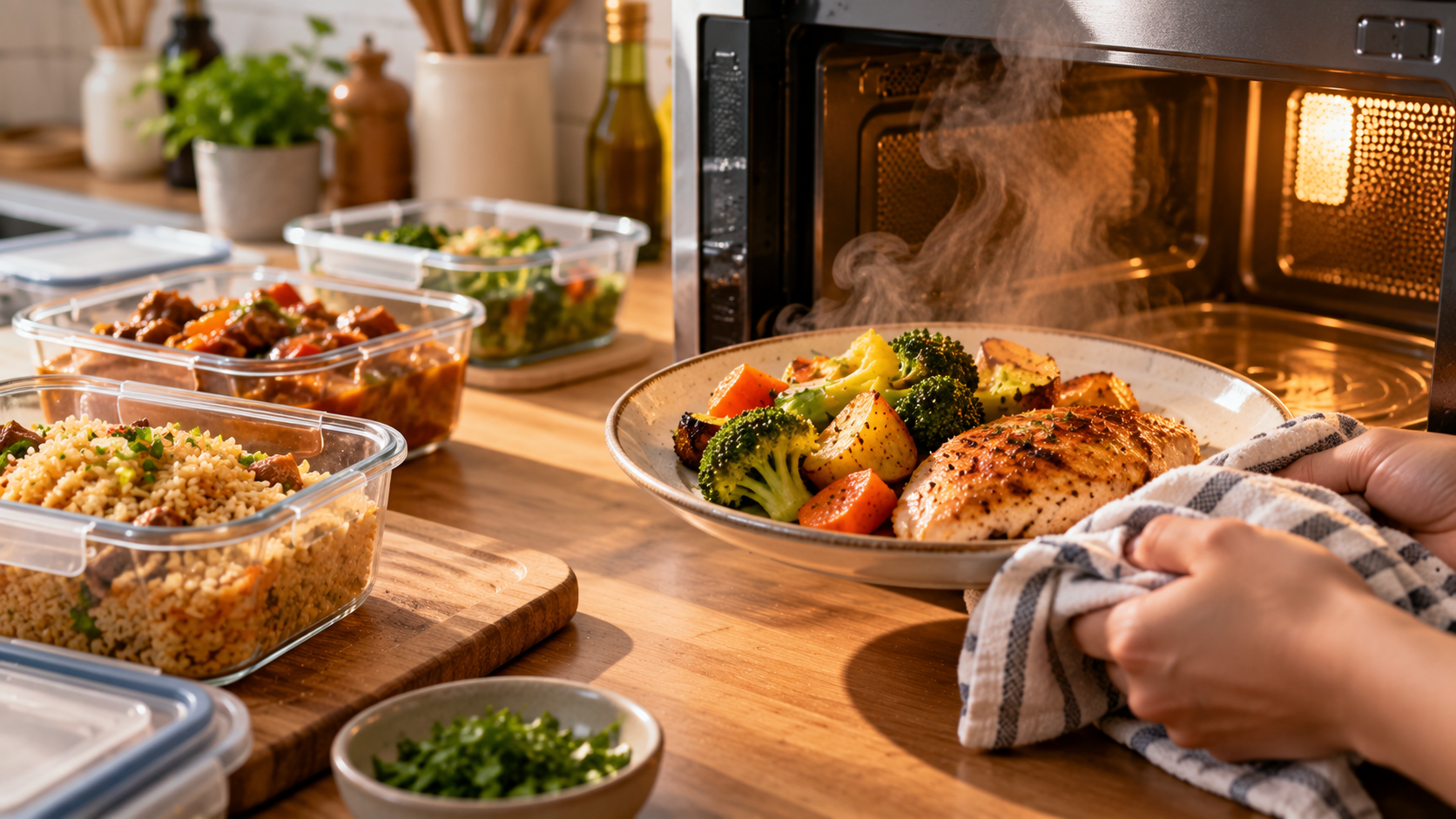
Why Reheated Food Tastes Different: What Happens to Flavor and Texture Overnight
You cook dinner, taste it straight from the pan, and everything seems exactly right. The aroma is strong, the vegetables still have texture, the sauce feels balanced, and the food tastes fresh.
Then you put the leftovers in the refrigerator.
The next day, you reheat the same meal using the same plate. Nothing has been added, yet something has clearly changed.
Sometimes the difference is disappointing. Fried food loses its crunch, meat becomes dry, pasta feels softer, and delicate aromas seem weaker. However, other dishes appear to improve overnight. Stews taste deeper, curries feel more integrated, and sauces can seem richer than they did immediately after cooking.
There is a reason reheated food tastes different.
Food does not become chemically and physically frozen in time simply because it enters the refrigerator. Cooling, storage, moisture movement, oxidation, starch changes, fat behavior, and reheating all continue to affect what eventually reaches our mouth.
Understanding those changes explains why yesterday’s dinner can sometimes taste better—and why other leftovers never quite return to their original form.
Why Reheated Food Tastes Different Even When the Recipe Has Not Changed
Flavor is much more than the ingredients listed in a recipe.
Temperature matters.
Texture matters.
Aroma matters.
Moisture distribution matters.
Even the way fat behaves at a particular temperature can influence how strongly we perceive certain flavors.
Freshly cooked food exists in a particular physical state. Heat has created aromas, softened ingredients, melted fats, evaporated water, and produced specific textures.
Once that food cools, the state begins to change.
Reheating can reverse some of those changes, but not all of them.
That is the basic reason leftovers rarely taste exactly like the original meal.
Temperature Changes the Way We Experience Flavor
Imagine eating a spoonful of sauce directly from the refrigerator.
Now warm the same sauce.
The second spoonful will probably smell and taste more intense.
One reason is that heat encourages volatile aroma compounds to reach the air. Those compounds travel toward the nose, contributing significantly to what we experience as flavor.
Cold food releases many aromas less readily.
As food warms, those aromas become easier to detect.
This is why a dish can seem bland when tasted cold but much more expressive after reheating.
Aroma Is a Huge Part of What We Call Taste
Our tongue detects fundamental taste sensations, but much of the detailed identity of food comes from aroma.
Think about the difference between tasting something while your nose is clear and tasting it while heavily congested.
The basic sensations remain.
However, identifying subtle flavors becomes more difficult.
When freshly cooked food leaves a hot pan, it releases a large amount of aromatic material into the surrounding air.
That first experience is difficult to reproduce completely the following day.
Some Aromas Are Lost During Storage
Not every aromatic compound remains equally stable.
Some gradually escape into the air inside the storage container.
Others change through chemical reactions.
As a result, delicate fresh aromas can become weaker after several hours or overnight.
Fresh herbs provide an obvious example.
A dish finished with aromatic herbs can smell bright and lively immediately after cooking.
After refrigeration and reheating, that freshness may become less prominent.
The ingredients are technically still present, but the sensory experience has changed.
Reheating Creates Another Round of Aroma Loss
Heating leftovers does not merely restore their original temperature.
It exposes them to heat again.
During that second heating cycle, additional volatile compounds can escape.
This is particularly noticeable when food is reheated aggressively for too long.
Instead of simply becoming hot, the food continues cooking.
The result can be a meal that smells less fresh and has a flatter flavor profile.
Moisture Moves Through Food During Storage
One of the biggest changes in leftovers involves water.
Water does not necessarily remain exactly where it was when the dish was first cooked.
During storage, moisture can migrate between different components.
A crisp coating can absorb moisture from a filling.
Bread can absorb liquid from a sauce.
Pasta continues interacting with surrounding moisture.
Rice changes as it cools.
These movements dramatically affect texture.
That matters because texture contributes strongly to our perception of food quality.
Why Crispy Leftovers Become Soft
A crisp crust usually depends on relatively low moisture at its surface.
Fresh fried chicken, roasted potatoes, pastry, and other crisp foods have a contrast between a dry exterior and a softer interior.
Once placed in a container, steam and moisture become trapped.
That moisture can migrate toward the crust.
The dry structure begins absorbing water.
Eventually, the crisp surface becomes soft.
Reheating has to remove some of that moisture if we want the texture to return.
The Microwave Cannot Restore Every Texture
Microwaves are excellent for speed.
However, they heat food differently from a dry oven or hot pan.
When reheating something that should be crispy, a microwave can make the food hot without sufficiently drying and recrisping the exterior.
That is why leftover fried foods may emerge hot but still soft.
For foods where crispness matters, dry heat often produces a result closer to the original texture.
The ideal method therefore depends on the food.
An Oven Can Be Better for Crisp Foods
An oven or air fryer exposes the surface to hot, relatively dry air.
This helps remove some surface moisture.
As the exterior dries and heats, crispness can partially return.
Roasted potatoes, pizza, breaded foods, and pastries often benefit from this approach.
However, excessive reheating can dry the interior.
The goal is not maximum heat.
It is restoring the desired contrast without overcooking the food.
A Pan Can Restore Texture Quickly
Some leftovers respond especially well to a skillet.
Pizza is a familiar example.
A pan can crisp the bottom while gently warming the toppings.
Rice dishes can also benefit from direct contact with a hot surface because slight browning adds texture and aroma.
The technique works because the pan provides something a microwave cannot easily reproduce: concentrated dry heat at the surface.
Saucy Foods Behave Differently
Crisp foods often suffer during storage.
Saucy dishes can do the opposite.
Stews, braises, curries, chili, and similar foods sometimes taste more cohesive the following day.
Their texture does not depend on maintaining a dry crust.
Instead, ingredients sit together in a moist environment.
During storage, flavors continue redistributing throughout the dish.
When reheated carefully, the result can feel more integrated.
Why Some Leftovers Taste Better the Next Day
People often say certain dishes need time for the flavors to “marry.”
The phrase is informal, but it describes a real sensory experience.
A freshly cooked stew may contain several distinct aromatic elements.
After cooling and resting, those components become distributed differently through the liquid and solid ingredients.
Strong individual notes can feel less isolated.
The dish may seem more unified.
That does not mean every food automatically improves overnight.
It means certain preparations are particularly suited to resting.
Spices Can Feel More Integrated
Freshly added spices can sometimes stand out sharply.
After several hours in a moist dish, their aromatic compounds have more opportunity to disperse through fats and liquids.
When the dish is reheated, the flavor can seem more evenly distributed.
Curries are a common example.
The next-day version may feel rounder because individual components no longer appear as separate.
Again, the ingredients have not magically become stronger.
Their distribution and perception have changed.
Fat Helps Carry Flavor
Many aromatic compounds dissolve readily in fat.
That makes fats important carriers of flavor.
Butter, cooking oils, dairy fat, and fat released from meat can distribute aroma compounds through a dish.
During cooling, some fats solidify.
This changes both texture and the way aromas are released.
When the dish is reheated, those fats melt again.
However, the final distribution may not be identical to the freshly cooked state.
Cold Fat Changes Mouthfeel
Think about refrigerated stew.
The fat may appear firm on the surface.
Cold cheese becomes firmer.
Butter hardens.
Meat fat can feel waxy when eaten directly from the refrigerator.
As these fats warm, they soften or melt.
Consequently, a dish can taste dramatically different at refrigerator temperature compared with serving temperature.
This is another reason evaluating leftovers while they are still cold can be misleading.
Sauces Can Thicken Overnight
Many sauces become noticeably thicker after refrigeration.
Several mechanisms can contribute.
Fat solidifies.
Gelatin can set.
Starches change structure.
Water continues interacting with ingredients.
A sauce that flowed easily while hot may become almost solid when cold.
When reheated, some of that texture returns toward its original state, although it may still need adjustment.
A Small Amount of Liquid Can Help Certain Leftovers
Some dishes lose moisture during storage and reheating.
Adding a small amount of water, stock, milk, or another appropriate liquid can help restore consistency.
The correct choice depends on the dish.
Pasta sauce might benefit from a splash of water.
A creamy preparation may require something different.
The key is moderation.
Too much liquid can dilute flavor and destroy texture.
Pasta Keeps Absorbing Sauce
Fresh pasta coated in sauce has a particular balance.
During storage, the pasta can continue absorbing surrounding moisture.
By the next day, the sauce may appear much thicker or nearly disappear into the pasta.
Reheating without adjustment can make the dish feel dry.
A small amount of liquid combined with gentle heat can help loosen it.
Still, the texture of the pasta itself may not return completely to its freshly cooked condition.
Overcooked Pasta Becomes Even More Noticeable the Next Day
If pasta was already very soft when first served, storage gives it little room to maintain a pleasant texture.
After absorbing additional moisture and being reheated, it can become mushier.
This is why pasta intended for meal preparation may benefit from careful initial cooking.
The first cooking stage affects how well the food survives the second heating stage.
Thinking ahead can improve leftovers substantially.
Rice Changes as It Cools
Cooked rice undergoes noticeable textural changes during refrigeration.
Fresh hot rice is soft because its starch has absorbed water and changed during cooking.
As it cools, starch molecules begin reorganizing.
The grains become firmer.
This is why refrigerated rice feels very different from freshly steamed rice.
Reheating can soften it again, especially when enough moisture is present, but the texture may still differ.
Cold Rice Can Be Useful for Other Dishes
A change is not always a defect.
Firmer refrigerated rice can be useful for fried rice because the grains separate more easily than freshly cooked, very moist rice.
Instead of trying to make yesterday’s rice behave exactly like fresh steamed rice, cooks can use its changed texture to their advantage.
This is an important principle for leftovers.
Sometimes the best solution is transformation rather than restoration.
Bread Also Changes During Storage
Bread becomes stale through more than simple moisture loss.
Its starch structure changes after baking.
That is why bread can become firm even when it has not completely dried out.
Heating can temporarily improve softness and aroma.
However, reheated bread may firm again relatively quickly as it cools.
Different storage and reheating methods therefore produce noticeably different results.
Refrigeration Is Not Ideal for Every Bread
Many people automatically refrigerate food to keep it fresh.
Bread is more complicated.
Refrigeration can accelerate some changes associated with staling.
For short-term storage, other approaches may be preferable depending on the bread and environment.
For longer storage, freezing is often useful.
The important point is that “colder” does not always mean “better texture.”
Pizza Demonstrates Almost Every Leftover Problem at Once
Pizza is an excellent example because it contains several contrasting components.
The crust should have structure.
Cheese contains fat.
Sauce contains water.
Toppings release moisture.
During refrigeration, these elements interact.
The crust can absorb moisture and become chewy or soft.
The cheese firms as its fat cools.
A good reheating method must warm the toppings while restoring some structure to the base.
That is why the method makes such a noticeable difference.
Meat Can Become Dry During Reheating
Cooked meat has already experienced heat once.
When reheated aggressively, it cooks further.
Additional moisture can be lost.
Proteins tighten.
A piece of meat that was juicy during dinner can therefore become dry the following day.
Gentler reheating helps reduce this problem.
The exact technique depends on the cut, thickness, and preparation.
Thin Slices Heat More Quickly
A large cold piece of meat takes time for heat to reach the center.
By the time the center is warm, the exterior may have become overcooked.
Slicing can shorten the distance heat needs to travel.
However, slices also expose more surface area and can lose moisture quickly.
There is always a trade-off.
Choose the method according to the food rather than applying one reheating technique to everything.
Sauce Can Protect Meat During Reheating
Meat stored in sauce often reheats better than a dry piece sitting alone.
The surrounding liquid helps distribute heat and provides moisture at the surface.
Braises and stews therefore tend to be forgiving leftovers.
A grilled steak is more challenging.
The difference comes from the physical environment surrounding the meat.
Chicken Can Develop a Distinct Leftover Flavor
Some people notice that refrigerated cooked meat, especially poultry, develops a recognizable flavor after storage and reheating.
Oxidation of fats is one contributor to changes in stored cooked meat.
The effect can be more noticeable in relatively mild foods because there are fewer strong sauces or spices to mask it.
Proper storage matters, but some flavor evolution is still possible even when food is handled correctly.
This is another example of why reheating cannot always reproduce the original dish exactly.
Oxidation Continues After Cooking
Exposure to oxygen can change food.
Fats are particularly relevant because oxidation can generate new flavor compounds.
Sometimes these changes are subtle.
In other cases, they produce stale or unpleasant notes.
Storage containers that reduce unnecessary air exposure can help preserve quality.
However, food chemistry does not stop completely inside the refrigerator.
Refrigeration Slows Change; It Does Not Stop It
This distinction is important.
Cold temperatures slow many biological and chemical processes.
They do not suspend food in time.
Texture can continue changing.
Aromas can migrate.
Oxidation can occur.
Moisture can redistribute.
That is why leftovers are different even when they have been refrigerated promptly.
The Refrigerator Has Its Own Environment
Food stored uncovered can lose moisture.
It can also absorb odors from surrounding foods.
A strongly aromatic ingredient elsewhere in the refrigerator may influence poorly covered leftovers.
Meanwhile, condensation inside containers can increase surface moisture.
Good storage therefore affects not only food safety but also sensory quality.
Airtight Containers Help Preserve Quality
A suitable container reduces moisture loss and limits exposure to surrounding refrigerator odors.
It also helps prevent the surface from drying excessively.
However, sealing very hot food immediately can trap large amounts of steam.
Storage practices need to balance cooling, food safety, and quality.
Use appropriate containers and follow safe cooling practices rather than leaving cooked food at room temperature for extended periods.
Food Safety Comes Before Perfect Texture
A crispy crust is not worth unsafe storage.
Leftovers should be cooled and refrigerated using safe food-handling practices.
Perishable food should not remain at room temperature simply because someone wants to preserve texture.
When reheating, food also needs to be heated appropriately for safe consumption.
Quality matters, but safety is the first requirement.
Smell Alone Cannot Confirm Food Safety
People sometimes smell leftovers and decide they are safe because nothing seems unusual.
That is not a reliable safety test.
Food can contain harmful microorganisms without producing an obvious smell, appearance, or taste.
Follow appropriate storage times, refrigeration practices, and reheating guidance.
If there is genuine doubt about whether perishable food was stored safely, avoiding it is wiser than trying to rescue it.
Repeated Cooling and Reheating Can Damage Quality
Every heating cycle creates another opportunity for moisture loss and texture changes.
Imagine reheating an entire container of stew, eating one portion, cooling the rest again, and repeating the process tomorrow.
Even apart from safe-handling considerations, quality will usually decline.
A practical approach is to reheat only the portion needed.
The remainder can stay refrigerated until required.
Portioning Leftovers Makes Reheating Easier
Instead of storing one enormous container, divide food into practical portions when appropriate.
Smaller portions cool and reheat more predictably.
They also reduce the need to repeatedly heat the entire batch.
This is particularly useful for soups, stews, curries, and cooked grains.
Planning storage is part of planning good leftovers.
Microwave Reheating Is Often Uneven
Anyone who has reheated food in a microwave knows the experience.
One side is extremely hot.
Another is still cold.
Microwave heating patterns depend on the food, container, amount, and appliance.
Stirring and rotating food can improve temperature distribution.
Allowing a short resting period can also help heat redistribute.
The goal is even heating rather than simply using maximum power for as long as possible.
Lower Microwave Power Can Be Useful
Maximum power is not automatically the best setting.
Gentler heating can provide more time for temperature to spread through the food.
This can be useful for dishes that dry out or split easily.
Instead of blasting leftovers until the edges overcook, shorter intervals and stirring often produce better results.
Speed remains one of the microwave’s strengths, but control matters.
Covering Food Can Reduce Moisture Loss
A suitable cover can trap some steam during microwave reheating.
This can help rice, pasta, and similar foods retain moisture.
However, foods that should remain crisp generally need a different strategy.
Again, there is no universal reheating rule.
Moist foods and crisp foods have opposite needs.
Steam Is Helpful Until It Is Not
Steam can restore softness to rice.
It can help prevent certain dishes from drying.
Yet the same steam destroys crispness.
This is why reheating leftovers becomes easier when we identify the desired texture first.
Do we want moisture?
Or do we need to remove moisture from the surface?
The answer determines the method.
Separate Components When Possible
Meal-prep containers often combine everything.
That is convenient, but different foods may need different reheating methods.
A crispy cutlet sitting directly on sauce will soften during storage.
Salad obviously should not be reheated with hot rice.
Fresh garnish loses its character when microwaved.
When practical, store components separately.
Assembly after reheating can produce a fresher result.
Keep Fresh Garnishes Fresh
Herbs, scallions, crunchy onions, toasted nuts, citrus zest, and similar finishing ingredients provide contrast.
Heating them repeatedly can reduce that contrast.
Instead, store suitable garnishes separately and add them after the main dish is reheated.
A small fresh component can dramatically improve the perception of leftovers.
It adds aroma and texture that storage may have removed.
Acidity Can Wake Up a Reheated Dish
Sometimes leftovers do not need more salt.
They need brightness.
A small amount of lemon juice, vinegar, or another appropriate acidic ingredient can make a rich reheated dish feel more lively.
During storage, flavors may seem heavier or more integrated.
Acidity restores contrast.
Of course, the correct addition depends on the cuisine and recipe.
Fresh Herbs Can Restore Top Notes
Slow-cooked food often has deep flavors.
Fresh herbs provide a different layer: bright aromatic notes.
Those delicate notes are among the easiest to lose during storage and reheating.
Adding fresh herbs at serving time can restore complexity.
This is particularly effective with soups, curries, pasta, and grain dishes.
Texture Contrast Can Make Leftovers Feel New Again
A soft leftover dish can become more interesting with a crunchy element.
Toasted breadcrumbs.
Nuts.
Seeds.
Fresh vegetables.
Crispy onions.
The exact choice depends on the dish.
The point is that reheating does not have to reproduce the original meal perfectly.
We can create a new balance.
Leftovers Can Be Treated as Ingredients
Yesterday’s roast chicken can become today’s sandwich.
Cooked vegetables can enter a frittata.
Rice can become fried rice.
Roasted meat can become a filling.
Bread can become croutons or another preparation.
Once we stop insisting that leftovers must return to their original state, many texture problems become opportunities.
Transformation Often Works Better Than Restoration
Some foods simply do not reheat beautifully.
French fries are a classic example.
You can improve them with dry heat, but reproducing the exact texture from the fryer is difficult.
Instead of fighting the change, repurpose them where appropriate.
The same principle applies to bread, meat, vegetables, and grains.
Cooking with leftovers is partly about understanding what the food has become.
Soup Is One of the Most Forgiving Leftovers
Soup generally does not depend on crisp surfaces.
Its components are already surrounded by liquid.
Gentle reheating can restore serving temperature without dramatically changing the basic format.
However, ingredients such as noodles can continue absorbing liquid during storage.
Therefore, even soup can change.
Broth may need adjustment, and delicate garnishes are best added fresh.
Stews Often Benefit from Resting
Slow-cooked dishes contain many ingredients sharing the same liquid environment.
Over time, flavors redistribute.
Gelatin and fats change as the dish cools.
When reheated gently, the texture can become rich and cohesive.
This explains why some people intentionally prepare stews a day before serving.
The resting period becomes part of the cooking plan.
Curry Can Become More Cohesive Overnight
Curries frequently contain spices, aromatics, fats, vegetables, proteins, and sauces interacting together.
After resting, sharp individual notes may become more integrated.
Reheating releases aromas again.
A fresh garnish or acidic finish can then restore brightness.
The combination of rested depth and fresh finishing notes can make the second serving especially satisfying.
Tomato-Based Sauces Often Reheat Well
Tomato sauces generally tolerate storage and reheating because their desired texture is already moist.
Flavor can become more cohesive overnight.
However, reduction during reheating can make the sauce too thick or salty.
Use gentle heat.
Add a small amount of liquid if necessary.
Taste only after the sauce reaches serving temperature.
Cream Sauces Require More Care
Emulsified or dairy-based sauces can behave differently.
Excessive heat can cause separation.
The sauce may become oily or grainy.
Gentle reheating and frequent stirring are usually preferable to intense boiling.
If the sauce thickened significantly in the refrigerator, a small amount of suitable liquid may help restore consistency.
Cheese Changes Dramatically with Temperature
Cold cheese is firmer.
Warm cheese softens.
Some cheeses melt smoothly.
Others release oil or become rubbery after repeated heating.
That is why cheese-heavy leftovers can have very different textures depending on the reheating method.
Pizza again provides a familiar example.
The goal is to warm the cheese without destroying the crust underneath it.
Vegetables Can Lose Their Original Bite
Cooked vegetables continue to face heat during reheating.
If they were perfectly tender during the first meal, another long heating cycle can push them into softness.
This is especially noticeable with vegetables that were originally meant to retain some bite.
Shorter reheating helps.
In meal preparation, some cooks intentionally leave vegetables slightly firmer during initial cooking because they know reheating will continue the process.
Roasted Vegetables Prefer Dry Heat
Roasting creates browned surfaces and concentrated flavor.
Microwaving can warm those vegetables but may soften the exterior.
Returning them briefly to an oven, air fryer, or pan can restore some surface character.
The best method depends on the vegetable and size.
Avoid reheating so long that the interior dries out.
Fried Food Needs Airflow
When fried food sits against a flat surface while reheating, moisture can remain trapped underneath.
A rack can improve airflow in an oven.
Air fryers use circulating hot air for a similar reason.
The goal is to expose more surface area to dry heat.
Better airflow helps moisture leave the crust instead of remaining trapped.
Do Not Overcrowd the Reheating Tray
Crowding food closely together traps steam.
Pieces shield one another from hot air.
Instead of crisping, they may soften.
Spread foods in a single layer when crispness is the goal.
This is the same principle used during roasting.
Surface exposure matters.
Reheated Food Can Need Different Seasoning
Storage and temperature changes alter perception.
A dish that was perfectly balanced yesterday may seem slightly muted today.
Before automatically adding salt, taste it at proper serving temperature.
Then consider what is actually missing.
Salt?
Acidity?
Fresh aroma?
Heat from spices?
Texture?
Diagnosing the problem produces better results than simply adding more seasoning.
Salt Does Not Disappear Overnight
If a dish tastes dull after refrigeration, that does not necessarily mean the salt vanished.
Temperature and aroma affect overall flavor perception.
Once the food is hot again, the balance may become clearer.
This is why seasoning cold leftovers aggressively can backfire.
After reheating, the dish may become too salty.
Taste at the stage when it will actually be eaten.
Spicy Heat Can Feel Different the Next Day
Spiced foods often seem different after resting.
Part of this comes from redistribution of flavor compounds through the dish.
Fat-soluble components may spread.
Other aromas become less prominent.
As a result, the balance between heat, sweetness, acidity, and savory flavors can shift.
Fresh additions at serving time can restore contrast.
Sweet Foods Change Too
Leftover behavior is not limited to savory meals.
Cake dries or firms.
Custards set more fully.
Chocolate changes texture with temperature.
Pastries lose crispness.
Cookies absorb or lose moisture depending on storage.
Desserts therefore have their own reheating and storage challenges.
Sometimes room temperature, rather than active reheating, produces the best result.
Cake Often Tastes Different After Resting
Fresh cake can have a very tender crumb while still warm.
After cooling completely, the structure stabilizes.
Some cakes develop a more even flavor after several hours.
Others begin losing moisture during storage.
Frosting also changes depending on temperature.
A refrigerated butter-based frosting can feel firm and less aromatic until allowed to warm appropriately.
Brownies Demonstrate the Importance of Temperature
A chilled brownie can feel dense and firm.
At room temperature, it softens.
Warm it slightly, and chocolate aromas become more pronounced while the center can feel fudgier.
It is the same brownie.
Yet the sensory experience changes substantially.
Serving temperature is therefore part of the recipe experience, even after baking is complete.
Pastry Is Difficult to Reheat Perfectly
Many pastries rely on layers and crispness.
Refrigeration introduces moisture challenges.
Microwaving can make pastry soft.
Dry heat usually performs better when restoring flakiness, but excessive heating dries the interior.
Short, controlled reheating is often preferable.
The original texture may not return completely, but it can be improved.
Refrigerated Desserts Should Not Automatically Be Heated
Cheesecake, mousse, pudding, and similar desserts are designed around cold or cool textures.
Their flavors still change with temperature, but reheating would destroy the intended structure.
Sometimes the appropriate “reheating strategy” is simply allowing a dessert to sit briefly at a suitable serving temperature.
Understanding the intended state of the food matters more than following a universal rule.
Freezing Introduces Another Set of Changes
Freezing can preserve many foods for longer periods, but ice formation can affect texture.
Foods with high water content may become softer after thawing.
Sauces can separate.
Certain vegetables lose firmness.
On the other hand, soups, stews, baked goods, and many prepared dishes can freeze successfully when handled properly.
The suitability depends heavily on the food’s structure.
Freeze Food with Its Future Use in Mind
If a large batch is meant for freezing, portion it before storage.
Use containers appropriate for freezing.
Label portions clearly.
Consider whether garnishes or delicate ingredients should be added only after thawing.
Planning for reheating during the original cooking process usually gives better results than treating storage as an afterthought.
Reheating Starts When You Cook the First Meal
This may sound strange, but good leftovers begin during initial preparation.
If pasta will be reheated tomorrow, avoid overcooking it today.
If vegetables will go through another heating cycle, consider their initial tenderness.
If crispy components will be stored with sauce, separate them.
If a stew tastes even better after resting, perhaps cook it ahead intentionally.
Thinking one meal ahead changes how leftovers perform.
Match the Reheating Method to the Original Cooking Method
This is a useful starting principle.
Roasted food often responds well to an oven.
Pan-fried food may benefit from a skillet.
Steamed rice benefits from moisture.
Soup returns naturally to a saucepan.
This is not an absolute rule, but it helps identify what made the food appealing originally.
Then choose a reheating method capable of restoring those qualities.
Ask What Made the Dish Good the First Time
Was it crispness?
Juiciness?
Creaminess?
Fresh aroma?
A contrast between hot and cold?
A browned crust?
A tender interior?
Once you identify the defining characteristic, reheating becomes easier.
Protect that characteristic first.
A method that works perfectly for soup may be terrible for fried chicken because the goals are completely different.
Separate “Hot” From “Properly Reheated”
Food can be hot and still disappointing.
A microwave can make pizza extremely hot while leaving the crust soft.
An oven can make chicken hot while also drying it out.
Temperature alone is not the goal.
Proper reheating attempts to restore a desirable combination of temperature, moisture, aroma, and texture.
That requires a little more attention.
Use Gentle Heat When Texture Is Delicate
High heat is useful for restoring a crust.
It is less appropriate for delicate sauces or meats that dry easily.
For those foods, slower or gentler heating can reduce damage.
Stir when appropriate.
Add moisture when appropriate.
Cover when appropriate.
The method should respond to the structure of the food.
Use Stronger Dry Heat When Crispness Matters
When the problem is excess surface moisture, gentle steaming is unlikely to help.
Crisp food needs the surface to dry.
An oven, skillet, or air fryer can provide stronger surface heat.
Keep the reheating period controlled.
Once the exterior has regained texture and the center is warm, additional heating usually creates diminishing returns.
Do Not Expect Every Leftover to Become “Fresh” Again
Some transformations are effectively irreversible in a home kitchen.
A salad that has sat in dressing cannot become freshly dressed lettuce again.
Overcooked pasta cannot become al dente.
A soggy fried coating may improve with dry heat but not perfectly return to its original state.
Accepting this makes leftover cooking more practical.
Instead of chasing an impossible reset, aim for the best version of the food in its current state.
Sometimes the Best Reheating Method Is No Reheating
Certain foods are enjoyable cold or at room temperature.
Roasted meats can become sandwiches.
Cooked vegetables can enter salads.
Some noodles work in cold preparations.
Cake may taste better after warming naturally from refrigerator temperature rather than entering a microwave.
The question is not always “How do I make this hot?”
It can be “What is the best way to eat this now?”
Good Leftover Cooking Reduces Waste
Learning to use leftovers well has a practical benefit.
Food that tastes disappointing is more likely to be discarded.
If we understand how to store, reheat, and transform it, more of the original meal can be enjoyed.
This saves ingredients, cooking effort, and money.
It also encourages more thoughtful meal planning.
Cooked Food Has a Second Life
Leftovers should not automatically be viewed as inferior food.
They are ingredients that have already undergone one stage of cooking.
Their properties have changed.
A skilled approach recognizes those changes and works with them.
Cold rice has advantages.
Rested stew has advantages.
Cooked chicken is ready for a new dish.
Stale bread can be transformed.
The second meal does not have to imitate the first.
The Refrigerator Is Part of the Cooking Story
We often imagine cooking ends when the stove turns off.
In reality, food continues changing as it cools and rests.
The refrigerator becomes another stage in the journey.
Starches reorganize.
Fats solidify.
Moisture moves.
Aromas redistribute.
Some compounds oxidize.
These processes explain why tomorrow’s plate can never be an exact copy of tonight’s dinner.
Reheating Is Another Cooking Process
This is perhaps the most useful mindset.
Reheating is not pressing a button that returns food to an earlier state.
It is applying heat again.
That means we are cooking again, even if only briefly.
Once we recognize that, decisions become more intentional.
How much heat?
What type?
For how long?
Does the food need moisture or dryness?
Should it be stirred?
Should components be separated?
Those questions lead to better leftovers.
Why the Same Dish Can Taste Better and Worse at the Same Time
A stew may develop deeper flavor overnight but contain vegetables that are softer.
Pizza sauce may taste good while the crust becomes less crisp.
Curry may become more cohesive while fresh herb aromas disappear.
Leftover quality is rarely one-dimensional.
Some characteristics improve.
Others decline.
The final experience depends on which qualities matter most for that particular dish.
Flavor Is an Experience, Not a Fixed Number
It is tempting to imagine that a dish contains a fixed amount of “flavor.”
But perception is dynamic.
Temperature affects aroma.
Texture affects how long food stays in the mouth.
Fat influences aromatic release.
Moisture affects structure.
Fresh garnishes create contrast.
The same ingredients can therefore produce different experiences depending on their physical state.
This is why leftovers are such an interesting part of food science.
A Simple Leftover Strategy
Before reheating, look at the food and identify its main characteristic.
If it should be crispy, use a method that removes surface moisture.
If it should be moist, protect it from drying.
If it contains a delicate sauce, use gentler heat.
If it has become too thick, consider whether a small amount of appropriate liquid is needed.
If it tastes heavy after warming, consider a fresh finishing element.
If its original texture cannot realistically return, transform it into another dish.
This approach is more reliable than automatically putting everything into the microwave for the same amount of time.
Conclusion
There is a simple reason reheated food tastes different: the food itself has changed.
Cooling and refrigeration affect starches, fats, moisture, aromas, and textures. Crispy surfaces absorb moisture. Pasta continues interacting with sauce. Rice becomes firmer. Fats solidify. Delicate aromas can fade, while flavors in stews and curries may become more integrated.
Then reheating introduces another transformation.
Heat releases aromas again, but it can also evaporate moisture, overcook proteins, soften crisp surfaces, separate sauces, or continue cooking vegetables.
That is why the reheating method matters so much.
Microwaves are useful for moist foods and convenience. Ovens and air fryers can help restore dry, crisp surfaces. Skillets provide direct heat. Saucepans work naturally for soups and sauces. Meanwhile, some leftovers are better transformed into an entirely new meal rather than forced back into their original form.
Once we understand why reheated food tastes different, leftovers become easier to manage.
Instead of asking how to make yesterday’s food exactly fresh again, ask a better question:
What does this food need now?
Sometimes it needs moisture.
Sometimes dry heat.
Sometimes a fresh herb or touch of acidity.
And sometimes yesterday’s dinner simply needs a new role.