Why Homemade Waffles Turn Soggy and How to Keep Them Crisp
The first waffle comes out golden, with firm edges and a light crunch. By the time the rest of the batch is ready, it has softened on the plate. Stack several together, and the crisp texture can disappear before breakfast even begins.
Learning how to keep waffles crispy starts with understanding what happens after they leave the iron. A waffle continues releasing steam while it cools. If that moisture becomes trapped against a plate or another waffle, the surface can soften.
The batter and cooking method matter too. A pale waffle with a damp interior will be harder to keep crisp than one that has cooked evenly. The goal is to build a firm exterior, then give escaping moisture somewhere to go.
A Golden Surface Does Not Always Mean the Waffle Is Ready
Color is useful, but it should not be the only sign of doneness. Sugar, milk, and the temperature of the waffle iron can affect how quickly the outside browns.
A waffle may look golden while the center still needs more time. Removing it too early can leave excess moisture inside, which moves toward the crust as the waffle rests.
Watch for a combination of signs: a set exterior, easy release from the plates, and noticeably reduced steam. Steam does not need to disappear completely. Use the recipe and appliance instructions as your starting point, then adjust based on the finished texture.
Preheat the Iron before Adding Batter
Pouring batter into an iron that has not fully heated can produce uneven results. The batter begins cooking against a cooler surface, making it harder to establish a crisp shell before the interior sets.
Allow the appliance to complete its preheating cycle. If it has an adjustable temperature, begin with the setting recommended for your recipe rather than automatically choosing the highest level.
Give the iron time to recover between waffles as well. Adding another portion immediately may work with some appliances, but others need a short pause to return to temperature.
Consistent heat helps make crispy homemade waffles repeatable instead of leaving each waffle with a different texture.
Batter Thickness Affects the Finished Texture
An unusually thin batter can spread quickly and produce a different structure from the one the recipe intends. A very thick batter may struggle to fill the grid evenly and leave a heavy center.
Measure flour and liquid carefully before making adjustments. Scooping flour into a cup and packing it down can introduce more flour than expected, while adding extra milk by eye changes the balance again.
If the recipe calls for resting the batter, follow that step before judging its consistency. Flour absorbs liquid during the rest, so a batter that initially seems loose may thicken without additional ingredients.
Avoid trying to fix soggy waffles by adding large amounts of flour. That can create a denser result without solving the cooking or cooling problem.
Mix Enough to Combine, Then Stop
Once flour meets liquid, extended mixing can develop gluten and make waffles tougher. A perfectly smooth batter is not always necessary; small lumps are acceptable in many recipes.
Scrape the bottom of the bowl to incorporate dry pockets, but avoid repeatedly beating the batter after it has come together. If the recipe uses whipped egg whites, fold them in gently according to its instructions.
Different waffle styles need different methods. Yeasted batter, conventional baking-powder batter, and dough-based waffles should not be treated as interchangeable.
For Belgian-style waffles with a light interior, follow a recipe designed for that structure rather than relying on extra mixing to create volume.
Move Finished Waffles onto a Rack
A flat plate blocks airflow underneath the waffle. Moisture can collect between the hot waffle and the plate, softening the bottom even while the top still feels crisp.
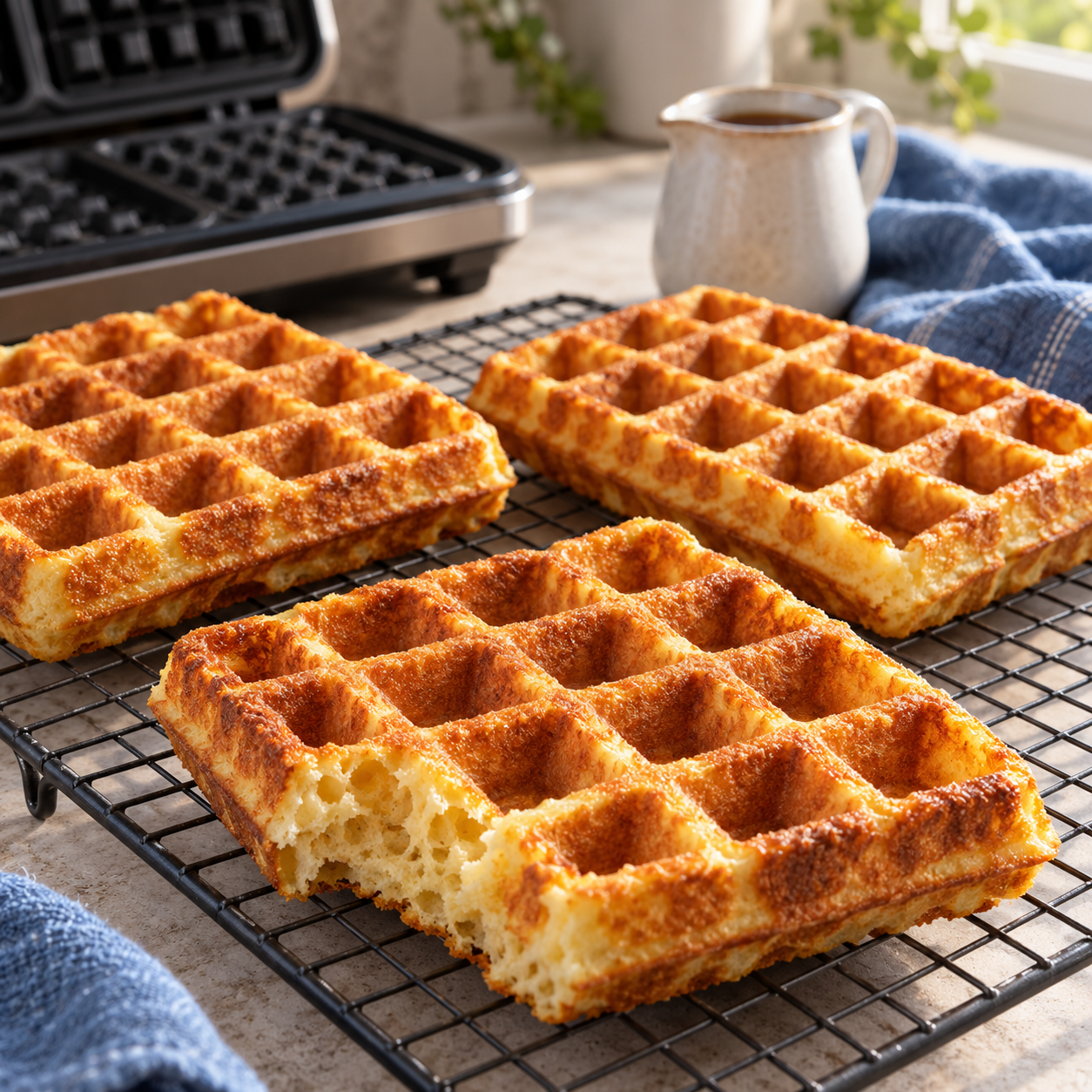
Place freshly cooked waffles on a wire rack in a single layer. This allows steam to escape from both sides instead of gathering beneath them.
Stacking causes a similar problem. Each waffle releases moisture into the one above it, so a tall pile may look inviting while gradually losing its texture.
If you want to understand how to keep waffles crispy, changing where they rest is one of the simplest variables to test.
Keep a Batch Warm without Covering It
When cooking for several people, serving each waffle immediately is not always practical. A low oven can help hold the first waffles while the remaining portions cook.
Arrange them in a single layer on an oven-safe rack set over a baking tray. A starting point of around 100–120°C can work for brief holding, but check your oven and recipe because prolonged warming may dry them out.
Avoid covering hot waffles tightly with foil or placing them in a closed container. Those methods retain steam along with heat.
The aim is a short holding period with airflow, rather than keeping waffles warm indefinitely.
Add Toppings Just before Eating
Even a well-cooked waffle will soften when it absorbs syrup, fruit juices, or other wet toppings. That change is expected, but its timing can be controlled.
Bring the waffles to the table first, then add toppings when each portion is ready to eat. If serving juicy fruit, spoon it on shortly before serving rather than letting it sit on the waffles while the batch finishes.
Keep extra syrup and sauces on the side. This lets each person choose the amount while preserving more of the crisp surface.
For waffles prepared ahead, cool them on a rack before storing. Reheat with dry heat in a toaster or oven, following the appliance instructions, rather than expecting a microwave to restore the crust.
Conclusion
Knowing how to keep waffles crispy means paying attention to cooking, cooling, and serving. Start with a fully preheated iron, measure the batter consistently, and allow each waffle to cook beyond surface color alone.
After cooking, use a rack, avoid stacking, and add wet toppings at the last moment. If the result is still disappointing, change one step at a time. That makes it easier to identify whether the problem begins in the batter or develops while the waffles wait to be served.